


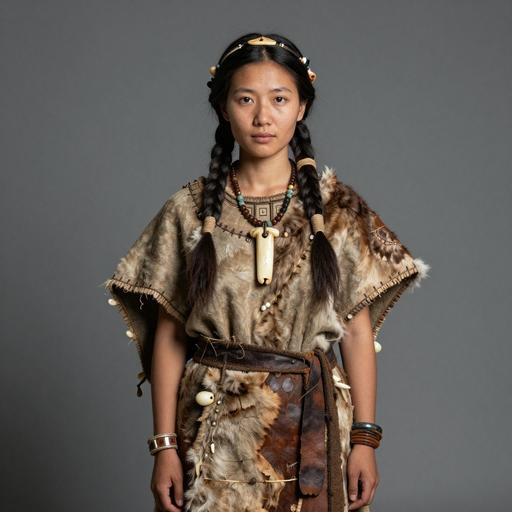
| Individual | Culture/Period | Date | Location | Action |
|---|---|---|---|---|
| Amur River Basin Mesolithic individual, China | Mesolithic China | 9243 BCE | Amur River Basin, China | View |
| Amur River Basin N individual, China | Early Neolithic China | 8175 BCE | Amur River Basin, China | View |
| Amur River Basin N individual, China | Early Neolithic China | 7172 BCE | Amur River Basin, China | View |
| Amur River Basin N individual, China | Neolithic China | 5471 BCE | Amur River Basin, China | View |
| Ancient Chinese Civilization individual, China | Bronze Age China | 1510 BCE | Amur River Basin, China | View |
| East Asian Neolithic individual, China | Early Neolithic China | 7458 BCE | Amur River Basin, China | View |
| East Asian Neolithic individual, China | Early Neolithic China | 7456 BCE | Amur River Basin, China | View |
| East Asian Paleolithic individual, China | Late Paleolithic China | 17605 BCE | Amur River Basin, China | View |
| East Asian Paleolithic individual, China | Late Paleolithic China | 12896 BCE | Amur River Basin, China | View |
| East Asian Paleolithic individual, China | Late Paleolithic China | 12371 BCE | Amur River Basin, China | View |
| East Asian Paleolithic individual, China | Late Paleolithic China | 10774 BCE | Amur River Basin, China | View |
| East Asian individual, China | Mesolithic China | 8782 BCE | Amur River Basin, China | View |
| East Asian individual, China | Mesolithic China | 8740 BCE | Amur River Basin, China | View |
| East Asian individual, China | Mesolithic China | 9442 BCE | Amur River Basin, China | View |
| East Asian individual, China | Mesolithic China | 8810 BCE | Amur River Basin, China | View |
| Ancient Chinese Civilization individual, China | Neolithic China | 4448 BCE | Amur River Basin, China | View |
| Ancient Chinese Civilization individual, China | Neolithic China | 4999 BCE | Amur River Basin, China | View |
| Ancient Chinese Civilization individual, China | Neolithic China | 5210 BCE | Amur River Basin, China | View |
| Ancient Chinese Civilization individual, China | Neolithic China | 6375 BCE | Amur River Basin, China | View |
| Ancient Chinese Civilization individual, China | Neolithic China | 4445 BCE | Amur River Basin, China | View |
| Ancient Chinese Civilization individual, China | Neolithic China | 6690 BCE | Amur River Basin, China | View |
| Ancient Chinese Civilization individual, China | Neolithic China | 6465 BCE | Amur River Basin, China | View |
| Ancient Chinese Civilization individual, China | Neolithic China | 4990 BCE | Amur River Basin, China | View |
| Ancient Chinese Civilization individual, China | Neolithic China | 5210 BCE | Amur River Basin, China | View |
| East Asian Paleolithic individual, China | Paleolithic China | 32159 BCE | Amur River Basin, China | View |
| Palaeolithic individual, China | 32159 BCE | Amur River Basin, China | View | |
| Asia East Hg individual, China | 17605 BCE | Amur River Basin, China | View | |
| Asia East Hg individual, China | 12896 BCE | Amur River Basin, China | View | |
| Late Paleolithic individual, China | 12371 BCE | Amur River Basin, China | View | |
| Late Paleolithic individual, China | 10774 BCE | Amur River Basin, China | View | |
| Mesolithic individual, China | 9442 BCE | Amur River Basin, China | View | |
| Asia East En individual, China | 8810 BCE | Amur River Basin, China | View | |
| Mesolithic individual, China | 8782 BCE | Amur River Basin, China | View | |
| Mesolithic individual, China | 8740 BCE | Amur River Basin, China | View | |
| Asia East En individual, China | 7458 BCE | Amur River Basin, China | View | |
| Asia East En individual, China | 7456 BCE | Amur River Basin, China | View | |
| Neolithic individual, China | 6690 BCE | Amur River Basin, China | View | |
| Asia East En individual, China | 6465 BCE | Amur River Basin, China | View | |
| Asia East En individual, China | 6375 BCE | Amur River Basin, China | View | |
| Asia East Mn individual, China | 5210 BCE | Amur River Basin, China | View | |
| Asia East Mn individual, China | 4999 BCE | Amur River Basin, China | View | |
| Asia East Ba individual, China | 1510 BCE | Amur River Basin, China | View | |
| Amur River Basin Late Paleolithic individual, China | 10812 BCE | Zhaodong on the northern bank of the Songhua River (Amur River Basin, southwest Heilongjiang Province, Songnen Plain), China | View | |
| Amur River Basin N individual, China | 4457 BCE | Zhaodong on the northern bank of the Songhua River (Amur River Basin, southwest Heilongjiang Province, Songnen Plain), China | View | |
| Amur River Basin Late Paleolithic individual, China | 12462 BCE | Zhaodong on the northern bank of the Songhua River (Amur River Basin, southwest Heilongjiang Province, Songnen Plain), China | View |
Page 1
| Individual | Culture/Period | Date | Location | Action |
|---|---|---|---|---|
| Palaeolithic individual, Russia | 43980 BCE | Ust'-Ishim. Siberia, Russia | View | |
| Palaeolithic individual, Russia | 30250 BCE | Yana RHS, Russia | View | |
| Palaeolithic individual, Russia | 30250 BCE | Yana RHS, Russia | View | |
| Palaeolithic individual, Romania | 32735 BCE | Baia de Fier. Peştera Muierii, Romania | View | |
| Palaeolithic individual, Russia | 43980 BCE | Ust'-Ishim. Siberia, Russia | View | |
| Palaeolithic individual, Russia | 22621 BCE | Mal'ta, Russia | View | |
| Palaeolithic individual, Russia | 15001 BCE | Afontova Gora, Russia | View | |
| Palaeolithic individual, China | 32159 BCE | Amur River Basin, China | View | |
| Palaeolithic individual, Romania | 32735 BCE | Baia de Fier. Peştera Muierii, Romania | View |
Page 1