Menu
mtDNA Haplogroup • Maternal Lineage

D2A1A

mtDNA Haplogroup D2A1A

~2,000 years ago
Northeast Asia / Beringia
0 subclades
14 ancient samples
Scroll to explore
Chapter I

The Story

The journey of mtDNA haplogroup D2A1A

Origins and Evolution

mtDNA haplogroup D2A1A is a derived subclade of D2A1, itself part of the broader D2a family of maternal lineages associated with Arctic and Beringian populations. Based on the phylogenetic position under D2A1 and calibrations used for Holocene mtDNA diversification, D2A1A most plausibly formed in Northeast Asia / Beringia during the mid-to-late Holocene (on the order of ~2 thousand years ago). The clade represents a local diversification of an already arctic-adapted maternal lineage and is consistent with successive founder events and genetic drift in small, mobile coastal and island communities of the Bering Strait and adjacent Arctic.

Subclades

As a defined downstream subclade of D2A1, D2A1A may contain further rare sub-branches identifiable by additional coding-region and control-region mutations. Published work and ancient-DNA surveys have resolved multiple fine-scale D2a/D2A1 sublineages in modern and ancient Arctic samples; D2A1A should be considered one of these regional micro-lineages that emerged after the initial D2a expansion into the North American Arctic and adjacent Siberia.

Geographical Distribution

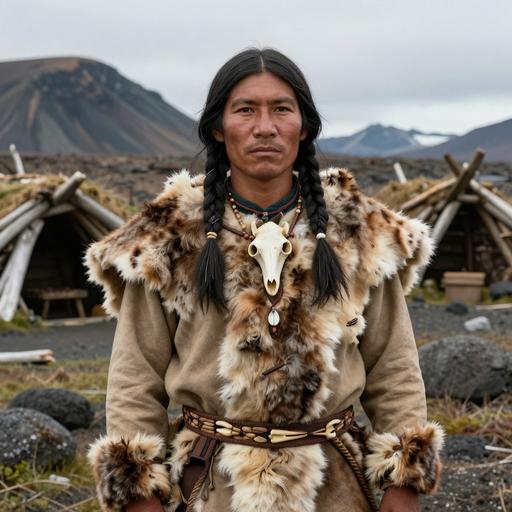
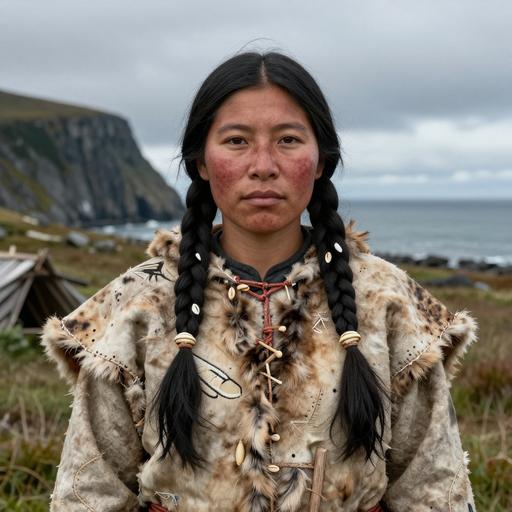
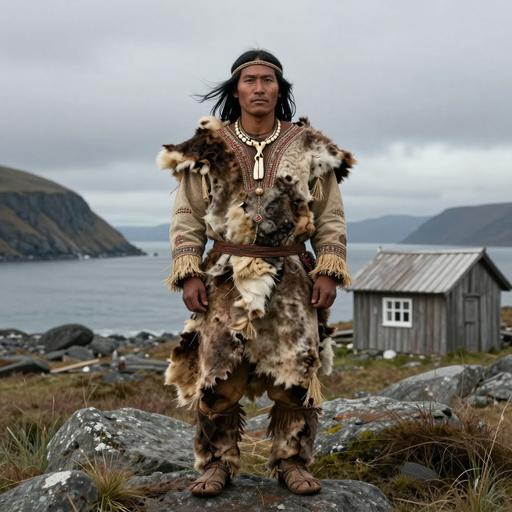
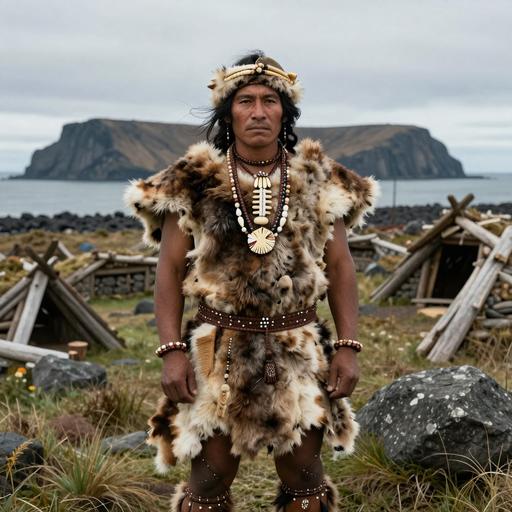
D2A1A is concentrated in the circumpolar region of northeastern Siberia and northern North America. Modern occurrences are highest among Inuit groups of Greenland and Alaska, Aleut (Unangan) communities, and Yupik-speaking populations of Siberia and Alaska. The clade also overlaps with lineages observed in archaeological contexts attributed to Paleo-Eskimo and later Neo-Eskimo (Thule) cultural phases, indicating continuity of maternal ancestry in some locales from the late Holocene to present.

Historical and Cultural Significance

The distribution and phylogenetic age of D2A1A fit models in which maternal lineages entered and diversified in the Beringia-to-Arctic corridor during the Holocene and were subsequently transmitted through maritime-adapted cultural traditions. Associations with archaeological cultures are plausible: D2A1 (the parent) appears in Paleo-Eskimo remains (e.g., Saqqaq), while later dispersals tied to Thule expansions (the ancestors of most modern Inuit) provide a mechanism for the wider spread and persistence of D2A1A. The clade illustrates how maternal founder effects, isolation, and population turnover shaped mtDNA diversity in high-latitude regions.

Conclusion

D2A1A is a regionally important maternal lineage within the D2a/D2A1 framework, emblematic of Holocene Arctic maternal ancestry. Its presence in modern Inuit, Aleut, and Siberian Yupik populations and appearance in ancient Arctic contexts underscores long-term continuity and the role of localized diversification following Beringian migrations. Continued ancient-DNA sampling and high-resolution mitogenome sequencing will refine the internal structure and precise chronology of this subclade.

Key Points

  • Origins and Evolution
  • Subclades
  • Geographical Distribution
  • Historical and Cultural Significance
  • Conclusion
Chapter II

Tree & Relationships

Phylogenetic context and subclades

Evolution Path

This haplogroup's evolutionary journey from its earliest ancestor to the present.

Steps Haplogroup Age Estimate Archaeology Era Time Passed Immediate Descendants Tested Modern Descendants Ancient Connections
1 D2A1A Current ~2,000 years ago 🏛️ Roman Period 2,000 years 0 0 14
2 D2A1 ~4,000 years ago 🔶 Bronze Age 4,500 years 1 0 0
3 D2a ~9,000 years ago 🌾 Neolithic 9,000 years 1 0 9
4 D2 ~20,000 years ago 🏹 Mesolithic 20,000 years 1 0 0
5 D ~45,000 years ago 🦴 Paleolithic 45,000 years 7 398 137
6 M ~60,000 years ago 🦴 Paleolithic 60,000 years 11 1,200 41
7 L3 ~70,000 years ago 🦴 Paleolithic 70,000 years 11 17,621 6
8 L ~160,000 years ago 🦴 Paleolithic 160,000 years 7 18,987 5

Subclades (0)

Terminal branch - no known subclades

Chapter III

Where in the World

Geographic distribution and modern presence

Place of Origin

Northeast Asia / Beringia

Modern Distribution

The populations where mtDNA haplogroup D2A1A is found include:

  1. Greenland Inuit
  2. Alaskan Inuit (Inupiat and Yupik)
  3. Aleut (Unangan)
  4. Siberian Yupik
  5. Chukchi and Koryak of northeastern Siberia
  6. Ancient Paleo-Eskimo individuals (e.g., Saqqaq)
  7. Indigenous groups of the Bering Strait region
CHAPTER IV

When in Time

Your haplogroup in the context of human history

~10k years ago

Neolithic Revolution

Agriculture begins, settled communities form

~5k years ago

Bronze Age

Metalworking, writing, and early civilizations

~3k years ago

Iron Age

Iron tools, expanded trade networks

~2k years ago

Classical Antiquity

Greek and Roman civilizations flourish

~2k years ago

Haplogroup D2A1A

Your mtDNA haplogroup emerged in Northeast Asia / Beringia

Northeast Asia / Beringia
Present

Present Day

Modern era

Your Haplogroup
Historical Era
Chapter IV-B

Linked Cultures

Ancient cultures associated with mtDNA haplogroup D2A1A

Cultural Heritage

These ancient cultures have been linked to haplogroup D2A1A based on matching ancient DNA samples from archaeological excavations. The presence of this haplogroup in these cultures provides insights into the migrations and population movements of populations carrying this haplogroup.

Neo-Aleut Culture Paleo-Aleut Culture Saqqaq
Culture assignments are based on archaeological context of ancient DNA samples and may represent regional associations during specific time periods.
Chapter V

Sample Catalog

14 direct carriers of haplogroup D2A1A

14 / 14 samples
Portrait Sample Country Era Date Culture mtDNA Match
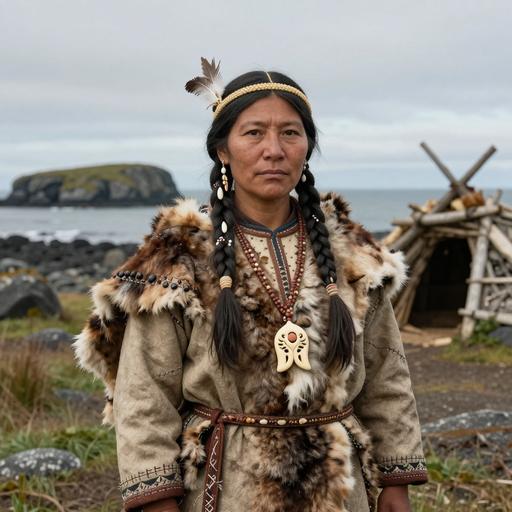
Portrait of ancient individual I0721 from USA, dated 350 BCE - 110 CE
I0721
USA Paleo-Aleut Culture, Alaska, USA 350 BCE - 110 CE Paleo-Aleut Culture D2a1a Direct
Portrait of ancient individual I0721 from USA, dated 350 BCE - 110 CE
I0721
USA Ancient Beringia 350 BCE - 110 CE D2a1a Direct
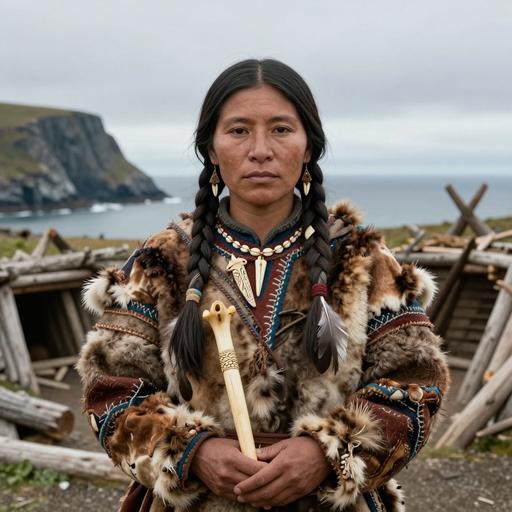
Portrait of ancient individual I0712 from USA, dated 690 CE - 1080 CE
I0712
USA Paleo-Aleut Culture, Alaska, USA 690 CE - 1080 CE Paleo-Aleut Culture D2a1a Direct
Portrait of ancient individual I1126 from USA, dated 730 CE - 1240 CE
I1126
USA Paleo-Aleut Culture, Alaska, USA 730 CE - 1240 CE Paleo-Aleut Culture D2a1a Direct
Portrait of ancient individual I1126 from USA, dated 730 CE - 1240 CE
I1126
USA Early Middle Age Beringia 730 CE - 1240 CE D2a1a Direct
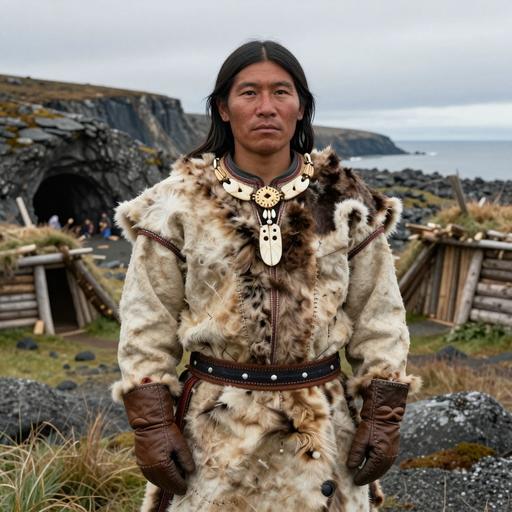
Portrait of ancient individual I1125 from USA, dated 1240 CE - 1510 CE
I1125
USA Neo-Aleut Culture, Alaska, USA 1240 CE - 1510 CE Neo-Aleut Culture D2a1a Direct
Portrait of ancient individual I0719 from USA, dated 1250 CE - 1640 CE
I0719
USA Paleo-Aleut Culture, Alaska, USA 1250 CE - 1640 CE Paleo-Aleut Culture D2a1a Direct
Portrait of ancient individual I0719 from USA, dated 1250 CE - 1640 CE
I0719
USA Ancient Beringia 1250 CE - 1640 CE D2a1a Direct
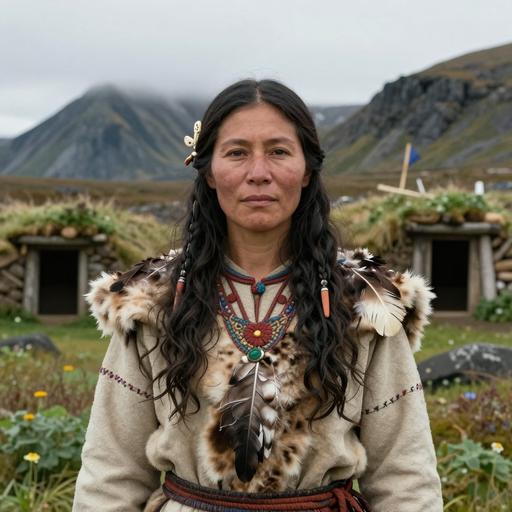
Portrait of ancient individual I1127 from USA, dated 1350 CE - 1680 CE
I1127
USA Neo-Aleut Culture, Alaska, USA 1350 CE - 1680 CE Neo-Aleut Culture D2a1a Direct
Portrait of ancient individual I1128 from USA, dated 1390 CE - 1700 CE
I1128
USA Neo-Aleut Culture, Alaska, USA 1390 CE - 1700 CE Neo-Aleut Culture D2a1a Direct
Chapter VI

Carrier Distribution Map

Geographic distribution of 14 ancient DNA samples (direct and subclade carriers of D2A1A)

Direct carrier
Time Period Filter
All Time Periods
Showing all samples
Chapter VII

Temporal Distribution

Distribution of carriers across archaeological periods

Chapter VIII

Geographic Distribution

Distribution by country of origin (direct and subclade carriers shown by default)

Chapter IX

Country × Era Distribution

Cross-tabulation of carrier countries and archaeological periods (direct and subclade carriers shown by default)

Data

Data & Provenance

Source information and data quality

Last Updated 2026-02-16
Confidence Score 50/100
Coverage Low
Data Source

We use the latest phylotree for MTDNA haplogroup classification and data.