The Story
The journey of mtDNA haplogroup D
Origins and Evolution
Haplogroup D is a well-established branch of the macro-haplogroup M (here placed under the intermediate M80'D node in some phylogenies). It most likely arose in Northeast/East Asia during the Upper Paleolithic, after the initial dispersal of macro-haplogroup M out of South Asia, and before or during the Last Glacial Maximum. Coalescence time estimates for major D lineages commonly fall in the range of roughly ~30–55 kya, and a reasonable central estimate for the origin of D is around ~45 kya. The clade diversified into multiple sublineages as human groups spread across Siberia, East Asia and, later, into the Americas via Beringia.
Subclades
Haplogroup D has several recognized subclades with distinct geographic and temporal patterns. Major groupings commonly reported in population studies include:
- D1 — strongly associated with many Native American populations and regarded as one of the maternal markers of the initial peopling of the Americas.
- D4 — a highly diverse and widely distributed subclade across East Asia and Siberia, with multiple downstream lineages (for example D4b, D4h and others) that show regional expansions in the Holocene.
- D2, D3, D5, D6 (and further subdivisions) — occur at varying frequencies across Northeast Asia, Siberia, Tibet and parts of Southeast Asia; some subclades show localization (for example certain D4 branches in Japan and the Russian Far East).
Different subclades carry geographic signatures used in phylogeographic reconstructions — for example, the D1 and some D4-derived lineages (e.g., D4h3a) have been highlighted in studies of early Native American maternal ancestry.
Geographical Distribution
Haplogroup D is most frequent in East Asia and parts of Siberia, with measurable presence across Northeast Asia, Central/Eastern Siberia, Mongolia, Japan and Korea. Important distributional features include:
- High frequencies and diversity in northern and eastern East Asian populations (e.g., northern Han, some Northeast Chinese groups, Korean populations).
- Significant presence in Japan, including links to Jomon-period remains (some ancient Jomon individuals carry D lineages) and modern Ainu and Japanese populations.
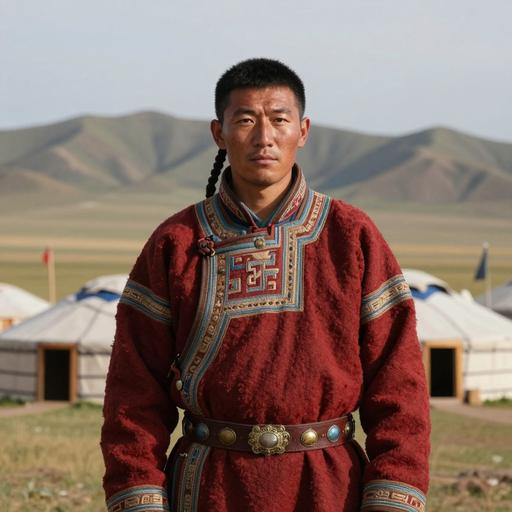
- Widespread representation in Siberian ethnic groups (Evenks, Yakuts, Tungusic groups), consistent with a long-standing presence in northern Eurasia.
- Presence among modern Tibetans and some highland groups, generally at lower frequencies compared with East Asian lowland populations.
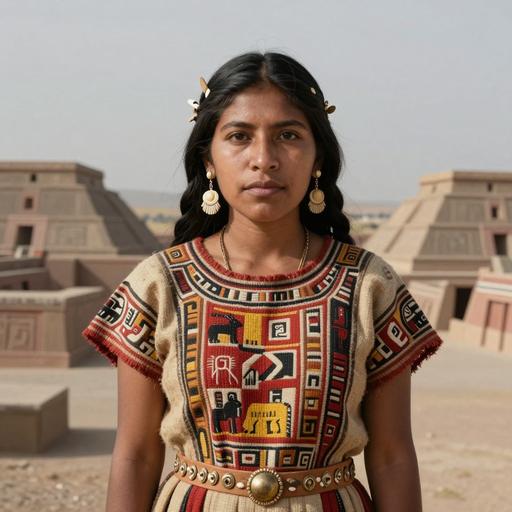
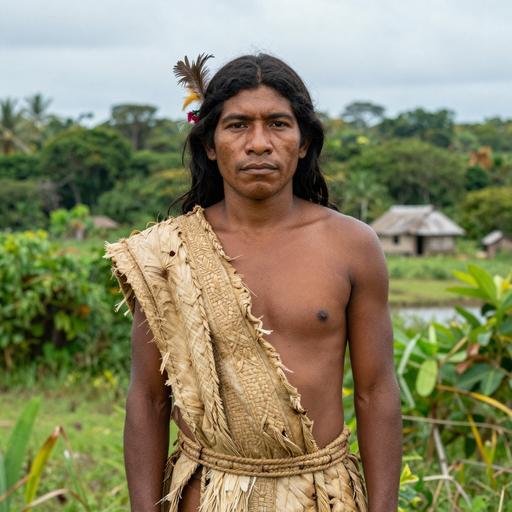
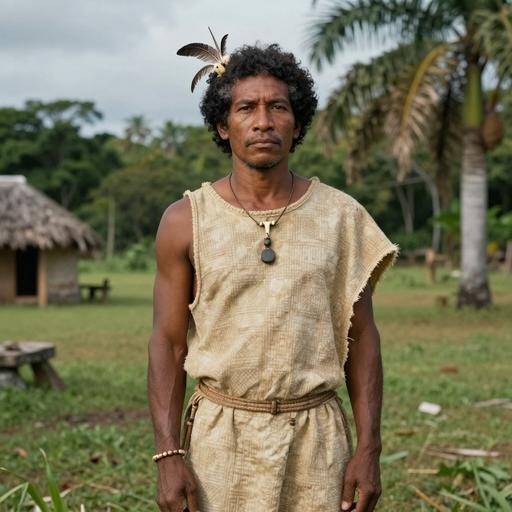
- Key subclades (notably D1 and some D4 branches such as D4h3a) are found among Indigenous peoples of the Americas, marking maternal lineages that entered the Americas across Beringia during the last glacial/interglacial transitions.
Historical and Cultural Significance
Haplogroup D has been used extensively in reconstructing prehistoric human migrations in northern Eurasia and the peopling of the Americas. Because some D subclades are found in ancient remains (e.g., Jomon period Japan, Paleosiberian remains) and in early Native American samples, D provides a mitochondrial record of Upper Paleolithic and later Holocene demography in East Asia and across Beringia. The distribution and internal diversity of D have been interpreted as reflecting:
- Early Upper Paleolithic settlement of Northeast Asia by M-descended maternal lineages.
- Postglacial and Holocene range expansions of hunter-gatherer and later farmer-associated populations within East Asia.
- One of the maternal lineages involved in the initial dispersal into the Americas, with subclades that likely crossed Beringia during the Late Pleistocene or early Holocene.
Although mtDNA alone does not provide a full demographic picture, haplogroup D, together with other East Eurasian mtDNA lineages (A, C, G, B), forms a coherent set of markers used to trace migration corridors, population continuity, and episodes of Replacement or admixture in prehistory.
Conclusion
mtDNA haplogroup D is a key maternal lineage for understanding human population history in Northeast Asia, Siberia and the Americas. Its deep Upper Paleolithic origin, diverse subclade structure, and presence in both ancient and modern populations make it an important marker for studies of migration, population continuity and the peopling of new regions. Ongoing ancient DNA and high-resolution mitogenome sequencing continue to refine the timing and geographic details of D's diversification and the movements of the peoples who carried it.
Key Points
- Origins and Evolution
- Subclades
- Geographical Distribution
- Historical and Cultural Significance
- Conclusion