Menu
Currency
mtDNA Haplogroup • Maternal Lineage

D2a

mtDNA Haplogroup D2a

~12,000 years ago
Northeast Asia / Siberia (Beringian nexus)
1 subclades
9 ancient samples
Scroll to explore
Chapter I

The Story

The journey of mtDNA haplogroup D2a

Origins and Evolution

mtDNA haplogroup D2a derives from haplogroup D2, itself a branch of the larger East Asian haplogroup D. Haplogroup D diversified in eastern Eurasia during the Late Pleistocene, and D2 lineages likely differentiated in northeastern Asia or Beringia during the terminal Pleistocene to early Holocene. D2a represents a downstream lineage that appears linked to populations involved in high‑latitude, postglacial expansions and maritime/shoreline adaptations around the North Pacific and Arctic margins.

Genetic dating for mtDNA clades is imprecise and depends on mutation rate models; however, molecular estimates and archaeological correlations suggest a coalescence for D2a on the order of the early Holocene (roughly 10–15 kya), consistent with movements of human groups into Beringia and the circumpolar zone as ice sheets retreated.

Subclades

D2a itself can contain further downstream subclades (for example, D2a1 and finer branches reported in updated Phylotree builds and population studies). The exact internal topology and names of these subclades continue to be refined as additional whole mitogenomes from Siberian, Arctic, and ancient Beringian contexts are published. Many reported sublineages are geographically restricted and can help trace local maternal founder events in Arctic and subarctic groups.

Geographical Distribution

D2a is most commonly reported in populations of northeastern Siberia and in circumpolar indigenous groups of the North American Arctic and North Pacific Rim. Ancient DNA has documented D2a lineages in Paleo‑Eskimo remains (for example, Saqqaq‑period individuals), providing direct evidence of its presence in Arctic migrations several thousand years ago. Modern occurrences are concentrated among Siberian groups (e.g., Chukotkan and neighboring peoples), some Yakut and Evenk samples in certain studies, and among Arctic peoples such as Aleut and some Inuit groups at low to moderate frequencies. Sporadic, low‑frequency occurrences in nearby East Asian populations have also been reported but are less common.

Historical and Cultural Significance

The occurrence of D2a in ancient Paleo‑Eskimo genomes (notably in Saqqaq individuals from Greenland circa 4 kya) ties this haplogroup to prehistoric Arctic expansions and to cultural adaptations associated with maritime hunting and ice‑edge economies. In modern populations, D2a lineages can mark maternal continuity or founder events tied to small, mobile communities in high latitudes. Because mtDNA tracks strictly maternal inheritance, the distribution of D2a complements archaeological and linguistic evidence for population movements across Beringia and along northern coastal corridors.

Conclusion

mtDNA D2a is an informative maternal lineage for reconstructing postglacial human population dynamics in the Northeast Asian–Beringian–Arctic region. While it is not among the most globally common mtDNA clades, its presence in both ancient and modern high‑latitude samples makes it a valuable marker for studies of Arctic prehistory, founder effects, and maternal population structure. Ongoing mitogenome sequencing and ancient DNA sampling continue to refine the subclade structure, geographic specificity, and timing of D2a's diversification.

Key Points

  • Origins and Evolution
  • Subclades
  • Geographical Distribution
  • Historical and Cultural Significance
  • Conclusion
Chapter II

Tree & Relationships

Phylogenetic context and subclades

Evolution Path

This haplogroup's evolutionary journey from its earliest ancestor to the present.

Steps Haplogroup Age Estimate Archaeology Era Time Passed Immediate Descendants Tested Modern Descendants Ancient Connections
1 D2a Current ~12,000 years ago 🌾 Neolithic 12,000 years 1 0 9
2 D2A'B 1 0 0
3 D2 ~20,000 years ago 🏹 Mesolithic 20,000 years 1 0 0
4 D4E1 ~8,000 years ago 🌾 Neolithic 8,000 years 2 4 0
5 D4E1'3 2 6 0
6 D4E ~15,000 years ago 🏹 Mesolithic 15,000 years 4 8 18
7 D4 ~25,000 years ago 🦴 Paleolithic 25,000 years 14 435 19
8 D ~45,000 years ago 🦴 Paleolithic 45,000 years 4 514 137
9 M80'D 2 518 0
10 M ~60,000 years ago 🦴 Paleolithic 60,000 years 42 2,162 41
11 L3 ~70,000 years ago 🦴 Paleolithic 70,000 years 7 23,542 6
12 L3'4 2 23,581 0
13 L3'4'6 2 23,584 0
14 L2'3'4'6 2 24,475 0
15 L2'3'4'5'6'7 2 24,488 0
16 L1'2'3'4'5'6'7 2 24,903 0
17 L ~160,000 years ago 🦴 Paleolithic 160,000 years 2 25,205 5
Chapter III

Where in the World

Geographic distribution and modern presence

Place of Origin

Northeast Asia / Siberia (Beringian nexus)

Modern Distribution

The populations where mtDNA haplogroup D2a is found include:

  1. Indigenous peoples of Northeastern Siberia (e.g., Chukchi, Koryak, some Yakut and Evenk samples)
  2. Arctic indigenous groups of the North American Arctic and Aleutian region (Aleut, some Inuit groups)
  3. Ancient Paleo‑Eskimo / Saqqaq individuals from Greenland and related ancient Arctic cultures
  4. Coastal populations of the North Pacific Rim at low to moderate frequencies
  5. Occasional low‑frequency reports in nearby Northeast Asian populations (northern Japan, Korea) pending broader sampling
CHAPTER IV

When in Time

Your haplogroup in the context of human history

~12k years ago

Haplogroup D2a

Your mtDNA haplogroup emerged in Northeast Asia / Siberia (Beringian nexus)

Northeast Asia / Siberia (Beringian nexus)
~10k years ago

Neolithic Revolution

Agriculture begins, settled communities form

~5k years ago

Bronze Age

Metalworking, writing, and early civilizations

~3k years ago

Iron Age

Iron tools, expanded trade networks

~2k years ago

Classical Antiquity

Greek and Roman civilizations flourish

Present

Present Day

Modern era

Your Haplogroup
Historical Era
Chapter IV-B

Linked Cultures

Ancient cultures associated with mtDNA haplogroup D2a

Cultural Heritage

These ancient cultures have been linked to haplogroup D2a based on matching ancient DNA samples from archaeological excavations. The presence of this haplogroup in these cultures provides insights into the migrations and population movements of populations carrying this haplogroup.

Agin-Buryat Culture Early Avar Magadan Culture Middle Dorset Neo-Aleut Culture Okhotsk Culture Saqqaq Xiongnu
Culture assignments are based on archaeological context of ancient DNA samples and may represent regional associations during specific time periods.
Chapter V

Sample Catalog

9 subclade carriers of haplogroup D2a (no exact D2a samples sequenced yet)

9 / 9 samples
Portrait Sample Country Era Date Culture mtDNA Match
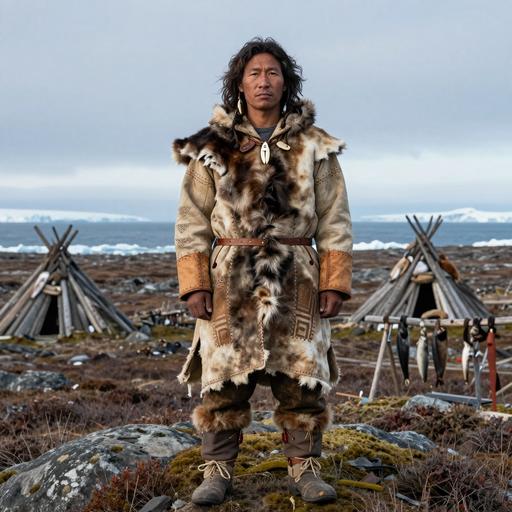
Portrait of ancient individual I10427 from Canada, dated 50 CE - 340 CE
I10427
Canada Middle Dorset Culture, Canada 50 CE - 340 CE Middle Dorset D2a1 Downstream
Portrait of ancient individual I10427 from Canada, dated 50 CE - 340 CE
I10427
Canada The First Peoples of North America 50 CE - 340 CE D2a1 Downstream
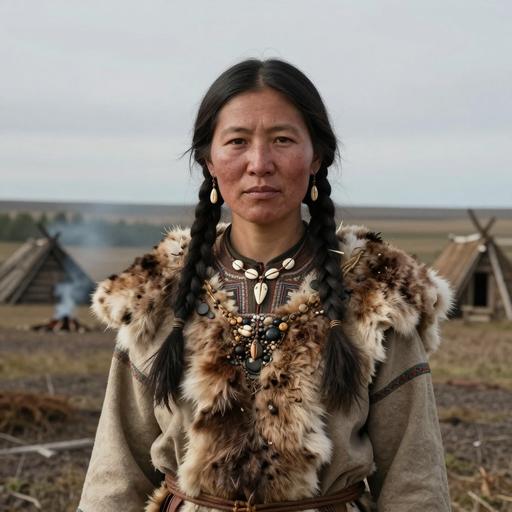
Portrait of ancient individual M0831 from Russia, dated 1300 BCE - 900 BCE
M0831
Russia Bronze Age Okhotsk Culture of Magadan 1300 BCE - 900 BCE Okhotsk Culture D2a1 Downstream
Portrait of ancient individual I11278 from Russia, dated 1300 BCE - 900 BCE
I11278
Russia Bronze Age Yakutia 1300 BCE - 900 BCE D2a1 Downstream
Portrait of ancient individual I11278 from Russia, dated 1300 BCE - 900 BCE
I11278
Russia Magadan Bronze Age 1300 BCE - 900 BCE Magadan Culture D2a1 Downstream
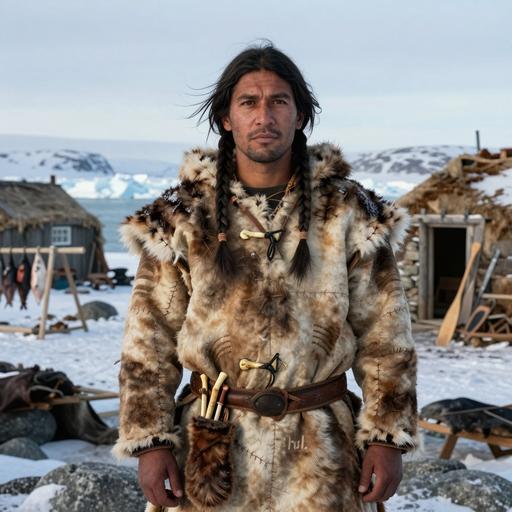
Portrait of ancient individual Inuk from Greenland, dated 2220 BCE - 1650 BCE
Inuk
Greenland The Saqqaq Culture of Greenland 2220 BCE - 1650 BCE Saqqaq D2a1 Downstream
Portrait of ancient individual Inuk from Greenland, dated 2220 BCE - 1650 BCE
Inuk
Greenland The Saqqaq Culture of Greenland 2220 BCE - 1650 BCE Saqqaq D2a1* Downstream
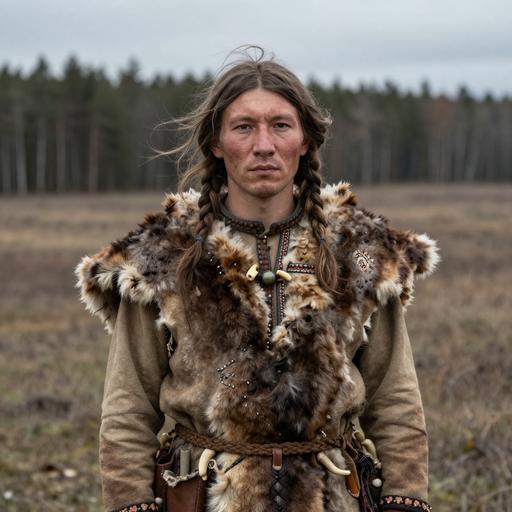
Portrait of ancient individual brn002 from Russia, dated 4233 BCE - 3987 BCE
brn002
Russia Neolithic Trans-Baikal, Siberia 4233 BCE - 3987 BCE D2a'b Downstream
Portrait of ancient individual brn002 from Russia, dated 4233 BCE - 3987 BCE
brn002
Russia Neolithic Agin-Buryat, Russia 4233 BCE - 3987 BCE Agin-Buryat Culture D2a'b Downstream
Chapter VI

Carrier Distribution Map

Geographic distribution of 9 ancient DNA samples (direct and subclade carriers of D2a)

Subclade carrier
Time Period Filter
All Time Periods
Showing all samples
Chapter VII

Temporal Distribution

Distribution of carriers across archaeological periods

Chapter VIII

Geographic Distribution

Distribution by country of origin (direct and subclade carriers shown by default)

Chapter IX

Country × Era Distribution

Cross-tabulation of carrier countries and archaeological periods (direct and subclade carriers shown by default)

Data

Data & Provenance

Source information and data quality

Last Updated 2026-06-14
Data Source

We use the latest phylotree for MTDNA haplogroup classification and data.