Menu
mtDNA Haplogroup • Maternal Lineage

H55

mtDNA Haplogroup H55

~6,000 years ago
Near East / Anatolia
1 subclades
Scroll to explore
Chapter I

The Story

The journey of mtDNA haplogroup H55

Origins and Evolution

H55 is a derived subclade within haplogroup H5, itself a branch of the broadly distributed European/West Asian maternal lineage H. Based on the phylogenetic position of H55 as a descendant of H5 and the geographic distribution of close relatives, H55 most plausibly arose in the Near East or Anatolia during the later Neolithic to early Bronze Age (roughly ~5–6 kya). Its emergence postdates the initial Late Glacial and early Neolithic expansions associated with older H lineages and instead likely reflects a later, regionally restricted diversification within the H5 clade.

Genetic evidence (low modern frequencies and a small number of matching ancient genomes) indicates H55 has a relatively shallow coalescence time compared with deeper H subclades, consistent with a local founder or series of founder events after the initial spread of H5-bearing populations into Europe.

Subclades (if applicable)

At present H55 appears to be a small lineage with limited internal branching documented in modern and ancient datasets. Where further sequencing has been done, H55 may show a few downstream variants confined to particular regions (for example, island or peninsular Mediterranean populations), but no major, widely distributed subclade equivalent to H5a has been established for H55 in published literature. Continued high-resolution mtDNA sequencing and ancient DNA sampling could reveal finer substructure and help time expansions more precisely.

Geographical Distribution

H55 is observed at low overall frequency and is concentrated primarily around the eastern Mediterranean and neighboring parts of Europe. Modern detections and the handful of ancient occurrences place it most commonly in:

  • Southern Europe (Italy, Greece, some Mediterranean islands) at low to moderate local frequencies in certain populations
  • Anatolia and the Levant at low to moderate frequencies consistent with a Near Eastern origin
  • Western Europe and the Balkans at low frequencies, typically as scattered occurrences rather than population-wide prevalence
  • The Caucasus and North Africa at very low frequencies in some surveys

Its pattern is therefore consistent with a lineage that diversified near the Near East/Anatolia and was carried westward into Europe by later Neolithic and post‑Neolithic movements, with occasional founder events producing slightly elevated local frequencies.

Historical and Cultural Significance

Because H55 is relatively rare, it is not strongly diagnostic of any single archaeological culture, but its spatiotemporal pattern aligns with several major demographic processes:

  • Neolithic/post‑Neolithic farmer dispersals: H55 likely arose after the principal wave of Anatolian farmer expansion but may have been carried into Europe by later farmer or mixed farmer‑forager populations in the Neolithic and Chalcolithic.
  • Bronze Age mobility: Small-scale movements and trade networks in the Bronze Age could have redistributed H55 lineages within the eastern Mediterranean and into southern Europe.
  • Local founder effects: Insular and peninsular populations (islands, coastal enclaves) sometimes show slightly elevated frequencies reflecting drift and founder events rather than large-scale replacements.

Ancient DNA traces (a small number of archaeological individuals) demonstrate H55 existed in past populations, but the limited ancient sample size means cultural associations remain tentative and are best interpreted alongside autosomal and archaeological context.

Conclusion

mtDNA H55 is a minor but informative branch of H5 that illustrates the continuing diversification of maternal lineages after the main post‑glacial and early Neolithic expansions. Its Near Eastern/Anatolian origin and later, patchy presence in southern and adjacent parts of Europe are compatible with dispersal by post‑Neolithic demographic processes and localized founder effects. Further targeted mitogenome sequencing and recovery of ancient genomes will be required to refine its age, internal structure, and precise migratory history.

Key Points

  • Origins and Evolution
  • Subclades (if applicable)
  • Geographical Distribution
  • Historical and Cultural Significance
  • Conclusion
Chapter II

Tree & Relationships

Phylogenetic context and subclades

Evolution Path

This haplogroup's evolutionary journey from its earliest ancestor to the present.

Steps Haplogroup Age Estimate Archaeology Era Time Passed Immediate Descendants Tested Modern Descendants Ancient Connections
1 H55 Current ~6,000 years ago 🪨 Chalcolithic 5,500 years 1 1 0
2 H5 ~12,000 years ago 🌾 Neolithic 12,000 years 21 424 23
3 H ~25,000 years ago 🦴 Paleolithic 25,000 years 9 6,551 991
4 HV ~30,000 years ago 🦴 Paleolithic 30,000 years 10 7,905 228
5 R ~60,000 years ago 🦴 Paleolithic 60,000 years 12 10,987 57
6 N ~60,000 years ago 🦴 Paleolithic 60,000 years 15 15,452 13
7 L3 ~70,000 years ago 🦴 Paleolithic 70,000 years 11 17,621 6
8 L ~160,000 years ago 🦴 Paleolithic 160,000 years 7 18,987 5
Chapter III

Where in the World

Geographic distribution and modern presence

Place of Origin

Near East / Anatolia

Modern Distribution

The populations where MTDNA haplogroup H55 is found include:

  1. Southern European populations (Italy, Greece, some Mediterranean islands)
  2. Western European populations (France, Iberia at low frequencies)
  3. Eastern European and Balkan populations (Balkans, Poland, Ukraine at low frequencies)
  4. Near Eastern and Anatolian populations (Turkey, Levant)
  5. Caucasus populations (Armenia, Georgia, Azerbaijan at very low frequencies)
  6. Jewish communities (observed at low frequency in some survey datasets)
  7. North African populations (Maghreb, at very low frequencies)
  8. Scattered detections in parts of Central Mediterranean and maritime trading hubs
CHAPTER IV

When in Time

Your haplogroup in the context of human history

~10k years ago

Neolithic Revolution

Agriculture begins, settled communities form

~5k years ago

Haplogroup H55

Your mtDNA haplogroup emerged in Near East / Anatolia

Near East / Anatolia
~5k years ago

Bronze Age

Metalworking, writing, and early civilizations

~3k years ago

Iron Age

Iron tools, expanded trade networks

~2k years ago

Classical Antiquity

Greek and Roman civilizations flourish

Present

Present Day

Modern era

Your Haplogroup
Historical Era
Chapter IV-B

Linked Cultures

Ancient cultures associated with mtDNA haplogroup H55

Cultural Heritage

These ancient cultures have been linked to haplogroup H55 based on matching ancient DNA samples from archaeological excavations. The presence of this haplogroup in these cultures provides insights into the migrations and population movements of populations carrying this haplogroup.

Alföld Linear Pottery Anatolian Neolithic Avar Bulgarian EIA Gumelnița Körös Culture Krepost Culture La Tene Culture Linear Pottery Culture Malak Preslavets Culture Serbian Neolithic Starčevo Culture
Culture assignments are based on archaeological context of ancient DNA samples and may represent regional associations during specific time periods.
Chapter V

Sample Catalog

4 direct carriers and 1 subclade carrier of haplogroup H55

5 / 5 samples
Portrait Sample Country Era Date Culture mtDNA Match
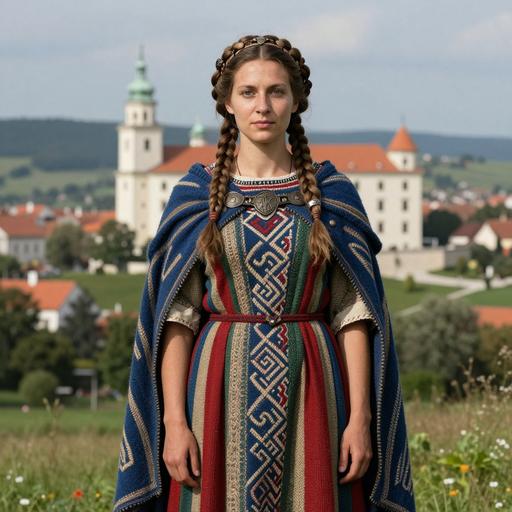
Portrait of ancient individual I11716 from Slovakia, dated 167 BCE - 46 BCE
I11716
Slovakia The La Tene Culture in Slovakia 167 BCE - 46 BCE La Tene Culture H55+153 Direct
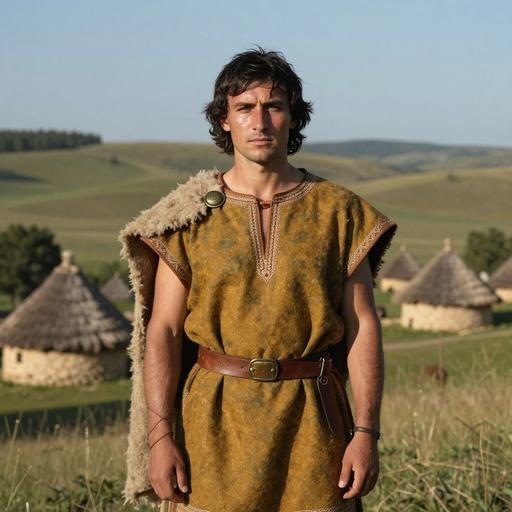
Portrait of ancient individual RKF110 from Hungary, dated 580 CE - 720 CE
RKF110
Hungary Early Middle Avar Period 580 CE - 720 CE Avar H55 Direct
Portrait of ancient individual I19495 from Bulgaria, dated 1100 BCE - 500 BCE
I19495
Bulgaria Early Iron Age Bulgaria 1100 BCE - 500 BCE Bulgarian EIA H55+153 Direct
Portrait of ancient individual I7869 from Serbia, dated 5205 BCE - 4852 BCE
I7869
Serbia Middle Neolithic Serbia 5205 BCE - 4852 BCE Serbian Neolithic H55 Direct
Portrait of ancient individual Log02 from Greece, dated 2600 BCE - 2000 BCE
Log02
Greece Middle Bronze Age Logkas, Greece 2600 BCE - 2000 BCE Logkas Culture H55a Downstream
Chapter VI

Carrier Distribution Map

Geographic distribution of 5 ancient DNA samples (direct and subclade carriers of H55)

Direct carrier Subclade carrier
Time Period Filter
All Time Periods
Showing all samples
Chapter VII

Temporal Distribution

Distribution of carriers across archaeological periods

Chapter VIII

Geographic Distribution

Distribution by country of origin (direct and subclade carriers shown by default)

Chapter IX

Country × Era Distribution

Cross-tabulation of carrier countries and archaeological periods (direct and subclade carriers shown by default)

Data

Data & Provenance

Source information and data quality

Last Updated 2026-02-16
Confidence Score 50/100
Coverage Low
Data Source

We use the latest phylotree for MTDNA haplogroup classification and data.