Menu
Currency
mtDNA Haplogroup • Maternal Lineage

H54

mtDNA Haplogroup H54

~12,000 years ago
Western Eurasia
0 subclades
Scroll to explore
Chapter I

The Story

The journey of mtDNA haplogroup H54

Origins and Evolution

mtDNA haplogroup H54 is an internal branch of the H macro-haplogroup, transmitted maternally and nested under an intermediate HF clade. H as a whole expanded strongly in Europe after the Last Glacial Maximum, and many of its downstream subclades reflect post-glacial and early Holocene demographic processes. Given its phylogenetic position within HF and the broader distribution patterns of H, H54 most plausibly arose in Western Eurasia during the Early Holocene (roughly 10–15 kya) as a localized derivative of the major H expansion; however, formal coalescence dating and dense regional sampling are needed to confirm this estimate.

Subclades (if applicable)

H54 is currently characterized as a relatively terminal or low-diversity branch in published phylogenies and sequence databases. There is limited documentation of well-differentiated downstream subclades assigned to H54, which suggests either a recent origin with limited diversification or undersampling in the populations where it occurs. As more mitogenomes are sequenced from understudied regions, additional internal structure of H54 may be discovered.

Geographical Distribution

Published mtDNA surveys and public mitogenome repositories indicate that most rare H subclades cluster in Western, Southern and Near Eastern Eurasia, consistent with the distribution of many H derivatives. H54 appears to be rare and patchily distributed, with occasional occurrences or sequence matches reported from Mediterranean and adjacent regions. Because H subclades can be geographically localized, H54 likely shows a focused but sparse presence rather than wide, high-frequency coverage.

Historical and Cultural Significance

Because H54 is low-frequency in modern datasets, its signal in ancient DNA and archaeological contexts is currently limited. Nevertheless, reasonable inferences can be made from the behaviour of related H lineages: H subclades were carried both by post-glacial hunter-gatherers and by early Neolithic farmers from Anatolia and the Near East, and later by populations associated with Bronze Age cultural horizons. H54 may therefore have been present among small regional groups through the Neolithic and Bronze Age periods, contributing to maternal diversity without becoming a major expanding lineage.

Specific archaeological cultures that have yielded diverse H lineages include Neolithic Anatolian/Levantine farmer groups and a variety of European farmer and post-Neolithic assemblages (e.g., Bell Beaker and Corded Ware contexts show many H variants in different regions). Until targeted ancient-DNA matches to H54 are confirmed, direct cultural attributions remain provisional.

Conclusion

mtDNA H54 should be viewed as a rare, regionally-focused descendant of the major H expansion in Western Eurasia during the Early Holocene. Its low observed frequency reflects either a recent/ localized origin or undersampling of the populations that carried it. Resolving its time-depth, precise geographic origin, and demographic role will require more complete mitogenome sequencing from Mediterranean, Near Eastern, and adjacent European populations as well as screening of archaeogenetic datasets for diagnostic H54 motifs.

Note: statements about timing and distribution are informed inference based on the phylogenetic position of H54 within the H/HF framework and on general population-genetic patterns of mtDNA H; they should be updated when new sequence data and formal coalescent dates become available.

Key Points

  • Origins and Evolution
  • Subclades (if applicable)
  • Geographical Distribution
  • Historical and Cultural Significance
  • Conclusion
Chapter II

Tree & Relationships

Phylogenetic context and subclades

Evolution Path

This haplogroup's evolutionary journey from its earliest ancestor to the present.

Steps Haplogroup Age Estimate Archaeology Era Time Passed Immediate Descendants Tested Modern Descendants Ancient Connections
1 H54 Current ~12,000 years ago 🌾 Neolithic 12,000 years 0 0 0
2 HF 1 0 0
3 H ~25,000 years ago 🦴 Paleolithic 25,000 years 78 7,089 991
4 HV ~30,000 years ago 🦴 Paleolithic 30,000 years 14 8,468 228
5 R0 ~15,000 years ago 🏹 Mesolithic 15,000 years 2 8,603 4
6 R ~55,000 years ago 🦴 Paleolithic 55,000 years 17 17,854 57
7 NA 1 17,854 0
8 N ~60,000 years ago 🦴 Paleolithic 60,000 years 16 20,371 13
9 L3 ~70,000 years ago 🦴 Paleolithic 70,000 years 7 23,542 6
10 L3'4 2 23,581 0
11 L3'4'6 2 23,584 0
12 L2'3'4'6 2 24,475 0
13 L2'3'4'5'6'7 2 24,488 0
14 L1'2'3'4'5'6'7 2 24,903 0
15 L ~160,000 years ago 🦴 Paleolithic 160,000 years 2 25,205 5

Subclades (0)

Terminal branch - no known subclades

Chapter III

Where in the World

Geographic distribution and modern presence

Place of Origin

Western Eurasia

Modern Distribution

The populations where mtDNA haplogroup HF haplogroup H54 is found include:

  1. Western European populations (sporadic reports and sequence matches)
  2. Southern European / Mediterranean populations (Italy, Iberia, Greece — rare occurrences)
  3. Anatolia / Near East (possible low-frequency presence linked to Holocene farmer expansions)
  4. Caucasus-adjacent groups (isolated or low-frequency observations plausible)
  5. Modern populations with Mediterranean ancestry in North Africa (rare or regionally localized)
  6. Undersampled rural and island populations in Western Eurasia (potential reservoirs for rare lineages)
CHAPTER IV

When in Time

Your haplogroup in the context of human history

~12k years ago

Haplogroup H54

Your mtDNA haplogroup emerged in Western Eurasia

Western Eurasia
~10k years ago

Neolithic Revolution

Agriculture begins, settled communities form

~5k years ago

Bronze Age

Metalworking, writing, and early civilizations

~3k years ago

Iron Age

Iron tools, expanded trade networks

~2k years ago

Classical Antiquity

Greek and Roman civilizations flourish

Present

Present Day

Modern era

Your Haplogroup
Historical Era
Chapter IV-B

Linked Cultures

Ancient cultures associated with mtDNA haplogroup H54

Cultural Heritage

These ancient cultures have been linked to haplogroup H54 based on matching ancient DNA samples from archaeological excavations. The presence of this haplogroup in these cultures provides insights into the migrations and population movements of populations carrying this haplogroup.

Alföld Linear Pottery Anatolian Neolithic Gumelnița Körös Culture Krepost Culture Linear Pottery Culture Malak Preslavets Culture Norse Greenland Starčevo Culture
Culture assignments are based on archaeological context of ancient DNA samples and may represent regional associations during specific time periods.
Chapter V

Sample Catalog

4 direct carriers of haplogroup H54

4 / 4 samples
Portrait Sample Country Era Date Culture mtDNA Match
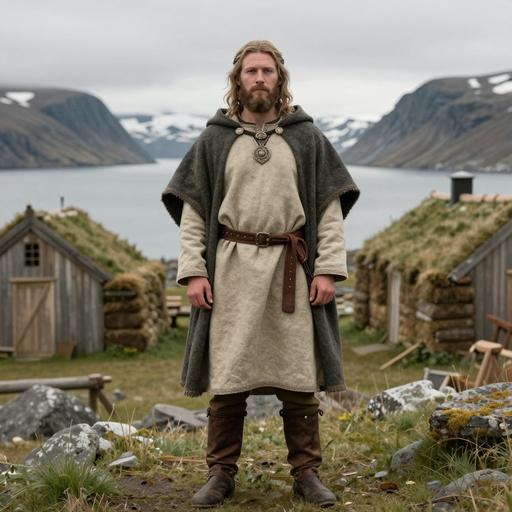
Portrait of ancient individual VK75 from Greenland, dated 893 CE - 1155 CE
VK75
Greenland Late Norse Greenland 893 CE - 1155 CE Norse Greenland H54 Direct
Portrait of ancient individual VK75 from Greenland, dated 893 CE - 1155 CE
VK75
Greenland The Viking Age 893 CE - 1155 CE H54 Direct
Portrait of ancient individual VK189 from Greenland, dated 1168 CE - 1271 CE
VK189
Greenland Late Norse Greenland 1168 CE - 1271 CE Norse Greenland H54 Direct
Portrait of ancient individual VK189 from Greenland, dated 1168 CE - 1271 CE
VK189
Greenland The Viking Age 1168 CE - 1271 CE H54 Direct
Chapter VI

Carrier Distribution Map

Geographic distribution of 4 ancient DNA samples (direct and subclade carriers of H54)

Direct carrier
Time Period Filter
All Time Periods
Showing all samples
Chapter VII

Temporal Distribution

Distribution of carriers across archaeological periods

Chapter VIII

Geographic Distribution

Distribution by country of origin (direct and subclade carriers shown by default)

Chapter IX

Country × Era Distribution

Cross-tabulation of carrier countries and archaeological periods (direct and subclade carriers shown by default)

Data

Data & Provenance

Source information and data quality

Last Updated 2026-06-14
Confidence Score 50/100
Coverage Low
Data Source

We use the latest phylotree for MTDNA haplogroup classification and data.