

Ancient DNA Reveals the Avar Woman Who Looked East
New ancient DNA from a Kunpeszér burial shows the earliest Avar elite in Hungary carried strong Northeast Asian ancestry, reshaping ideas about migration and identity.


Expert articles, research insights, and the latest in genetic science. Stay informed with our team's discoveries.
New ancient DNA from a Kunpeszér burial shows the earliest Avar elite in Hungary carried strong Northeast Asian ancestry, reshaping ideas about migration and identity.
Explore how Y-chromosome and mitochondrial DNA reveal a striking paternal and maternal split in Latin America, with the Andes showing the strongest Native American continuity.
The Global Ancient Composition Report has been significantly refreshed for September 2026, with a larger and newly curated ancient reference dataset covering more regions and historical periods worldwide. The update expands the pool of ancient individuals used across closest-match results, mixture models, composite profiles, the interactive map, and PCA analysis. This broader coverage may surface new matches, refine existing estimates, and provide a more complete view of genetic similarity from the Paleolithic through the Early Modern era. If you have run the report before, we recommend revisiting your results to see what has changed. As always, these results indicate genetic similarity to ancient reference populations and individuals; they do not constitute proof of direct genealogical descent.
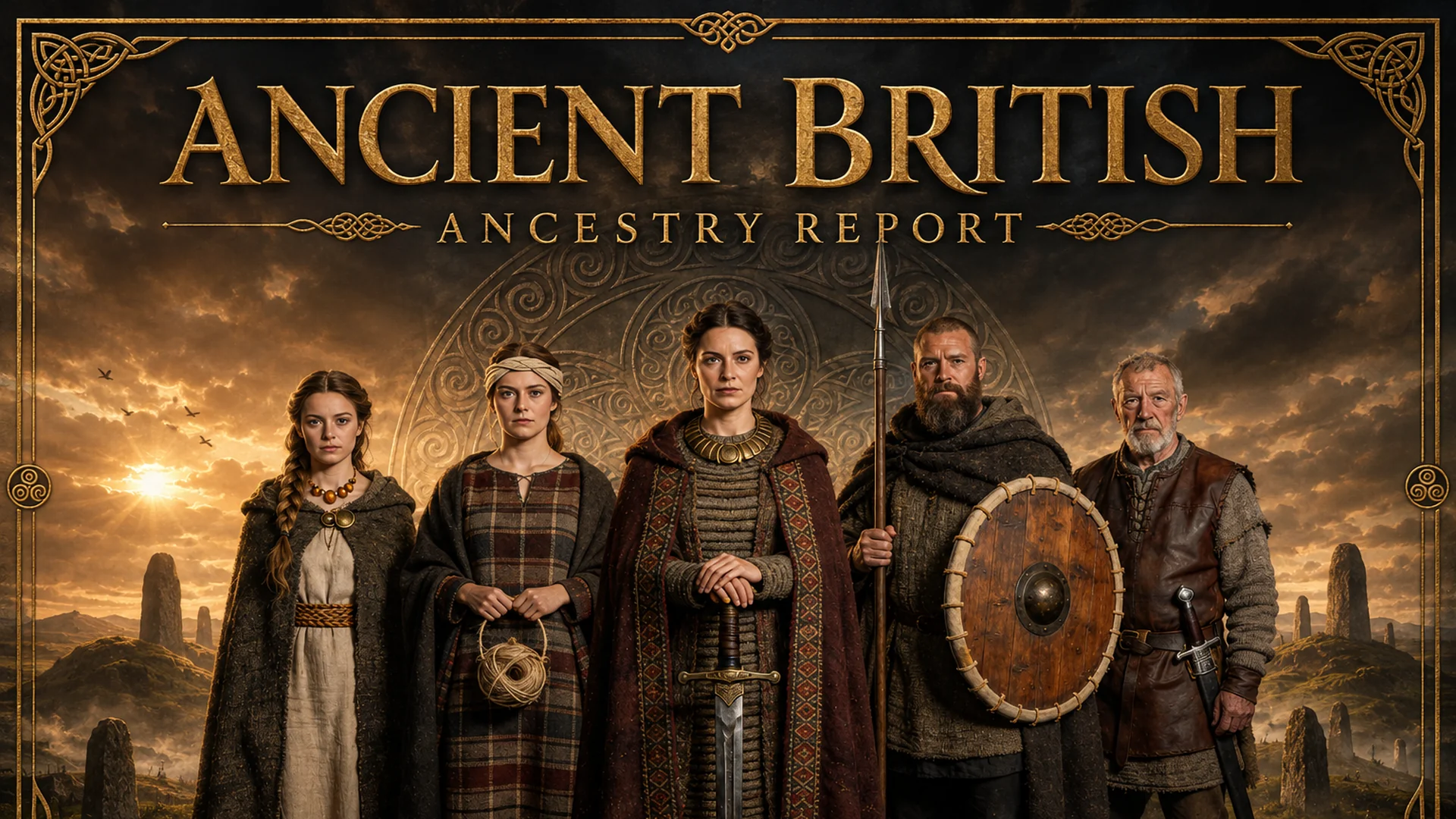
DNAGENICS launches a new regional ancient DNA report covering England, Scotland, Wales, and Ireland. Match your genome against 500 archaeological samples across nine cultural periods, from Mesolithic hunter-gatherers to Medieval populations.
Explore how genetic traits shape who we are, how they connect to ancestry, and why environment matters alongside DNA. A balanced, accessible guide for all readers.
Compare four leading consumer DNA tests, learn how they work, and discover how uploading your raw DNA to DNAGENICS unlocks 500+ ancestry reports and traits.

G25 coordinates provide a compact, multidimensional view of how your DNA sits relative to reference populations in genetic space. Learn how they work, how to interpret distances, and why they are exploratory tools—not definitive ancestry labels.
ADMIXTURE analysis models genome-wide SNP data as mixtures of inferred components to reveal population structure. Learn how it works, how to interpret results, and why it is not a direct ancestry report.

Learn how to access and download your raw FASTQ files from the tellmeGen Ultra 30x WGS test, with practical tips on formats, storage, and when to use FASTQ versus VCF.
This document explains the configuration options available in G25 Studio in plain language. It covers the Monte Carlo algorithms, the Oracle (Ancestors Predictions) system, distance methods, and distance weights. Read this after you have completed at least one basic run.
This guide is for people who are new to G25 coordinates and G25 Studio. It explains the ideas in plain language, walks through a simple first analysis, and points you to deeper documentation when you are ready.