


How Spanish Are Filipinos? DNA After 333 Years of Rule
Spanish rule transformed Filipino culture, but genetics tells a different story. Explore what DNA studies reveal about Spanish ancestry, migration and the Philippines.
Read articleDNA Genics / Journal
Ideas, research and practical guides to help you make sense of DNA analysis and genetic similarity.
The journal
Showing 37-48 of 307
Spanish rule transformed Filipino culture, but genetics tells a different story. Explore what DNA studies reveal about Spanish ancestry, migration and the Philippines.
Read article
Southern Italian DNA is often closer to Greek reference populations than northern Italian DNA, but ancient genomes reveal a layered history beyond Greek colonization.
Read article
Afrikaner DNA is predominantly northwestern European, with smaller South Asian, African and Khoe-San signals reflecting Cape Colony history and migration.
Read article
Ancient DNA, Y chromosomes and population genetics reveal how Roman-era migration, Slavic settlement and Balkan ancestry shaped modern Romanians.
Read article
Ancient DNA from Bronze Age Levant sites shows strong continuity with modern Lebanese, Syrians, Palestinians, and Jordanians, reshaping ancestry history.
Read article
Ancient DNA and radiocarbon dating show that Europe’s megaliths likely began in Brittany and spread by sea, built by Neolithic farming communities.
Read article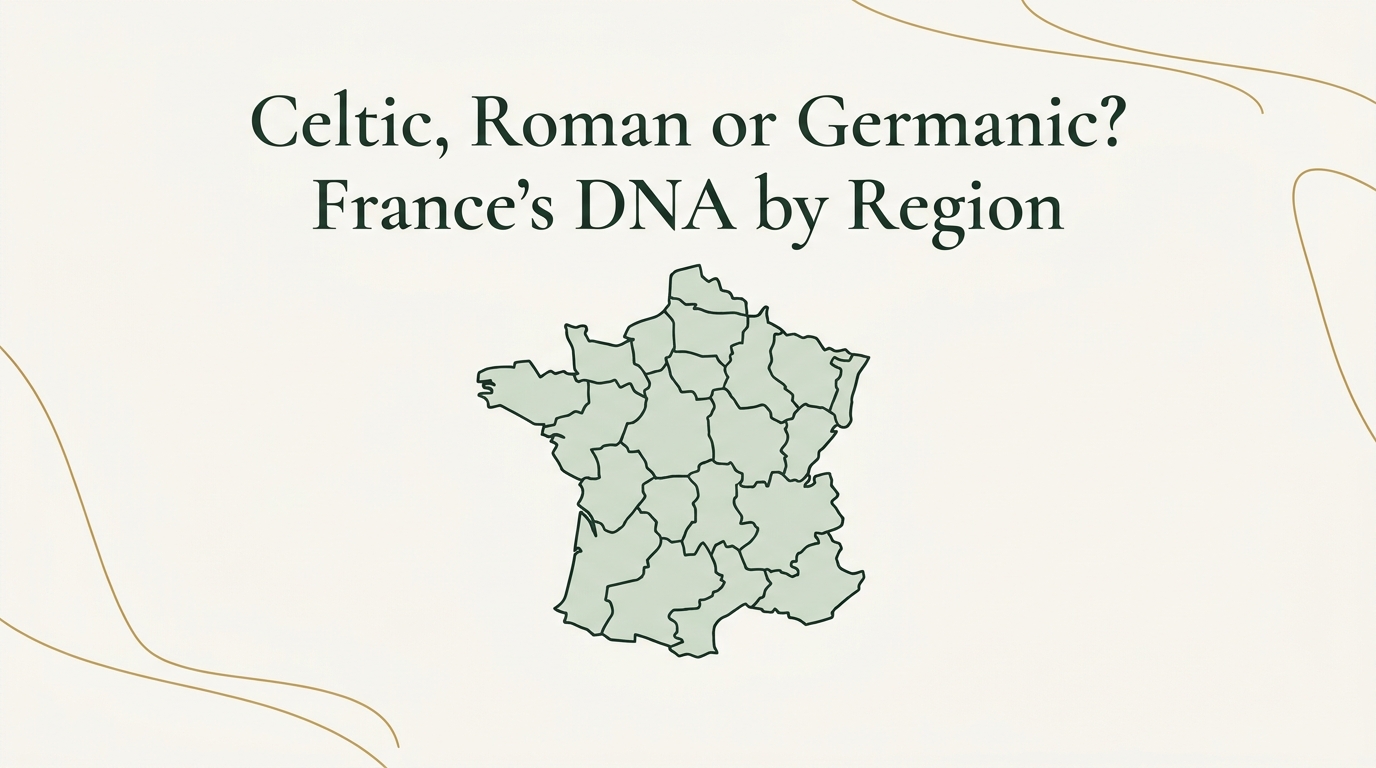
A region-by-region look at mainland France’s DNA reveals layered ancestry from hunter-gatherers, farmers, steppe herders, Gauls, Romans, and Germanic migrations.
Read article
Discover the Ancient North Eurasians, the Ice Age ghost population linking Europeans and Native Americans through ancient DNA, haplogroups, and migration.
Read article
Ancient DNA from Iberia shows Rome reshaped Spanish ancestry far more than the Visigoths did, with only a modest genetic trace from Gothic-era migrants.
Read article
Ancient DNA from Iron Age Gaul shows strong continuity with modern French populations, especially regional patterns of ancestry, migration, and population genetics.
Read article
New ancient DNA from Taforalt in Morocco reveals a 15,000-year-old North African population with both Near Eastern and sub-Saharan roots.
Read article
Learn how DNAGENICS AI Assistant adds context to supported DNA results, suggests G25 comparisons, and helps you ask better follow-up questions.
Read articleOur guides explain the methods we use, from population comparisons to matching segments of DNA.