Menu
mtDNA Haplogroup • Maternal Lineage

B4A1A

mtDNA Haplogroup B4A1A

~8,000 years ago
East / Southeast Asia
1 subclades
29 ancient samples
Scroll to explore
Chapter I

The Story

The journey of mtDNA haplogroup B4A1A

Origins and Evolution

mtDNA haplogroup B4A1A is a downstream lineage of B4A1, itself part of the wider B4 branch that has deep roots in East and Southeast Asia. Based on phylogenetic placement beneath B4A1 and the archaeological and modern distribution of related B4-derived lineages, B4A1A most plausibly arose in coastal East or Southeast Asia in the early to mid-Holocene (~8 kya). Its evolution reflects the population dynamics of Holocene coastal communities and later maritime expansions that characterize the spread of Austronesian-speaking peoples.

Subclades (if applicable)

B4A1A is defined by specific control-region and coding-region mutations that distinguish it from other B4A1 sublineages. Where more finely resolved sampling exists, B4A1A may be subdivided into local subbranches restricted to particular island groups or archipelagos; however, many of these finer subclades remain undersampled in public databases. Ongoing complete mtGenome sequencing in Island Southeast Asia and the Pacific continues to reveal microstructure within B4A1A reflecting island-to-island founder effects.

Geographical Distribution

B4A1A shows a distribution strongly tied to maritime populations of Island Southeast Asia and the Pacific. Highest relative frequencies are observed in Austronesian-speaking groups of Taiwan, the Philippines, and parts of eastern Indonesia, with moderated presence among Micronesian and Polynesian communities that trace part of their ancestry to Austronesian voyagers. The lineage is present at low to moderate frequency in some mainland East Asian populations (southern Han and adjacent groups) and appears sporadically in Island Melanesian communities where Austronesian admixture occurred. In modern contexts it can also be detected at very low frequency in the Americas where recent East/Southeast Asian admixture has introduced B4-derived maternal lineages.

Historical and Cultural Significance

Because B4A1A is nested within B4 lineages that are closely associated with coastal and maritime adaptations, it is often interpreted as part of the maternal genetic signature of the Austronesian expansion. This expansion, beginning from Taiwan and adjacent coasts in the mid-to-late Holocene, dispersed people and material culture through the Philippines, Indonesia, and into Remote Oceania (Lapita and later Polynesian settlement). B4A1A's presence in ancient and modern samples from island contexts supports its role as one of several mtDNA haplogroups that accompanied seafaring colonization and island founder events.

Conclusion

B4A1A is a Holocene maternal lineage rooted in East/Southeast Asia and amplified by maritime Neolithic movements associated with Austronesian dispersals. Its modern distribution highlights patterns of coastal settlement, island founder effects, and later admixture; continued complete mtGenome sampling and ancient DNA work in Island Southeast Asia and the Pacific will refine its internal branching and timing further.

Key Points

  • Origins and Evolution
  • Subclades (if applicable)
  • Geographical Distribution
  • Historical and Cultural Significance
  • Conclusion
Chapter II

Tree & Relationships

Phylogenetic context and subclades

Evolution Path

This haplogroup's evolutionary journey from its earliest ancestor to the present.

Steps Haplogroup Age Estimate Archaeology Era Time Passed Immediate Descendants Tested Modern Descendants Ancient Connections
1 B4A1A Current ~8,000 years ago 🌾 Neolithic 8,000 years 1 38 29
2 B4A1 ~12,000 years ago 🌾 Neolithic 12,000 years 2 54 0
3 B4A ~20,000 years ago 🏹 Mesolithic 20,000 years 3 64 4
4 B4 ~28,000 years ago 🦴 Paleolithic 28,000 years 6 334 7
5 B ~50,000 years ago 🦴 Paleolithic 50,000 years 4 1,196 75

Siblings (1)

Other branches from the same parent haplogroup

Chapter III

Where in the World

Geographic distribution and modern presence

Place of Origin

East / Southeast Asia

Modern Distribution

The populations where mtDNA haplogroup B4A1A is found include:

  1. Indigenous Taiwanese (Austronesian-speaking groups)
  2. Filipino and other Philippine island populations
  3. Coastal and island populations of Indonesia (including eastern Indonesia)
  4. Austronesian-speaking Pacific Islanders (Micronesians, Polynesians)
  5. Parts of Island Melanesia (in communities with Austronesian admixture)
  6. Mainland East Asian populations at low to moderate frequency (southern Han Chinese and neighboring groups)
  7. Coastal Southeast Asian populations (Vietnamese-adjacent, Malay-adjacent groups)
  8. Modern populations in the Americas where recent East/Southeast Asian admixture introduced B4-derived lineages (low frequency)
CHAPTER IV

When in Time

Your haplogroup in the context of human history

~10k years ago

Neolithic Revolution

Agriculture begins, settled communities form

~8k years ago

Haplogroup B4A1A

Your mtDNA haplogroup emerged in East / Southeast Asia

East / Southeast Asia
~5k years ago

Bronze Age

Metalworking, writing, and early civilizations

~3k years ago

Iron Age

Iron tools, expanded trade networks

~2k years ago

Classical Antiquity

Greek and Roman civilizations flourish

Present

Present Day

Modern era

Your Haplogroup
Historical Era
Chapter IV-B

Linked Cultures

Ancient cultures associated with mtDNA haplogroup B4A1A

Cultural Heritage

These ancient cultures have been linked to haplogroup B4A1A based on matching ancient DNA samples from archaeological excavations. The presence of this haplogroup in these cultures provides insights into the migrations and population movements of populations carrying this haplogroup.

Historic Polynesian Latte Ntodo Leseh Saudeleur Culture Taiwanese Iron Tanjung Pinang Culture Vanuatu Ancient Vanuatu Colonial
Culture assignments are based on archaeological context of ancient DNA samples and may represent regional associations during specific time periods.
Chapter V

Sample Catalog

4 direct carriers and 25 subclade carriers of haplogroup B4A1A

29 / 29 samples
Portrait Sample Country Era Date Culture mtDNA Match
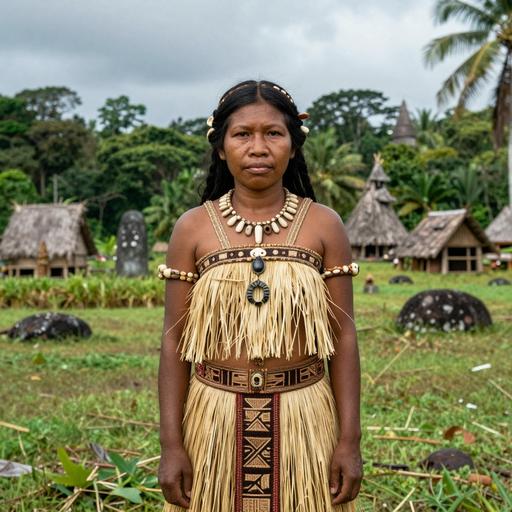
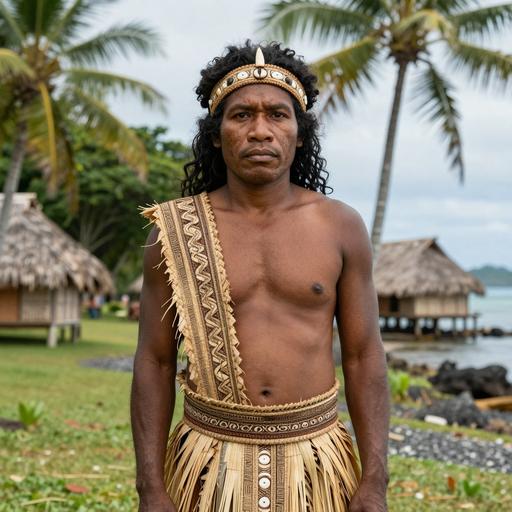
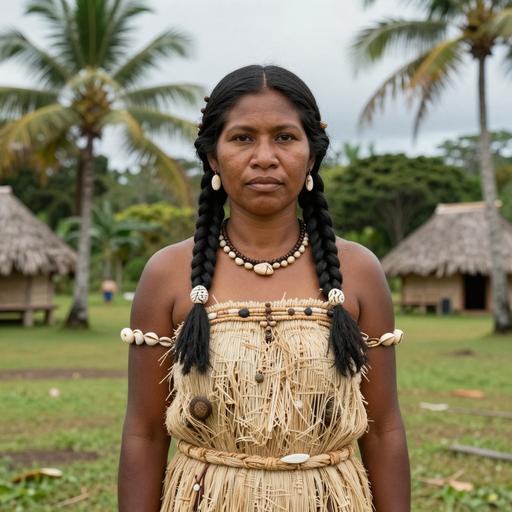
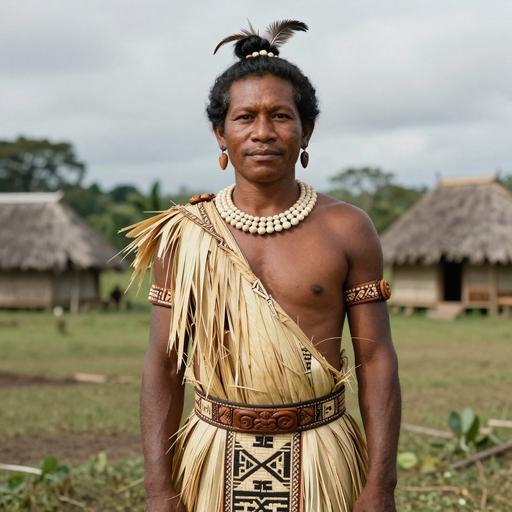
Portrait of ancient individual I13694 from Taiwan, dated 1 CE - 800 CE
I13694
Taiwan Iron Age Taiwan 1 CE - 800 CE Taiwanese Iron B4a1a Direct
Portrait of ancient individual I14929 from Taiwan, dated 1 CE - 800 CE
I14929
Taiwan Iron Age Taiwan 1 CE - 800 CE Taiwanese Iron B4a1a Direct
Portrait of ancient individual I14937 from Taiwan, dated 1 CE - 800 CE
I14937
Taiwan Iron Age Taiwan 1 CE - 800 CE Taiwanese Iron B4a1a Direct
Portrait of ancient individual TanjungPinang6 from Indonesia, dated 752 BCE - 350 CE
TanjungPinang6
Indonesia Neolithic to Early Bronze Age Tanjung Pinang, Morotai, Indonesia 752 BCE - 350 CE Tanjung Pinang Culture B4a1a Direct
Portrait of ancient individual AMA001 from Indonesia, dated 394 BCE - 206 BCE
AMA001
Indonesia Early Bronze Age Indonesia 394 BCE - 206 BCE Early Bronze Indonesian B4a1a1 Downstream
Portrait of ancient individual MAL001 from Vanuatu, dated 399 BCE - 201 BCE
MAL001
Vanuatu Vanuatu 2,200 Years Ago 399 BCE - 201 BCE Post-Lapita Vanuatu B4a1a1 Downstream
Portrait of ancient individual MAL001 from Vanuatu, dated 399 BCE - 201 BCE
MAL001
Vanuatu Ancient Oceania 399 BCE - 201 BCE B4a1a1 Downstream
Portrait of ancient individual I4096 from Vanuatu, dated 580 CE - 710 CE
I4096
Vanuatu Vanuatu 1,300 Years Ago 580 CE - 710 CE Vanuatu Ancient B4a1a1 Downstream
Portrait of ancient individual I4096 from Vanuatu, dated 580 CE - 710 CE
I4096
Vanuatu The First Peoples of Vanuatu 580 CE - 710 CE B4a1a1 Downstream
Portrait of ancient individual AMA005 from Indonesia, dated 750 BCE - 150 CE
AMA005
Indonesia Early Bronze Age Indonesia 750 BCE - 150 CE Early Bronze Indonesian B4a1a1 Downstream
Chapter VI

Carrier Distribution Map

Geographic distribution of 29 ancient DNA samples (direct and subclade carriers of B4A1A)

Direct carrier Subclade carrier
Time Period Filter
All Time Periods
Showing all samples
Chapter VII

Temporal Distribution

Distribution of carriers across archaeological periods

Chapter VIII

Geographic Distribution

Distribution by country of origin (direct and subclade carriers shown by default)

Chapter IX

Country × Era Distribution

Cross-tabulation of carrier countries and archaeological periods (direct and subclade carriers shown by default)

Data

Data & Provenance

Source information and data quality

Last Updated 2026-02-16
Confidence Score 50/100
Coverage Low
Data Source

We use the latest phylotree for MTDNA haplogroup classification and data.