Menu
mtDNA Haplogroup • Maternal Lineage

B4A4

mtDNA Haplogroup B4A4

~9,000 years ago
East / Southeast Asia (coastal)
0 subclades
Scroll to explore
Chapter I

The Story

The journey of mtDNA haplogroup B4A4

Origins and Evolution

mtDNA haplogroup B4a4 sits within the larger B4a clade, a lineage that arose in East/Southeast Asia during the Late Pleistocene (parent clade B4a ~20 kya) and played an important role in Holocene coastal and maritime expansions. B4a4 itself most likely coalesced in the early Holocene (roughly 8–11 kya) following the Last Glacial Maximum, when rising sea levels and changing coastal ecologies favored demographic expansions of coastal foragers and early food-producers. Its phylogenetic position as a subclade of B4a places it in the same broader maternal tradition that later supplied lineages to Austronesian-speaking populations.

Subclades (if applicable)

Genetic surveys and phylogenies identify internal diversity within B4a4, with reported downstream lineages in some high-resolution mtDNA trees (often labeled as B4a4a, B4a4b, etc.). However, sampling remains limited compared with the well-studied Polynesian motif (B4a1a1), so the fine-scale structure, geographic patterning, and TMRCA estimates of B4a4 subclades require additional complete mitogenomes from diverse island and coastal populations to resolve. Where subclades have been reported, they tend to show localized distributions consistent with founder effects and island colonization dynamics.

Geographical Distribution

B4a4 is found primarily along coastal East and Southeast Asia and in island populations of Island Southeast Asia and parts of Near Oceania. Frequencies are generally moderate in some Southeast Asian island groups and low-to-moderate in mainland East Asian populations. The lineage appears in indigenous Taiwanese (Austronesian-speaking) groups and in island populations of the Philippines, eastern Indonesia, and at lower frequency in some Pacific islanders and Melanesian groups — a pattern consistent with coastal and maritime dispersals. Modern occurrences in the Americas typically reflect recent historical admixture from East/Southeast Asian sources rather than prehistoric trans-Pacific gene flow.

Historical and Cultural Significance

The distribution and timing of B4a4 are consistent with involvement in maritime foraging and later Neolithic/Austronesian-associated movement. While the classic Polynesian motif (a different B4a subclade) is the most famous B4 contribution to Pacific settlement, B4a4 likely represents a complementary coastal maternal lineage that spread with seafaring communities in Island Southeast Asia and contributed to the maternal gene pool of some Austronesian-speaking populations. Archaeogenetic evidence is limited but includes a small number of ancient DNA hits, supporting continuity of coastal maternal lineages through the Holocene in this region.

Conclusion

B4a4 is a regional maternal lineage rooted in the East/Southeast Asian coastal zone that expanded during the Holocene and contributed to the genetic makeup of maritime populations in Island Southeast Asia and parts of Near Oceania. Additional mitogenome sequencing from under-sampled island and coastal populations, plus targeted ancient DNA from archaeological coastal sites, will clarify its internal structure, precise timing, and role relative to other B4a subclades in prehistoric population movements.

Key Points

  • Origins and Evolution
  • Subclades (if applicable)
  • Geographical Distribution
  • Historical and Cultural Significance
  • Conclusion
Chapter II

Tree & Relationships

Phylogenetic context and subclades

Evolution Path

This haplogroup's evolutionary journey from its earliest ancestor to the present.

Steps Haplogroup Age Estimate Archaeology Era Time Passed Immediate Descendants Tested Modern Descendants Ancient Connections
1 B4A4 Current ~9,000 years ago 🌾 Neolithic 9,000 years 0 4 0
2 B4A ~20,000 years ago 🏹 Mesolithic 20,000 years 3 64 4
3 B4 ~28,000 years ago 🦴 Paleolithic 28,000 years 6 334 7
4 B ~50,000 years ago 🦴 Paleolithic 50,000 years 4 1,196 75

Subclades (0)

Terminal branch - no known subclades

Siblings (2)

Other branches from the same parent haplogroup

Chapter III

Where in the World

Geographic distribution and modern presence

Place of Origin

East / Southeast Asia (coastal)

Modern Distribution

The populations where mtDNA haplogroup B4A4 is found include:

  1. Han Chinese and other East Asian populations (China, Korea, Japan)
  2. Southeast Asian groups (Vietnamese, Thai, Malay peoples, Filipino)
  3. Indigenous Taiwanese (Austronesian-speaking groups)
  4. Austronesian-speaking Pacific Islanders (Polynesians, Micronesians) — low to moderate frequency
  5. Melanesian populations (in parts of Island Melanesia) — low frequency
  6. Coastal island populations of Island Southeast Asia (Indonesia, Philippines)
  7. Modern populations in the Americas where recent admixture introduced East/Southeast Asian lineages (low frequency)
  8. Coastal and island populations involved in prehistoric maritime dispersals
CHAPTER IV

When in Time

Your haplogroup in the context of human history

~10k years ago

Neolithic Revolution

Agriculture begins, settled communities form

~9k years ago

Haplogroup B4A4

Your mtDNA haplogroup emerged in East / Southeast Asia (coastal)

East / Southeast Asia (coastal)
~5k years ago

Bronze Age

Metalworking, writing, and early civilizations

~3k years ago

Iron Age

Iron tools, expanded trade networks

~2k years ago

Classical Antiquity

Greek and Roman civilizations flourish

Present

Present Day

Modern era

Your Haplogroup
Historical Era
Chapter IV-B

Linked Cultures

Ancient cultures associated with mtDNA haplogroup B4A4

Cultural Heritage

These ancient cultures have been linked to haplogroup B4A4 based on matching ancient DNA samples from archaeological excavations. The presence of this haplogroup in these cultures provides insights into the migrations and population movements of populations carrying this haplogroup.

Ancient Beringian Chinese Paleolithic Dushan Culture Qinchang Culture Taiwanese Iron Tanjung Pinang Culture Tianyuan Culture Umungobi Medieval Wuzhuangguoliang Culture
Culture assignments are based on archaeological context of ancient DNA samples and may represent regional associations during specific time periods.
Chapter V

Sample Catalog

4 direct carriers of haplogroup B4A4

4 / 4 samples
Portrait Sample Country Era Date Culture mtDNA Match
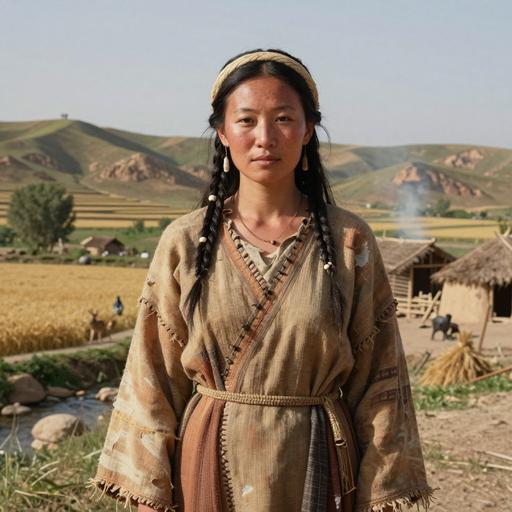
Portrait of ancient individual S123 from China, dated 3400 BCE - 2800 BCE
S123
China Late Neolithic to Early Chalcolithic Wuzhuangguoliang, China 3400 BCE - 2800 BCE Wuzhuangguoliang Culture B4a4 Direct
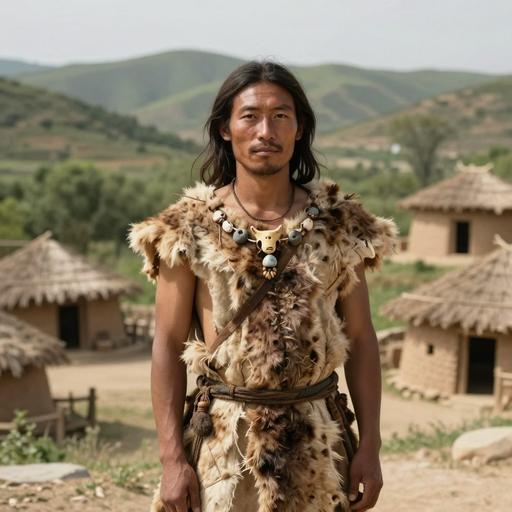
Portrait of ancient individual S97 from China, dated 3400 BCE - 2800 BCE
S97
China Late Neolithic to Early Chalcolithic Wuzhuangguoliang, China 3400 BCE - 2800 BCE Wuzhuangguoliang Culture B4a4 Direct
Portrait of ancient individual S123 from China, dated 3400 BCE - 2800 BCE
S123
China Neolithic China 3400 BCE - 2800 BCE B4a4 Direct
Portrait of ancient individual S97 from China, dated 3400 BCE - 2800 BCE
S97
China Neolithic China 3400 BCE - 2800 BCE B4a4 Direct
Chapter VI

Carrier Distribution Map

Geographic distribution of 4 ancient DNA samples (direct and subclade carriers of B4A4)

Direct carrier
Time Period Filter
All Time Periods
Showing all samples
Chapter VII

Temporal Distribution

Distribution of carriers across archaeological periods

Chapter VIII

Geographic Distribution

Distribution by country of origin (direct and subclade carriers shown by default)

Chapter IX

Country × Era Distribution

Cross-tabulation of carrier countries and archaeological periods (direct and subclade carriers shown by default)

Data

Data & Provenance

Source information and data quality

Last Updated 2026-02-16
Confidence Score 50/100
Coverage Low
Data Source

We use the latest phylotree for MTDNA haplogroup classification and data.