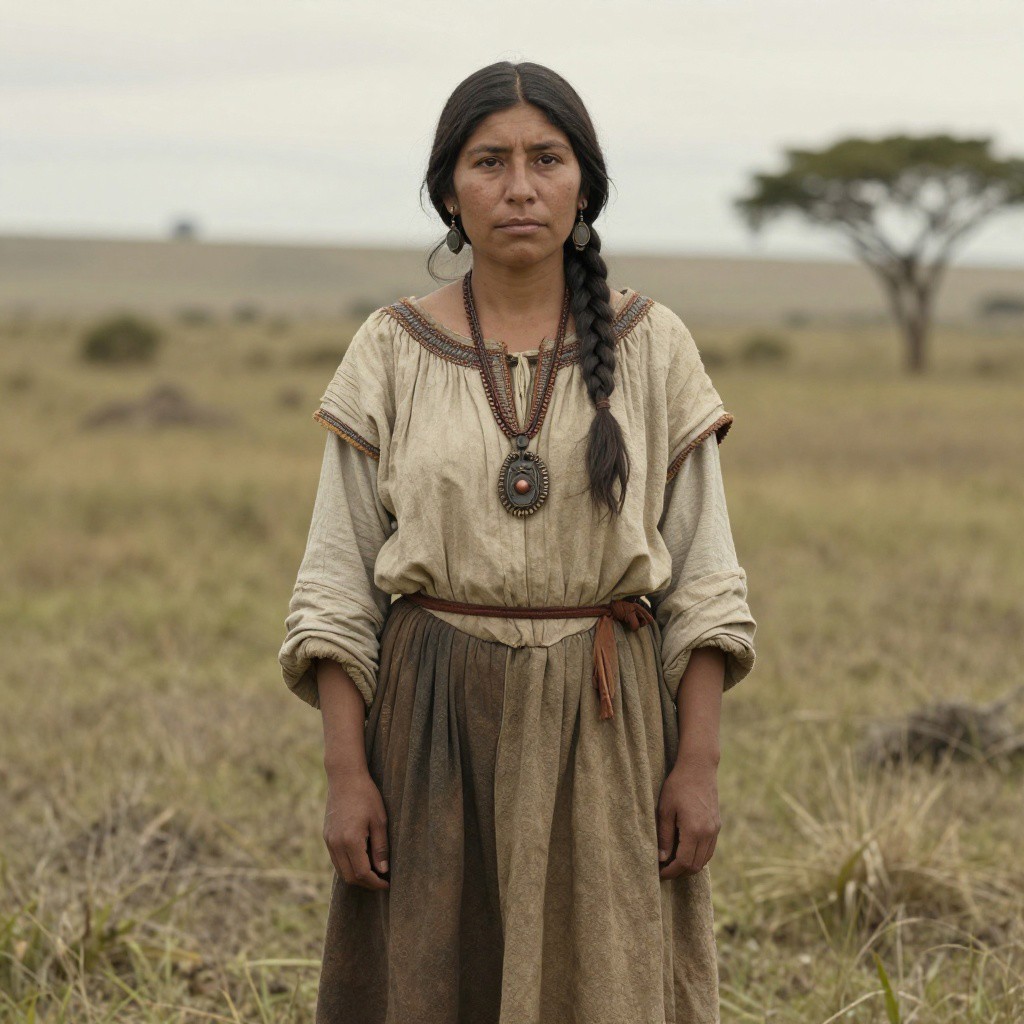
The Story
The journey of mtDNA haplogroup D1H
Origins and Evolution
mtDNA haplogroup D1H is a downstream branch of the Native American clade D1, itself derived from East Eurasian haplogroup D. While D1 likely formed in Beringia or northeastern Asia during the Late Pleistocene (around 18 kya) and dispersed into the Americas with early migrating populations, D1H most plausibly arose in situ within the Americas after initial colonization — probably in the early Holocene (roughly ~11 kya, based on phylogenetic depth relative to other D1 subclades and patterns of regional differentiation). Its emergence reflects local diversification of maternal lineages as populations expanded into South America and adapted to varied ecologies.
Subclades
As a named subclade of D1, D1H represents a defined cluster of mitochondrial control-region and coding-region mutations (specific diagnostic mutations depend on the reference phylogeny and ongoing revisions). The internal structure of D1H may include further minor branches detected at low frequency in modern or ancient samples; however, available data indicate D1H itself is a relatively localized lineage without a widely distributed large sub-phylogeny (unlike some other D1 subclades). Continued sequencing of full mitogenomes from under-sampled regions of South America could reveal additional internal diversity.
Geographical Distribution
D1H shows a predominantly South American distribution, with the highest representation in certain Andean and adjacent Amazonian indigenous groups. Occasional detections in Central America or Mexico may reflect north–south gene flow or ancestral population structure, but frequencies outside South America are typically very low. Unlike broader D1, which is found across North, Central and South America and occasionally in ancient Siberian samples, D1H appears to be a post-peopling regional derivative that became structured following the initial migration into South America. D1H has also been identified in at least two ancient DNA samples, supporting its antiquity within the region.
Historical and Cultural Significance
Because D1H is concentrated in South America, it contributes to the maternal genetic signatures used to reconstruct Holocene demographic events such as early highland settlement, coastal and riverine dispersals, and later localized expansions associated with preceramic and formative societies. The lineage is useful in population genetic and archaeogenetic studies for distinguishing regional maternal continuity from later admixture. It does not, however, appear to be diagnostic of a single archaeological complex; instead, it reflects population-level continuity and microevolution across multiple cultural horizons in South America.
Conclusion
mtDNA D1H exemplifies how an ancestral Beringian-derived haplogroup (D1) diversified within the Americas to produce regionally distinct maternal lineages. Its likely origin in South America during the early Holocene and its concentration among Andean/Amazonian groups make it an informative marker for studies of postglacial settlement, regional population structure, and the maternal demographic history of South America. Ongoing mitogenome sequencing and broader ancient DNA sampling will refine the internal topology, age estimates, and precise geographic origins of D1H.
Key Points
- Origins and Evolution
- Subclades
- Geographical Distribution
- Historical and Cultural Significance
- Conclusion