The Story
The journey of mtDNA haplogroup D1J1
Origins and Evolution
mtDNA haplogroup D1J1 is an internal subclade of the D1 lineage, placed beneath the intermediate node D1JA in current phylogenies. The broader haplogroup D1 is one of the primary maternal lineages associated with populations that crossed Beringia and peopled the Americas during the Late Pleistocene to Early Holocene. By phylogenetic position, D1J1 most likely arose in a Northeast Asian or Beringian context after the formation of the main D1 trunk and before or during regional diversification following initial migrations into the Americas. Age estimates for D1 sublineages span the Late Pleistocene and Early Holocene; the more derived internal clades such as D1J1 are plausibly younger, on the order of several thousand to ~10,000 years ago, though precise dating requires calibrated molecular-clock analyses on well-sampled mitogenomes.
Subclades
As an intermediate node (D1J1) under D1JA, this haplogroup currently contains further downstream sublineages in some phylogenetic builds but remains comparatively poorly sampled. Where complete mitogenomes are available, D1J1 can be identified by diagnostic mutations that separate it from sister branches of D1JA; continued sequencing of full mtDNA genomes will clarify subclade structure and help resolve the timing of splits within this clade. Because D1J1 is a relatively deep but low-frequency node, it often functions as a connector between broader parent (D1JA / D1) diversity and more localized descendant lineages.
Geographical Distribution
Observed occurrences of D1J1 (or close derivatives) are currently rare and geographically restricted. Based on the distribution of related D1 subclades and published population surveys, reasonable inferences place D1J1 at low-to-moderate frequencies in:
- Northeast Asia and Arctic Siberia — reflecting the region where D1 diversity is high and where Beringian ancestry was concentrated.
- Northern North America (including subarctic and Arctic Indigenous groups) — consistent with D1’s prominence among Native American maternal lineages and post-glacial coastal and interior expansions.
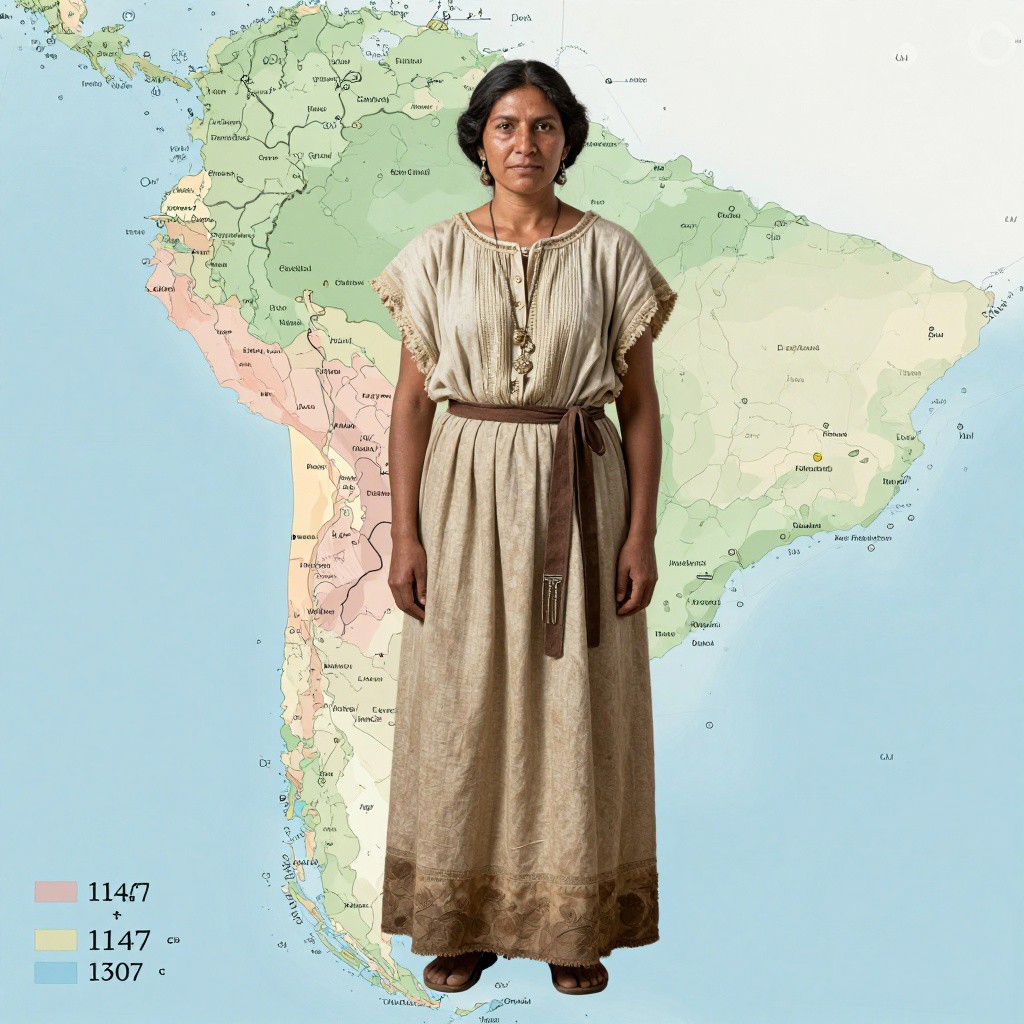
- Selected Indigenous groups in parts of Central/South America — some derived D1 branches spread widely after entry into the Americas, so low-frequency occurrences of related lineages are possible in downstream populations.
It is important to emphasize that current sampling is incomplete; many putative occurrences are based on HVS or partial-sequence matches and require full mitogenome confirmation to firmly place sequences into D1J1.
Historical and Cultural Significance
Because D1J1 sits within the D1 clade, its historical significance is primarily tied to the broader story of Late Pleistocene human movement across Beringia and the peopling of the Americas. If present in Arctic and subarctic populations, D1J1 may reflect maternal continuity among Paleo-Siberian and early Native American groups involved in coastal and inland dispersals during the terminal Pleistocene and Early Holocene. However, unlike some high-frequency D1 subclades that help track major migrations, D1J1’s low frequency means it is more valuable for fine-scale phylogeographic and population-structure studies than for broad-strokes cultural associations.
Conclusion
mtDNA haplogroup D1J1 is a derived, low-frequency branch of the D1 maternal lineage that likely originated in a Northeast Asian / Beringian setting during the Early Holocene. Its current apparent distribution in northern Eurasia and among Indigenous peoples of the Americas is consistent with the known behavior of D1 subclades, but more complete mitogenome sequencing and broader, geographically targeted sampling are required to refine its age, internal structure, and precise geographic history. Researchers should treat assignments to D1J1 with caution unless based on complete mtDNA sequences and well-supported phylogenetic placement.
Key Points
- Origins and Evolution
- Subclades
- Geographical Distribution
- Historical and Cultural Significance
- Conclusion