Menu
mtDNA Haplogroup • Maternal Lineage

F3B1

mtDNA Haplogroup F3B1

~8,000 years ago
East / Southeast Asia
1 subclades
Scroll to explore
Chapter I

The Story

The journey of mtDNA haplogroup F3B1

Origins and Evolution

mtDNA haplogroup F3B1 is a daughter lineage nested within haplogroup F3B, itself part of the broader haplogroup F radiation that is characteristic of East and Southeast Asia. Based on phylogenetic position and coalescent estimates for F3B, F3B1 most likely formed in the early Holocene (around ~8 kya) as populations that persisted through the Last Glacial Maximum began to expand and reconfigure across mainland and island Asia. The lineage's age and regional distribution are consistent with Holocene demographic processes such as post-glacial recolonizations, localized continuity of hunter-gatherer groups, and later interactions with expanding agriculturalists.

Genetic studies and emerging ancient DNA evidence (including two curated ancient samples identified as F3B-lineage carriers) indicate that F3B1 is not a pan-continental lineage but rather a geographically focused maternal clade that accumulated diversity across East and Southeast Asia during the Holocene.

Subclades

As a named subclade, F3B1 can itself include further downstream branches, but many of these finer sub-branches remain undersampled in published datasets. Where higher-resolution mitogenomes are available, substructure within F3B1 shows geographic clustering consistent with local drift and founder effects (for example, island-specific lineages in parts of Island Southeast Asia). Continued mitogenome sequencing across underrepresented groups (indigenous Formosan, Philippine, and Near Oceanic populations) is likely to reveal additional internal clades and refine the phylogeographic picture.

Geographical Distribution

F3B1 shows a primarily East to Southeast Asian distribution with variable frequencies:

  • Mainland East Asia: Found at moderate frequencies among Han Chinese, Koreans and Japanese (including lineages tracing to both Jomon and Yayoi-era interactions).
  • Island Southeast Asia and Austronesian-speaking populations: Present at low-to-moderate frequencies among Formosan groups, Filipinos, Indonesians and Malays, reflecting either pre-Austronesian substrate diversity or later admixture.
  • Mainland Southeast Asia: Observed among Vietnamese, Thai, Lao and Khmer populations, as well as Tai-Kadai speakers (e.g., Zhuang), typically at low-to-moderate frequencies.
  • Near Oceania and some Pacific islands: Low and patchy occurrences consistent with limited maternal gene flow into Near Oceania from Southeast Asia during Holocene maritime movements.
  • Central Asia and southern Siberia: Occasional low-frequency detections likely reflect historical east–west gene flow and recent admixture rather than an origin in those regions.

Overall the geographic pattern matches a lineage that diversified within East/Southeast Asia and spread variably with both prehistoric and historic migrations.

Historical and Cultural Significance

F3B1's distribution intersects with several major prehistoric processes in East and Southeast Asia. Its early Holocene origin places it within the time frame of post-glacial demographic expansion and the emergence of regional Neolithic cultural complexes. In particular:

  • Rice-farming expansions and Neolithic agrarian societies in parts of southern China and mainland Southeast Asia likely redistributed maternal lineages that were already locally common, including F3-derived lineages.
  • Austronesian maritime dispersals (beginning ca. 4.5–3.5 kya) plausibly carried some F3B1 lineages into Island Southeast Asia and marginally into Near Oceania, though F3B1 is not one of the dominant Austronesian maternal markers and likely represents either substrate ancestry or limited female-mediated gene flow.
  • Japanese prehistory: The presence of F3B1-associated lineages in Japan can reflect both Jomon-era continuity and later Yayoi-associated admixture from continental East Asia, illustrating how F3B1 can mark mixed maternal ancestries in archipelagic contexts.

Because F3B1 is not a single high-frequency pan-regional lineage but rather a set of localized lineages, it is particularly useful for studying regional maternal continuity, founder events, and small-scale migrations in East and Southeast Asia.

Conclusion

mtDNA haplogroup F3B1 is a Holocene-aged maternal clade rooted in East/Southeast Asia that documents regional continuity and multiple scales of dispersal—from local post-glacial expansions to later Neolithic and maritime movements. Continued high-resolution mitogenome sampling, especially from understudied island and indigenous populations, and additional ancient DNA data will refine the detailed phylogeny and migration histories associated with F3B1.

Key Points

  • Origins and Evolution
  • Subclades
  • Geographical Distribution
  • Historical and Cultural Significance
  • Conclusion
Chapter II

Tree & Relationships

Phylogenetic context and subclades

Evolution Path

This haplogroup's evolutionary journey from its earliest ancestor to the present.

Steps Haplogroup Age Estimate Archaeology Era Time Passed Immediate Descendants Tested Modern Descendants Ancient Connections
1 F3B1 Current ~8,000 years ago 🌾 Neolithic 8,000 years 1 4 0
2 F3B ~8,000 years ago 🌾 Neolithic 8,000 years 1 4 2
3 F3 ~15,000 years ago 🏹 Mesolithic 15,000 years 2 13 5
4 F ~28,000 years ago 🦴 Paleolithic 28,000 years 3 82 6
Chapter III

Where in the World

Geographic distribution and modern presence

Place of Origin

East / Southeast Asia

Modern Distribution

The populations where mtDNA haplogroup F3B1 is found include:

  1. Han Chinese
  2. Japanese (including lineages associated with Jomon/Yayoi heritage)
  3. Koreans
  4. Vietnamese
  5. Thai and other Tai-Kadai speaking groups (e.g., Zhuang)
  6. Austronesian-speaking populations (Taiwanese Indigenous/Formosan, Filipinos, Indonesians, Malays)
  7. Tibeto-Burman groups (low to moderate frequencies)
  8. Indigenous groups of Mainland Southeast Asia (e.g., Lao, Khmer)
  9. Indigenous and admixed populations in Near Oceania (low to moderate frequencies in some islands)
  10. Certain Central Asian and southern Siberian groups (generally low frequencies)
CHAPTER IV

When in Time

Your haplogroup in the context of human history

~10k years ago

Neolithic Revolution

Agriculture begins, settled communities form

~8k years ago

Haplogroup F3B1

Your mtDNA haplogroup emerged in East / Southeast Asia

East / Southeast Asia
~5k years ago

Bronze Age

Metalworking, writing, and early civilizations

~3k years ago

Iron Age

Iron tools, expanded trade networks

~2k years ago

Classical Antiquity

Greek and Roman civilizations flourish

Present

Present Day

Modern era

Your Haplogroup
Historical Era
Chapter IV-B

Linked Cultures

Ancient cultures associated with mtDNA haplogroup F3B1

Cultural Heritage

These ancient cultures have been linked to haplogroup F3B1 based on matching ancient DNA samples from archaeological excavations. The presence of this haplogroup in these cultures provides insights into the migrations and population movements of populations carrying this haplogroup.

Early Kazakh Iron Historical Malaysian Huatuyan Culture Late Medieval Mongolian Roman Republic Taiwanese Iron Yellow River Culture
Culture assignments are based on archaeological context of ancient DNA samples and may represent regional associations during specific time periods.
Chapter V

Sample Catalog

2 direct carriers and 7 subclade carriers of haplogroup F3B1

9 / 9 samples
Portrait Sample Country Era Date Culture mtDNA Match
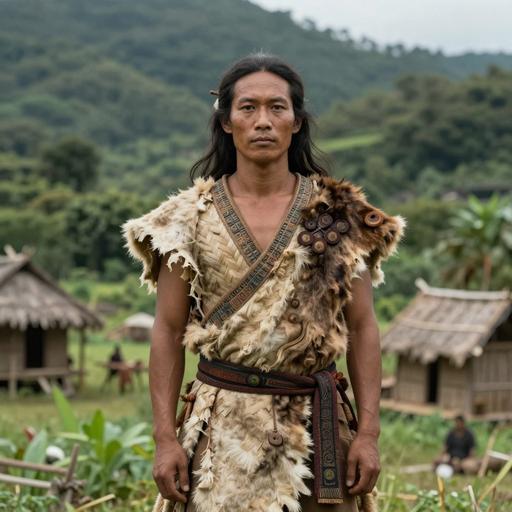
Portrait of ancient individual I3731 from Taiwan, dated 1 CE - 800 CE
I3731
Taiwan Iron Age Taiwan 1 CE - 800 CE Taiwanese Iron F3b1 Direct
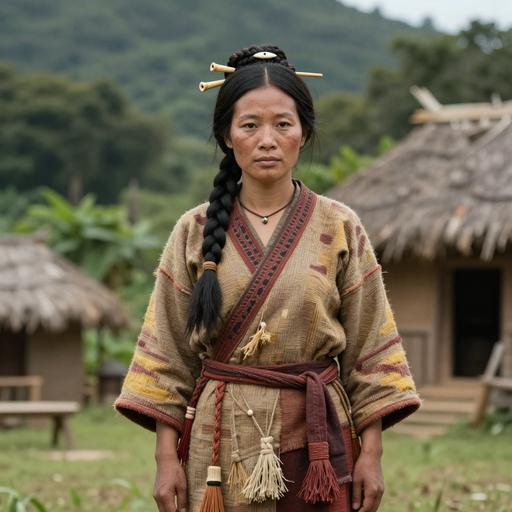
Portrait of ancient individual I8079 from Taiwan, dated 1 CE - 800 CE
I8079
Taiwan Iron Age Taiwan 1 CE - 800 CE Taiwanese Iron F3b1 Direct
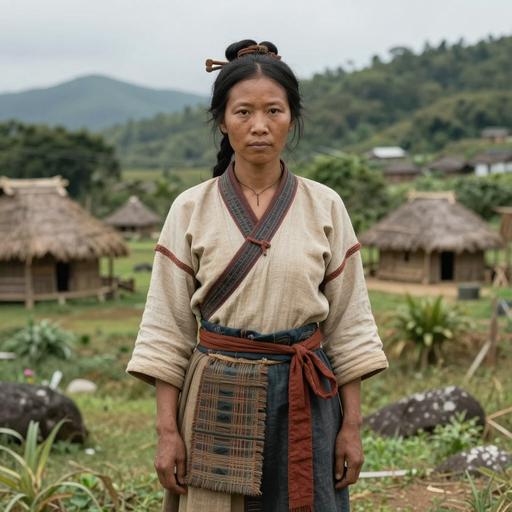
Portrait of ancient individual I8074 from Taiwan, dated 1 CE - 800 CE
I8074
Taiwan Iron Age Taiwan 1 CE - 800 CE Taiwanese Iron F3b1a-a Downstream
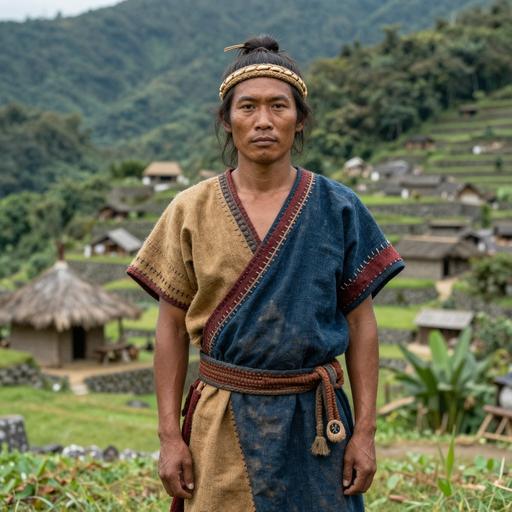
Portrait of ancient individual I8080 from Taiwan, dated 1 CE - 800 CE
I8080
Taiwan Iron Age Taiwan 1 CE - 800 CE Taiwanese Iron F3b1a-a Downstream
Portrait of ancient individual I14933 from Taiwan, dated 1 CE - 800 CE
I14933
Taiwan Iron Age Taiwan 1 CE - 800 CE Taiwanese Iron F3b1a Downstream
Portrait of ancient individual I3728 from Taiwan, dated 401 CE - 538 CE
I3728
Taiwan Iron Age Taiwan 401 CE - 538 CE Taiwanese Iron F3b1a-a Downstream
Portrait of ancient individual I3619 from Taiwan, dated 415 CE - 540 CE
I3619
Taiwan Iron Age Taiwan 415 CE - 540 CE Taiwanese Iron F3b1a-a Downstream
Portrait of ancient individual I8081 from Taiwan, dated 439 CE - 586 CE
I8081
Taiwan Iron Age Taiwan 439 CE - 586 CE Taiwanese Iron F3b1a2 Downstream
Portrait of ancient individual Ma554 from Malaysia, dated 1448 CE - 1625 CE
Ma554
Malaysia Historical Malaysia 1448 CE - 1625 CE Historical Malaysian F3b1a-a Downstream
Chapter VI

Carrier Distribution Map

Geographic distribution of 9 ancient DNA samples (direct and subclade carriers of F3B1)

Direct carrier Subclade carrier
Time Period Filter
All Time Periods
Showing all samples
Chapter VII

Temporal Distribution

Distribution of carriers across archaeological periods

Chapter VIII

Geographic Distribution

Distribution by country of origin (direct and subclade carriers shown by default)

Chapter IX

Country × Era Distribution

Cross-tabulation of carrier countries and archaeological periods (direct and subclade carriers shown by default)

Data

Data & Provenance

Source information and data quality

Last Updated 2026-02-16
Confidence Score 50/100
Coverage Low
Data Source

We use the latest phylotree for MTDNA haplogroup classification and data.