Menu
mtDNA Haplogroup • Maternal Lineage

I

mtDNA Haplogroup I

~25,000 years ago
Near East
7 subclades
66 ancient samples
Scroll to explore
Chapter I

The Story

The journey of mtDNA haplogroup I

Origins and Evolution

mtDNA haplogroup I is a descendant branch of the broader N-derived maternal lineages that characterize much of Eurasia. Current phylogenies place haplogroup I as arising after the initial N radiation, likely in the Near East or adjacent regions during the Upper Paleolithic or the Late Glacial (roughly ~25 kya, with uncertainty). Its formation fits the pattern of West Eurasian maternal diversification that generated many regional lineages before and during the transition to agriculture.

Like other N-derived clades, haplogroup I carries mutations that allow it to be tracked in both modern and ancient DNA datasets. Its relatively low frequency and scattered distribution suggest that it was never a major population founder lineage but rather a regionally persistent maternal lineage that contributed to later demographic expansions and local continuity.

Subclades (if applicable)

Haplogroup I is subdivided into several named subclades (commonly labelled I1, I2, I3, I4, etc. in the literature) with differing geographic affinities. Broadly:

  • I1/I1a: Reported more frequently in parts of Europe (including northern and western groups) and in some ancient European samples.
  • I2/I3: Often found in the Near East, Anatolia and the Caucasus, with occasional presence in neighboring regions.
  • I4 and rarer branches: Appear at low frequency across western and central Asia and sporadically in Europe.

Resolution and naming of subclades continue to improve as more full mitogenomes are sequenced; some earlier subclade assignments have been reorganized as phylogenies are refined.

Geographical Distribution

Today haplogroup I is observed at low to moderate frequencies across much of West Eurasia. Its principal modern concentrations are in the Near East, parts of the Caucasus and Anatolia, and at lower but notable frequencies throughout Europe (including the Mediterranean, the Balkans, and parts of northern and western Europe). Small occurrences are reported in parts of Central and South Asia and sporadically in North Africa. Ancient DNA shows haplogroup I in early Neolithic farmer contexts in Europe and in later Bronze Age samples, indicating both early farmer association and long-term regional persistence.

Historical and Cultural Significance

Haplogroup I is not typically associated with a single founding migration but rather with regional continuity and participation in multiple demographic processes. Ancient DNA studies have recovered mtDNA I lineages among Early European Farmers (for example LBK-associated remains) and in various later archaeological horizons, implying that women carrying I were part of the Neolithic expansion into Europe from Anatolia/the Near East. Later, I-lineage carriers are observed at low frequencies among Bronze Age and Iron Age samples, consistent with admixture and local survival rather than large-scale replacement driven by this haplogroup alone.

Because of its presence in both Neolithic farmer contexts and in Near Eastern/Caucasian populations, haplogroup I provides useful information about maternal mobility between Anatolia, the Levant, the Caucasus, and Europe during the Holocene.

Conclusion

mtDNA haplogroup I is a West Eurasian maternal lineage of Near Eastern origin that achieved a scattered but persistent presence across Europe, the Caucasus and western Asia. It serves as an informative marker for studying the maternal components of the Neolithic expansion and subsequent regional continuity. Ongoing full mitochondrial genome sampling and ancient DNA continue to refine its internal structure and the timing and routes of its dispersals.

Key Points

  • Origins and Evolution
  • Subclades (if applicable)
  • Geographical Distribution
  • Historical and Cultural Significance
  • Conclusion

Chapter II

Tree & Relationships

Phylogenetic context and subclades

Evolution Path

This haplogroup's evolutionary journey from its earliest ancestor to the present.

Steps Haplogroup Age Estimate Archaeology Era Time Passed Immediate Descendants Tested Modern Descendants Ancient Connections
1 I Current ~25,000 years ago 🦴 Paleolithic 25,000 years 7 296 66
Chapter III

Where in the World

Geographic distribution and modern presence


Place of Origin

Near East

Modern Distribution

The populations where mtDNA haplogroup I is found include:

  1. Near Eastern populations (Anatolia, Levant, Iran)
  2. Caucasus populations (Armenia, Georgia, Azerbaijan)
  3. Southern and Eastern European populations (Balkans, Italy, parts of Northern and Western Europe)
  4. Central and South Asian groups (low frequency, scattered)
  5. North African populations (sporadic, generally low frequency)
  6. Jewish communities (including some Ashkenazi and Sephardic lineages, at low frequency)
  7. Ancient European farmer communities (Neolithic LBK and related contexts)
CHAPTER IV

When in Time

Your haplogroup in the context of human history

~25k years ago

Haplogroup I

Your mtDNA haplogroup emerged in Near East

Near East
~20k years ago

Last Glacial Maximum

Peak of the last ice age, populations isolated

~10k years ago

Neolithic Revolution

Agriculture begins, settled communities form

~5k years ago

Bronze Age

Metalworking, writing, and early civilizations

~3k years ago

Iron Age

Iron tools, expanded trade networks

~2k years ago

Classical Antiquity

Greek and Roman civilizations flourish

Present

Present Day

Modern era

Your Haplogroup
Historical Era
Chapter IV-B

Linked Cultures

Ancient cultures associated with mtDNA haplogroup I

Cultural Heritage

These ancient cultures have been linked to haplogroup I based on matching ancient DNA samples from archaeological excavations. The presence of this haplogroup in these cultures provides insights into the migrations and population movements of populations carrying this haplogroup.

Armenian Neolithic Ghassulian Gonur Culture Gumelnița Late Punic Sardinian Linear Pottery Culture Nordic Bronze Age PPNC Saltovo-Mayaki Urartian
Culture assignments are based on archaeological context of ancient DNA samples and may represent regional associations during specific time periods.
Chapter V

Sample Catalog

9 direct carriers and 57 subclade carriers of haplogroup I

50 / 50 samples
Portrait Sample Country Era Date Culture mtDNA Match
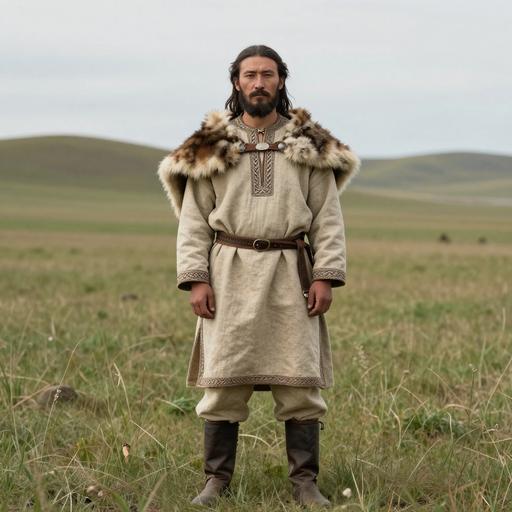
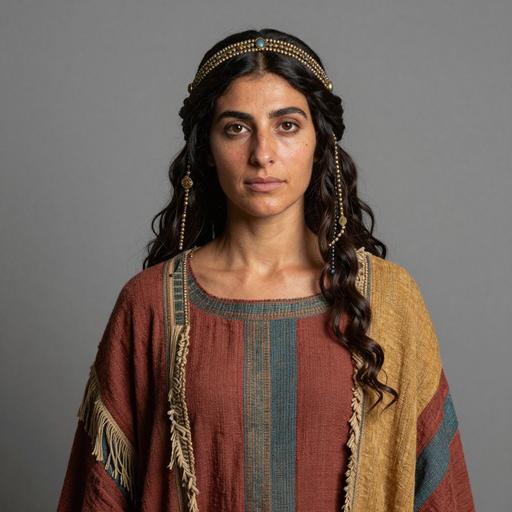
Portrait of ancient individual VIL004 from Italy, dated 515 BCE - 392 BCE
VIL004
Italy Iron Age Punic 2 Sardinia, Italy 515 BCE - 392 BCE Late Punic Sardinian I Direct
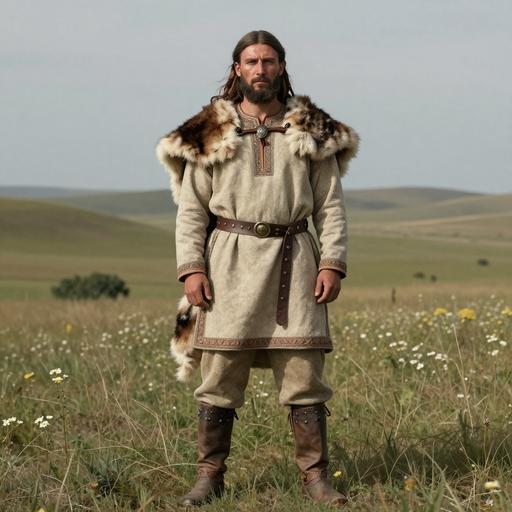
Portrait of ancient individual DA188 from Russia, dated 709 CE - 956 CE
DA188
Russia Saltovo-Mayaki Culture, Russia 709 CE - 956 CE Saltovo-Mayaki I Direct
Portrait of ancient individual DA188 from Russia, dated 709 CE - 956 CE
DA188
Russia The Saltovo-Mayaki Culture 709 CE - 956 CE I Direct
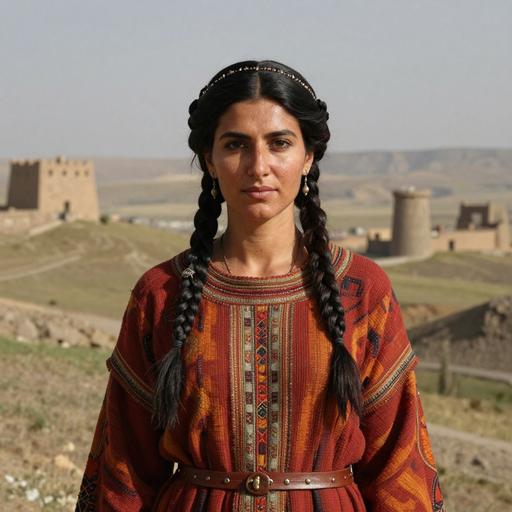
Portrait of ancient individual I11855 from Armenia, dated 902 BCE - 812 BCE
I11855
Armenia The Urartian Empire 902 BCE - 812 BCE Urartian I Direct
Portrait of ancient individual RISE47 from Denmark, dated 1499 BCE - 1322 BCE
RISE47
Denmark Bronze Age Denmark 1499 BCE - 1322 BCE Nordic Bronze Age I Direct
Portrait of ancient individual RISE47 from Denmark, dated 1499 BCE - 1322 BCE
RISE47
Denmark Bronze Age Nordic Countries 1499 BCE - 1322 BCE I Direct
Portrait of ancient individual I6310 from Turkmenistan, dated 2500 BCE - 1600 BCE
I6310
Turkmenistan Bronze Age Gonur 2500 BCE - 1600 BCE Gonur Culture I Direct
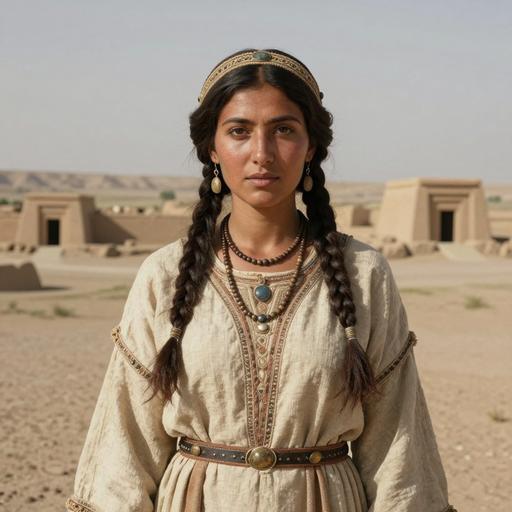
Portrait of ancient individual I1679 from Jordan, dated 6900 BCE - 6800 BCE
I1679
Jordan Pre-Pottery Neolithic C Jordan 6900 BCE - 6800 BCE PPNC I Direct
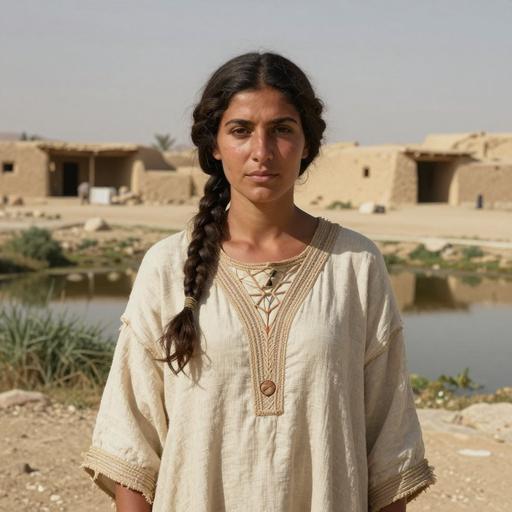
Portrait of ancient individual I1679 from Jordan, dated 6900 BCE - 6800 BCE
I1679
Jordan Neolithic Levant 6900 BCE - 6800 BCE I Direct
Portrait of ancient individual I3320 from Spain, dated 300 BCE - 100 BCE
I3320
Spain Iron Age Spain 300 BCE - 100 BCE Iberian Iron Age I1 Downstream
Chapter VI

Carrier Distribution Map

Geographic distribution of 66 ancient DNA samples (direct and subclade carriers of I)

Direct carrier Subclade carrier
Time Period Filter
All Time Periods
Showing all samples
Chapter VII

Temporal Distribution

Distribution of carriers across archaeological periods

Chapter VIII

Geographic Distribution

Distribution by country of origin (direct and subclade carriers shown by default)

Chapter IX

Country × Era Distribution

Cross-tabulation of carrier countries and archaeological periods (direct and subclade carriers shown by default)

Data

Data & Provenance

Source information and data quality

Last Updated 2026-02-09
Data Source

We use the latest phylotree for MTDNA haplogroup classification and data.