Menu
mtDNA Haplogroup • Maternal Lineage

L3B1

mtDNA Haplogroup L3B1

~12,000 years ago
West/Central Africa
1 subclades
Scroll to explore
Chapter I

The Story

The journey of mtDNA haplogroup L3B1

Origins and Evolution

mtDNA haplogroup L3B1 is a downstream lineage of L3B, itself a branch of the broader African L3 macro-haplogroup. Based on its phylogenetic position beneath L3B and the geographic distribution of closely related lineages, L3B1 most plausibly arose in West or Central Africa during the Late Pleistocene to early Holocene (a reasonable estimate is on the order of ~12 kya). As a subclade of L3B, L3B1 inherits the deeper coalescence of L3 while representing a more recent, regionally focused maternal lineage.

Mutational motifs that define L3B1 are detected in mitogenome studies sampling West and Central African populations; full mitogenome sequencing has helped refine the internal structure of L3B-derived lineages and distinguish L3B1 from other L3B branches. Because L3 lineages are central to the African mtDNA tree, L3B1 is part of the maternal diversity that accumulated within Africa during the Late Pleistocene and into the Holocene.

Subclades (if applicable)

L3B1 itself may contain further substructure (for example, named sub-branches reported in specific mitogenome studies, sometimes annotated as L3B1a, L3B1b, etc.). The specific subclade naming and number of resolved downstream branches depend on sampling density and whole-mtDNA sequencing; many finer splits have only been recognized as sequencing coverage in West and Central Africa has increased. These subclades typically show local differentiation, with some branches more common in particular ethnolinguistic groups (e.g., Mande or Niger-Congo speakers) or in rainforest populations.

Geographical Distribution

L3B1 is concentrated in West and parts of Central Africa, with highest frequencies reported among groups in coastal and near-coastal West Africa (e.g., Yoruba, Mandenka, Akan) and detectable presence in Sahelian and Central African rainforest populations. The haplogroup is also present, at appreciable frequencies, in Afro-Caribbean and African American communities as a result of the transatlantic slave trade. Low-frequency occurrences are reported in North Africa and along parts of the East African coast, consistent with historical northward and coastal gene flow and long-range contacts across the Sahara and Indian Ocean.

Geographic patterns for L3B1 mirror those of several other West/Central African maternal lineages: concentration in the western half of the continent, local heterogeneity between ethnic groups, and dispersal signals tied to historical movements.

Historical and Cultural Significance

L3B1 carries information about both deep prehistory and recent history. In prehistory, its emergence during the Late Pleistocene–Early Holocene ties it to periods of climatic change and population reorganization in West/Central Africa (for example, expansions of forest-adapted groups and later Sahelian dynamics). Over millennia, population processes such as local expansions, drift in small groups, and gene flow among neighboring communities shaped the present-day distribution.

In historic times, L3B1 is an informative marker of the African diaspora. Its presence in the Americas, particularly among Afro-Caribbean and African American populations, reflects forced migrations during the transatlantic slave trade and subsequent admixture. Conversely, rare detections in North Africa and along the East African coast point to trade, migration, and admixture episodes (e.g., trans-Saharan contacts, coastal Indian Ocean exchanges).

For genetic genealogy and population genetics, L3B1 is useful for reconstructing maternal ancestry to West/Central African source regions and for tracking within-Africa demographic processes when sufficiently high-resolution mtDNA data are available.

Conclusion

L3B1 is a regionally important West/Central African maternal lineage that links deeper African maternal diversity (L3) to local Holocene demographic histories and to recent historical movements that dispersed West/Central African peoples and their descendants beyond the continent. Ongoing mitogenome sequencing across understudied African populations continues to refine the internal structure and age estimates for L3B1 and its subclades.

Key Points

  • Origins and Evolution
  • Subclades (if applicable)
  • Geographical Distribution
  • Historical and Cultural Significance
  • Conclusion
Chapter II

Tree & Relationships

Phylogenetic context and subclades

Evolution Path

This haplogroup's evolutionary journey from its earliest ancestor to the present.

Steps Haplogroup Age Estimate Archaeology Era Time Passed Immediate Descendants Tested Modern Descendants Ancient Connections
1 L3B1 Current ~12,000 years ago 🌾 Neolithic 12,000 years 1 79 0
2 L3B ~30,000 years ago 🦴 Paleolithic 30,000 years 1 82 0
3 L3 ~70,000 years ago 🦴 Paleolithic 70,000 years 11 17,621 6
4 L ~160,000 years ago 🦴 Paleolithic 160,000 years 7 18,987 5
Chapter III

Where in the World

Geographic distribution and modern presence

Place of Origin

West/Central Africa

Modern Distribution

The populations where mtDNA haplogroup L3B1 is found include:

  1. Yoruba (Nigeria, West Africa)
  2. Mande-speaking groups (e.g., Mandenka, West Africa)
  3. Akan (Ghana, West Africa)
  4. Fulani / Peul (Sahel, West/Central Africa)
  5. Mbuti and other Central African rainforest groups (Central Africa)
  6. Afro-Caribbean and African American populations (diaspora, Americas)
  7. North African groups (e.g., Morocco, Algeria) — low frequency due to historical admixture
  8. Coastal East African groups (e.g., Swahili-adjacent populations) — low frequency
CHAPTER IV

When in Time

Your haplogroup in the context of human history

~12k years ago

Haplogroup L3B1

Your mtDNA haplogroup emerged in West/Central Africa

West/Central Africa
~10k years ago

Neolithic Revolution

Agriculture begins, settled communities form

~5k years ago

Bronze Age

Metalworking, writing, and early civilizations

~3k years ago

Iron Age

Iron tools, expanded trade networks

~2k years ago

Classical Antiquity

Greek and Roman civilizations flourish

Present

Present Day

Modern era

Your Haplogroup
Historical Era
Chapter IV-B

Linked Cultures

Ancient cultures associated with mtDNA haplogroup L3B1

Cultural Heritage

These ancient cultures have been linked to haplogroup L3B1 based on matching ancient DNA samples from archaeological excavations. The presence of this haplogroup in these cultures provides insights into the migrations and population movements of populations carrying this haplogroup.

Bungule Corded Ware Guanche Jordanow-Michelsberg Culture Khovd Long-Term Mtwapa Munsa Culture Nubian Christian Saint Martin Slab Grave Culture St. Helena Colonial
Culture assignments are based on archaeological context of ancient DNA samples and may represent regional associations during specific time periods.
Chapter V

Sample Catalog

12 subclade carriers of haplogroup L3B1 (no exact L3B1 samples sequenced yet)

12 / 12 samples
Portrait Sample Country Era Date Culture mtDNA Match
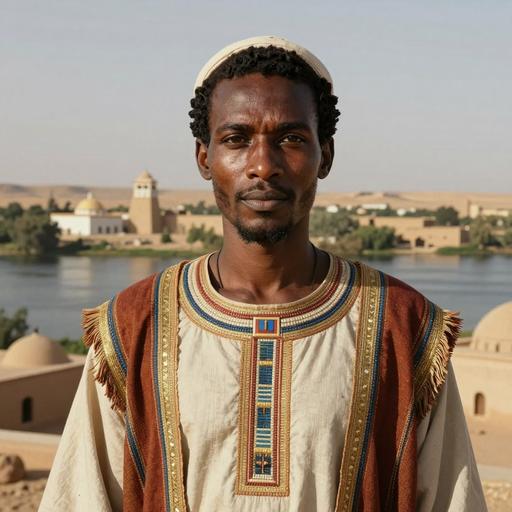
Portrait of ancient individual I19138 from Sudan, dated 650 CE - 1050 CE
I19138
Sudan Early Christian Era in Sudan 650 CE - 1050 CE Nubian Christian L3b1a2 Downstream
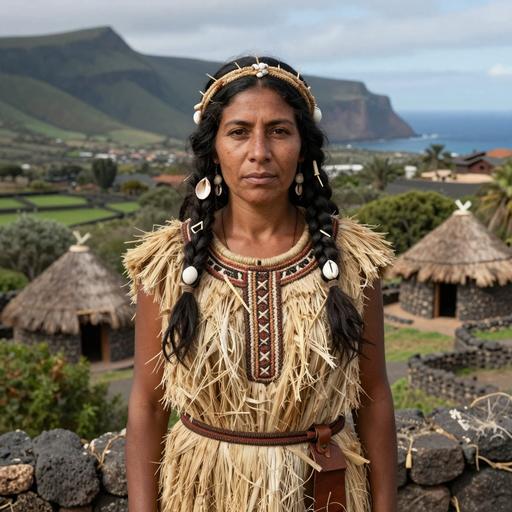
Portrait of ancient individual gun008 from Canary Islands, dated 884 CE - 994 CE
gun008
Canary Islands The Guanche People of the Canary Islands 884 CE - 994 CE Guanche L3b1a Downstream
Portrait of ancient individual gun008 from Canary Islands, dated 884 BCE - 994 BCE
gun008
Canary Islands The Guanche People of the Canary Islands 884 BCE - 994 BCE Guanche L3b1a Downstream
Portrait of ancient individual I17407 from Kenya, dated 1250 CE - 1650 CE
I17407
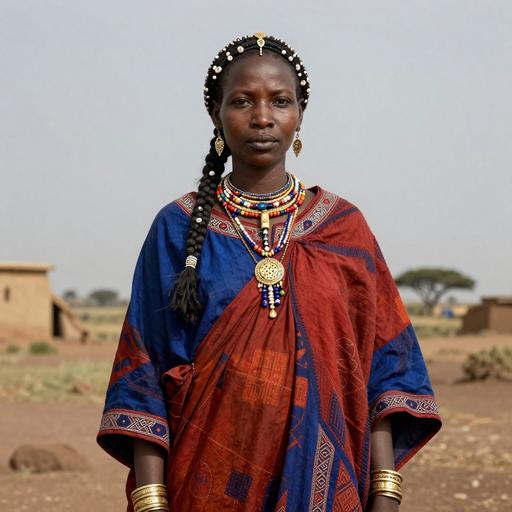
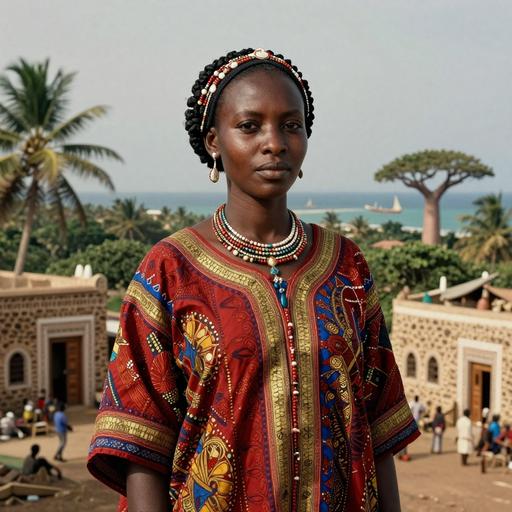
Kenya Swahili Culture of Mtwapa 1250 CE - 1650 CE Mtwapa L3b1a1a Downstream
Portrait of ancient individual I19384 from Kenya, dated 1250 CE - 1650 CE
I19384
Kenya Swahili Culture of Mtwapa 1250 CE - 1650 CE Mtwapa L3b1a1a Downstream
Portrait of ancient individual I19390 from Kenya, dated 1250 CE - 1650 CE
I19390
Kenya Swahili Culture of Mtwapa 1250 CE - 1650 CE Mtwapa L3b1a+@16124 Downstream
Portrait of ancient individual I19392 from Kenya, dated 1250 CE - 1650 CE
I19392
Kenya Swahili Culture of Mtwapa 1250 CE - 1650 CE Mtwapa L3b1a1 Downstream
Portrait of ancient individual I23551 from Kenya, dated 1250 CE - 1650 CE
I23551
Kenya Swahili Culture of Mtwapa 1250 CE - 1650 CE Mtwapa L3b1a1 Downstream
Portrait of ancient individual I13611 from Kenya, dated 1350 CE - 1550 CE
I13611
Kenya Swahili Culture of Mtwapa 1350 CE - 1550 CE Mtwapa L3b1a11 Downstream
Portrait of ancient individual MUN001 from Uganda, dated 1400 CE - 1600 CE
MUN001
Uganda Munsa Late Iron Age in Uganda 1400 CE - 1600 CE Munsa Culture L3b1a1 Downstream
Chapter VI

Carrier Distribution Map

Geographic distribution of 12 ancient DNA samples (direct and subclade carriers of L3B1)

Subclade carrier
Time Period Filter
All Time Periods
Showing all samples
Chapter VII

Temporal Distribution

Distribution of carriers across archaeological periods

Chapter VIII

Geographic Distribution

Distribution by country of origin (direct and subclade carriers shown by default)

Chapter IX

Country × Era Distribution

Cross-tabulation of carrier countries and archaeological periods (direct and subclade carriers shown by default)

Data

Data & Provenance

Source information and data quality

Last Updated 2026-02-16
Confidence Score 50/100
Coverage Low
Data Source

We use the latest phylotree for MTDNA haplogroup classification and data.