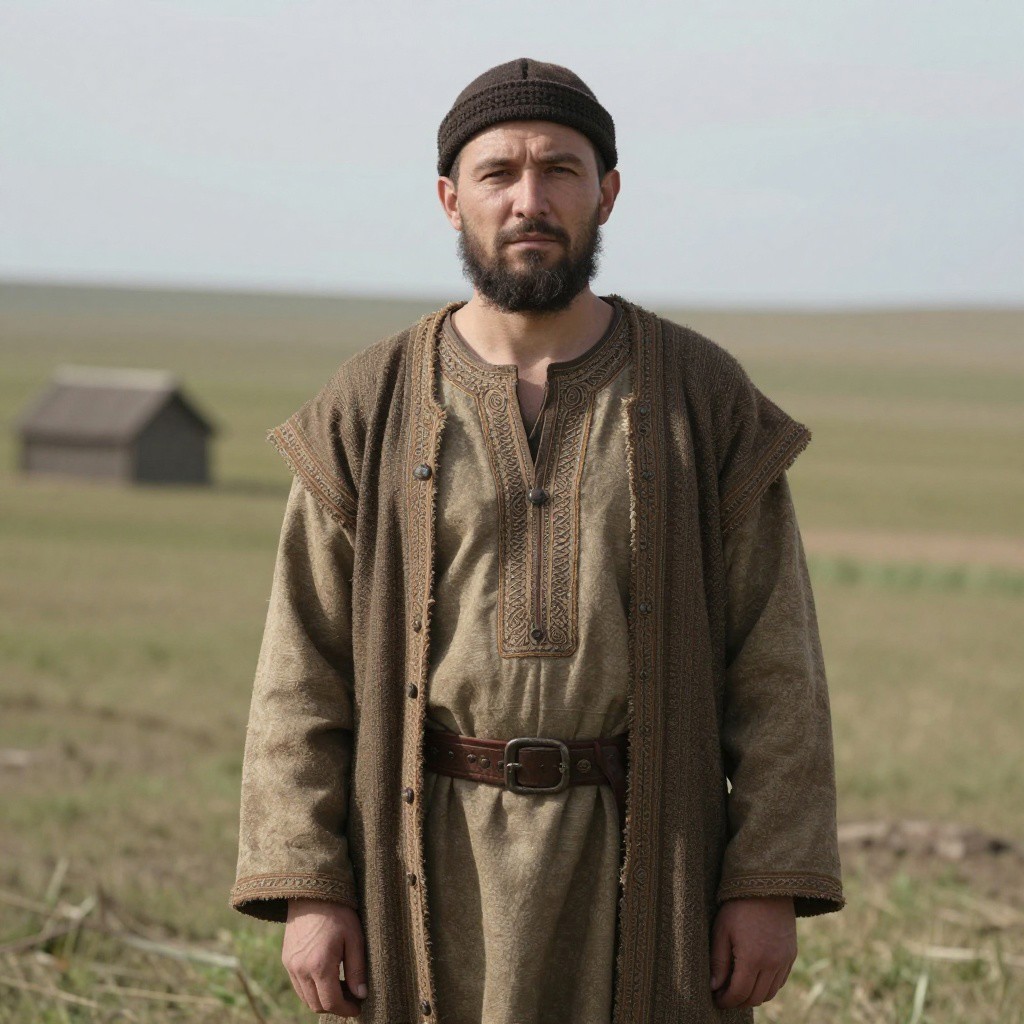
The Story
The journey of mtDNA haplogroup V26
Origins and Evolution
Haplogroup V26 is a downstream branch of mtDNA haplogroup V2, itself a subclade of haplogroup V. Haplogroup V2 has been interpreted in population genetics studies as a lineage that originated in western Eurasia soon after the Last Glacial Maximum and participated in the postglacial re‑expansion of human groups from southwestern European refugia. As a subordinate clade, V26 most plausibly arose after the initial diversification of V2, during the early Holocene (we estimate on the order of ~9 kya), consistent with a pattern of subsequent local differentiation within western Mediterranean and adjacent regions.
The formation of V26 would have occurred within small, regionally structured maternal populations; such subclades often attain low modern frequencies but can be informative about fine‑scale postglacial and later demographic events.
Subclades
At present V26 is best described as a terminal or lowly diversified branch in published phylogenies and screening datasets. If deeper internal structure exists, it is presently rare and undersampled; targeted full mitogenome sequencing of carriers would be required to resolve any internal subclades and to refine time estimates. Because V26 is a sublineage of V2, it shares diagnostic substitutions that define V2 plus one or a few private mutations that define V26.
Geographical Distribution
V26 is uncommon and found at low frequencies in western Eurasian and adjacent Mediterranean locales. Based on the phylogenetic position within V2 and the geographic pattern of related lineages, reasonable inferences and limited modern sampling indicate occurrences in:
- Iberian Peninsula (Spain and Portugal) — where many V subclades are concentrated and where southwestern European refugia left a strong genetic legacy.
- Mediterranean islands (e.g., Sardinia and other insular populations) — islands often preserve rare maternal lineages at low frequencies.
- North Africa (Berber and coastal populations) — reflecting Holocene bidirectional gene flow across the western Mediterranean.
- Caucasus region (Armenia, Georgia and neighboring groups) — where rare V subclades are occasionally reported.
- Northern Europe (isolated indigenous groups such as Saami and other northern populations) — typically at very low frequency, reflecting wider low‑level dispersals of V lineages.
These occurrences are generally sporadic and low in frequency; V26 is not a major lineage in any large, broad population sample reported to date.
Historical and Cultural Significance
Because V26 is a low‑frequency, regionally restricted branch of a postglacial lineage, its principal significance is as a marker of micro‑demographic processes rather than of large scale migrations. Inferred associations include:
- Postglacial re‑expansion: the parent haplogroup V2 is tied to human groups expanding from southwestern European refugia after the Last Glacial Maximum; V26 likely represents a later, localized diversification from those expanding populations.
- Neolithic and later interactions: low‑frequency V clades are found in both Mesolithic contexts and in Neolithic/Bronze Age assemblages across western Eurasia, suggesting assimilation between indigenous hunter‑gatherers and incoming farmer groups in some regions.
- Island and peripheral population retention: Mediterranean islands and geographically peripheral populations can preserve rare maternal lineages like V26 due to drift and founder effects.
Archaeogenetic datasets currently contain very few — if any — secure ancient occurrences assigned specifically to V26; this scarcity limits direct archaeological association but is consistent with its low modern frequency.
Conclusion
mtDNA V26 should be viewed as a rare, regionally patchy subclade of V2 that reflects fine‑scale maternal population structure in western Eurasia following the Last Glacial Maximum and into the Holocene. Its distribution (Iberia, Mediterranean islands, North Africa, Caucasus and occasional northern European finds) mirrors the broader but low‑frequency dispersal pattern of V lineages. Resolving its internal structure, precise age and palaeogeographic movements will require increased sampling and whole mitogenome data from modern and ancient individuals.
Key Points
- Origins and Evolution
- Subclades
- Geographical Distribution
- Historical and Cultural Significance
- Conclusion