Menu
Y-DNA Haplogroup • Paternal Lineage

C1A1

Y-DNA Haplogroup C1A1

~28,000 years ago
East Asia (Japanese archipelago / Northeast Asia)
1 subclades
Scroll to explore
Chapter I

The Story

The journey of Y-DNA haplogroup C1A1

Origins and Evolution

Y‑DNA haplogroup C1A1 (often reported in literature under marker names such as C‑M8) is a deep sublineage of C1A and therefore part of the broader haplogroup C (M130) radiation that expanded across Eurasia in the Upper Paleolithic. Based on its phylogenetic position beneath C1A and the geographic clustering of modern and ancient samples, C1A1 most likely split from its sister lineages in the Late Upper Paleolithic (estimated here around ~28 kya, though confidence intervals are broad). The pattern of diversity — limited internal substructure and strong geographic concentration — is consistent with an early dispersal into the Japanese archipelago followed by long-term isolation, drift, and founder effects.

Subclades (if applicable)

C1A1 appears to have limited surviving subclades visible in modern datasets; published and public-tree data show small, regionally restricted branches rather than a deep, widely distributed internal phylogeny. This topology is typical for lineages that underwent an early split and then persisted at low frequency in relatively small, isolated populations (for example, island or high-latitude hunter‑gatherer groups). Ongoing sequencing of modern and ancient Y chromosomes may reveal further internal structure, especially from additional Jomon and other prehistoric East Asian remains.

Geographical Distribution

C1A1 is strongly concentrated in the Japanese archipelago, where it is detected at appreciable frequency in the Ainu and at lower but detectable frequencies among Ryukyuan and some mainland Japanese samples. Outside Japan, C1A1 is rare but can appear sporadically in neighboring regions such as the Korean Peninsula and the Russian Far East, reflecting either ancient contacts or recent gene flow. Unlike its sister clade C1a2 (C‑V20), which is found in ancient European hunter‑gatherers, C1A1 shows little to no evidence for a substantial presence in prehistoric or modern Europe.

Historical and Cultural Significance

Genetically and archaeologically, C1A1 is most relevant to the population history of the Jomon people and later indigenous groups of northern and insular Japan. The persistence of C1A1 alongside other lineages characteristic of Jomon-descended groups (for example, Y‑DNA D1b and mtDNA haplogroups such as N9b and M7a) supports a model in which the prehistoric inhabitants of the archipelago maintained genetic continuity in some regions despite later Bronze Age and Iron Age migrations (the Yayoi expansion) that reshaped much of the modern Japanese gene pool. In cultural terms, C1A1 helps mark paternal continuity in hunter‑gatherer and early Holocene island societies and is therefore of interest to studies of demographic persistence, island founder effects, and the formation of modern regional identities such as the Ainu.

Conclusion

C1A1 is a classic example of a deeply diverging, low-frequency paternal lineage whose modern distribution reflects a mixture of ancient settlement, geographic isolation, and genetic drift. Its concentration in the Japanese archipelago and presence in prehistoric Jomon contexts make it an important marker for reconstructing the peopling and population dynamics of island East Asia, and ongoing ancient DNA and high-resolution Y‑chromosome sequencing will refine chronological and phylogeographic details for this lineage.

Key Points

  • Origins and Evolution
  • Subclades (if applicable)
  • Geographical Distribution
  • Historical and Cultural Significance
  • Conclusion
Chapter II

Tree & Relationships

Phylogenetic context and subclades

Evolution Path

This haplogroup's evolutionary journey from its earliest ancestor to the present.

Steps Haplogroup Age Estimate Archaeology Era Time Passed Immediate Descendants Tested Modern Descendants Ancient Connections
1 C1A1 Current ~28,000 years ago 🦴 Paleolithic 28,000 years 1 0 0
2 C1A ~45,000 years ago 🦴 Paleolithic 45,000 years 2 18 2
3 C1 ~50,000 years ago 🦴 Paleolithic 50,000 years 2 43 0
4 C ~53,000 years ago 🦴 Paleolithic 53,000 years 3 303 35

Siblings (1)

Other branches from the same parent haplogroup

Chapter III

Where in the World

Geographic distribution and modern presence

Place of Origin

East Asia (Japanese archipelago / Northeast Asia)

Modern Distribution

The populations where Y-DNA haplogroup C1A1 is found include:

  1. Ainu (indigenous people of northern Japan)
  2. Ryukyuan island populations (Okinawa and surrounding islands)
  3. Mainland Japanese (Honshu, Hokkaido) at low frequencies
  4. Prehistoric Jomon remains from the Japanese archipelago
  5. Scattered/rare occurrences in neighboring regions (Korean Peninsula, Russian Far East)

Regional Presence

Eastern Asia High
Northeast Asia Moderate
Southeast Asia Low
CHAPTER IV

When in Time

Your haplogroup in the context of human history

~28k years ago

Haplogroup C1A1

Your Y-DNA haplogroup emerged in East Asia (Japanese archipelago / Northeast Asia)

East Asia (Japanese archipelago / Northeast Asia)
~20k years ago

Last Glacial Maximum

Peak of the last ice age, populations isolated

~10k years ago

Neolithic Revolution

Agriculture begins, settled communities form

~5k years ago

Bronze Age

Metalworking, writing, and early civilizations

~3k years ago

Iron Age

Iron tools, expanded trade networks

~2k years ago

Classical Antiquity

Greek and Roman civilizations flourish

Present

Present Day

Modern era

Your Haplogroup
Historical Era
Chapter IV-B

Linked Cultures

Ancient cultures associated with Y-DNA haplogroup C1A1

Cultural Heritage

These ancient cultures have been linked to haplogroup C1A1 based on matching ancient DNA samples from archaeological excavations. The presence of this haplogroup in these cultures provides insights into the migrations and population movements of populations carrying this haplogroup.

Azilian Culture Goyet Cave Linear Pottery Culture Pavlovian Culture Solutrean Starčevo Culture
Culture assignments are based on archaeological context of ancient DNA samples and may represent regional associations during specific time periods.
Chapter V

Sample Catalog

1 subclade carrier of haplogroup C1A1 (no exact C1A1 samples sequenced yet)

1 / 1 samples
Portrait Sample Country Era Date Culture Y-DNA Match
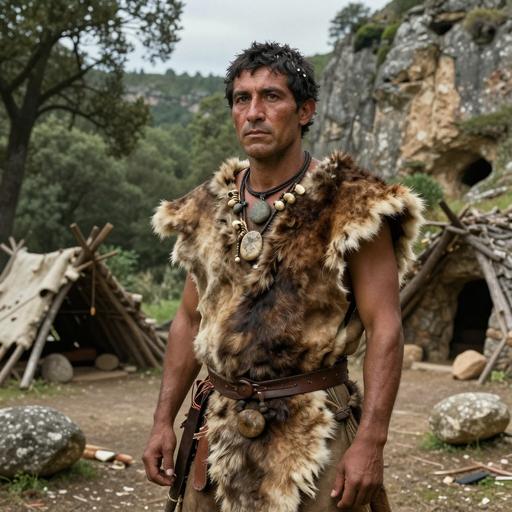
Portrait of ancient individual BAL003 from Spain, dated 10727 BCE - 9272 BCE
BAL003
Spain Upper Paleolithic Azilian Culture, Spain 10727 BCE - 9272 BCE Azilian Culture C1a1a Downstream
Chapter VI

Carrier Distribution Map

Geographic distribution of 1 ancient DNA sample (direct and subclade carriers of C1A1)

Subclade carrier
Time Period Filter
All Time Periods
Showing all samples
Chapter VII

Temporal Distribution

Distribution of carriers across archaeological periods

Chapter VIII

Geographic Distribution

Distribution by country of origin (direct and subclade carriers shown by default)

Chapter IX

Country × Era Distribution

Cross-tabulation of carrier countries and archaeological periods (direct and subclade carriers shown by default)

Data

Data & Provenance

Source information and data quality

Last Updated 2026-02-16
Confidence Score 50/100
Coverage Low
Data Source

We use the latest phylotree for YDNA haplogroup classification and data.