Menu
Y-DNA Haplogroup • Paternal Lineage

I1A2A1A1

Y-DNA Haplogroup I1A2A1A1

~1,000 years ago
Southern Scandinavia / Northern Europe
2 subclades
Scroll to explore
Chapter I

The Story

The journey of Y-DNA haplogroup I1A2A1A1

Origins and Evolution

Y-DNA haplogroup I1A2A1A1 is a downstream derivative of I1A2A1A within the broader I1 clade, a lineage long associated with Northern Europe. Based on its phylogenetic position beneath I1A2A1A (a branch estimated to have formed in southern Scandinavia in the late Iron Age), I1A2A1A1 most plausibly originated in southern Scandinavia during the early medieval period (roughly the Viking Age, ~1.0 kya). Its formation represents a relatively recent splitting event on the I1 tree, consistent with the pattern of rapid diversification and local founder effects seen in male lineages during the last two thousand years in northern Europe.

Subclades

As a terminal or near-terminal subclade (I1A2A1A1), this lineage may contain further downstream branches that are still being resolved with increasing SNP discovery and high-resolution sequencing. In many modern datasets such subclades are defined by regionally restricted SNPs or short-range STR signatures; however, published and public-tree resolution for very recent I1 branches is often incomplete, and additional substructure is expected as more whole-Y sequences are generated. The parent clade I1A2A1A and sibling I1 branches form the immediate phylogenetic context.

Geographical Distribution

The highest frequencies of I1A2A1A1 are found in southern and central Scandinavia (notably southern Sweden and Denmark), with reduced but notable presence in Iceland, parts of Scotland and northern England, and low-to-moderate frequencies in northern Germany and the Netherlands. The haplogroup also appears at low levels in Baltic-region populations and parts of Poland, reflecting regional overlap and historical contact. Outside Europe, occurrences are generally rare and attributable to historical migration and modern diaspora (North America, Oceania). In our archaeological and aDNA database this specific lineage has been identified in two ancient samples, supporting its persistence in archaeological contexts dating to the last two millennia.

Historical and Cultural Significance

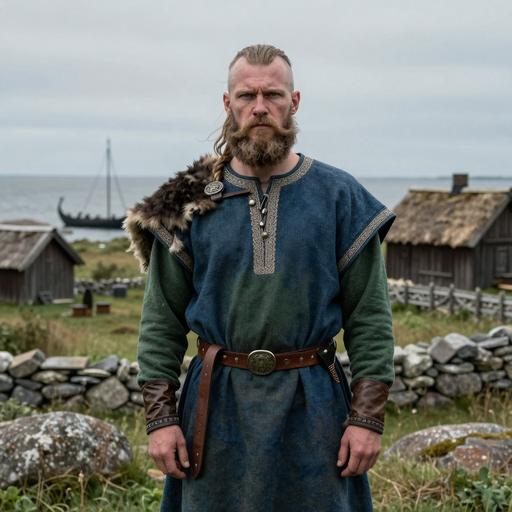
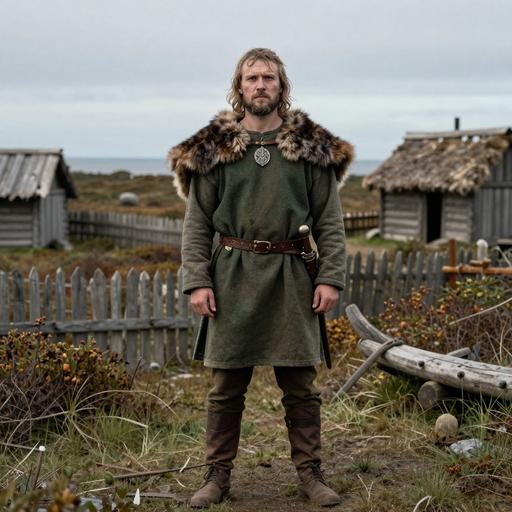
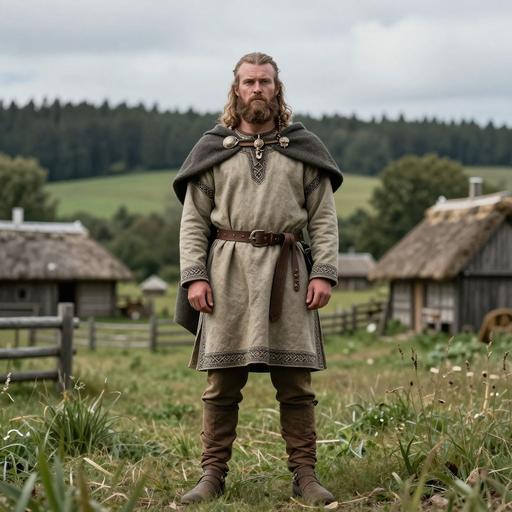
Because of its origin timing and geographic pattern, I1A2A1A1 is best interpreted in light of Iron Age and early medieval Scandinavian demographic processes. The clade likely expanded locally in southern Scandinavian population centers and spread with later Germanic and Viking Age movements — including coastal and maritime dispersals to the North Atlantic and British Isles. Its presence in Iceland and some northern British sites is consistent with documented Norse settlement and seafaring colonization. In later centuries, population mixing, medieval migrations, and modern movements carried the lineage further into adjacent parts of Europe and, via recent historical migrations, worldwide.

Conclusion

I1A2A1A1 is a relatively young, regionally concentrated Scandinavian branch of I1 that exemplifies how male lineages can diversify rapidly during periods of cultural expansion and mobility. Continued high-resolution sequencing and more ancient DNA sampling will refine its internal structure, provide clearer dating, and improve understanding of the micro-geographies of its spread during the Viking Age and subsequent medieval period.

Key Points

  • Origins and Evolution
  • Subclades
  • Geographical Distribution
  • Historical and Cultural Significance
  • Conclusion
Chapter II

Tree & Relationships

Phylogenetic context and subclades

Evolution Path

This haplogroup's evolutionary journey from its earliest ancestor to the present.

Steps Haplogroup Age Estimate Archaeology Era Time Passed Immediate Descendants Tested Modern Descendants Ancient Connections
1 I1A2A1A1 Current ~1,000 years ago 🏰 Medieval 1,000 years 2 16 0

Siblings (1)

Other branches from the same parent haplogroup

Chapter III

Where in the World

Geographic distribution and modern presence

Place of Origin

Southern Scandinavia / Northern Europe

Modern Distribution

The populations where Y-DNA haplogroup I1A2A1A1 is found include:

  1. Southern and central Scandinavians (especially southern Sweden and Denmark, and parts of southern Norway)
  2. Iceland and other North Atlantic Norse-settled islands (Faroe, parts of Orkney/Shetland)
  3. British Isles (notably parts of Scotland, northern and western England)
  4. Northern Germany and the Netherlands
  5. Baltic populations and parts of Poland (low to moderate frequency)
  6. Low-frequency occurrences in Southern Europe and worldwide diasporas (North America, Oceania) due to historic migration

Regional Presence

Northern Europe (Scandinavia) High
Western Europe (British Isles, North Sea coasts) Moderate
Central Europe (Northern Germany, Netherlands) Moderate
North-Eastern Europe (Baltics, Poland) Low
North America (diaspora) Low
CHAPTER IV

When in Time

Your haplogroup in the context of human history

~10k years ago

Neolithic Revolution

Agriculture begins, settled communities form

~5k years ago

Bronze Age

Metalworking, writing, and early civilizations

~3k years ago

Iron Age

Iron tools, expanded trade networks

~2k years ago

Classical Antiquity

Greek and Roman civilizations flourish

~1k years ago

Haplogroup I1A2A1A1

Your Y-DNA haplogroup emerged in Southern Scandinavia / Northern Europe

Southern Scandinavia / Northern Europe
Present

Present Day

Modern era

Your Haplogroup
Historical Era
Chapter IV-B

Linked Cultures

Ancient cultures associated with Y-DNA haplogroup I1A2A1A1

Cultural Heritage

These ancient cultures have been linked to haplogroup I1A2A1A1 based on matching ancient DNA samples from archaeological excavations. The presence of this haplogroup in these cultures provides insights into the migrations and population movements of populations carrying this haplogroup.

Avar Danish Medieval Danish Post-Medieval Late Viking Post-Medieval Swedish Roman Provincial Sarmatian-Hun Saxon Culture Southern Scandinavian Culture Viking Viking Denmark
Culture assignments are based on archaeological context of ancient DNA samples and may represent regional associations during specific time periods.
Chapter V

Sample Catalog

18 subclade carriers of haplogroup I1A2A1A1 (no exact I1A2A1A1 samples sequenced yet)

18 / 18 samples
Portrait Sample Country Era Date Culture Y-DNA Match
Portrait of ancient individual A181015 from Hungary, dated 400 CE - 500 CE
A181015
Hungary Late Sarmatian to Early Hun Period Danube-Tisza, Hungary 400 CE - 500 CE Sarmatian-Hun I1a2a1a1a1b Downstream
Portrait of ancient individual A181016 from Hungary, dated 400 CE - 500 CE
A181016
Hungary Late Sarmatian to Early Hun Period Danube-Tisza, Hungary 400 CE - 500 CE Sarmatian-Hun I1a2a1a1a Downstream
Portrait of ancient individual VK485 from Estonia, dated 649 CE - 775 CE
VK485
Estonia Early Viking Age Estonia 649 CE - 775 CE Viking I1a2a1a1d1a Downstream
Portrait of ancient individual VK490 from Estonia, dated 657 CE - 777 CE
VK490
Estonia Early Viking Age Estonia 657 CE - 777 CE Viking I1a2a1a1d1a1a Downstream
Portrait of ancient individual VK483 from Estonia, dated 674 CE - 877 CE
VK483
Estonia Early Viking Age Estonia 674 CE - 877 CE Viking I1a2a1a1d1a Downstream
Portrait of ancient individual VK491 from Estonia, dated 700 CE - 800 CE
VK491
Estonia Early Viking Age Estonia 700 CE - 800 CE Viking I1a2a1a1d1a1a Downstream
Portrait of ancient individual VK497 from Estonia, dated 700 CE - 800 CE
VK497
Estonia Early Viking Age Estonia 700 CE - 800 CE Viking I1a2a1a1d1a1a Downstream
Portrait of ancient individual VK552 from Estonia, dated 700 CE - 800 CE
VK552
Estonia Early Viking Age Estonia 700 CE - 800 CE Viking I1a2a1a1d Downstream
Portrait of ancient individual VK555 from Estonia, dated 700 CE - 800 CE
VK555
Estonia Early Viking Age Estonia 700 CE - 800 CE Viking I1a2a1a1d1a Downstream
Portrait of ancient individual VK492 from Estonia, dated 700 CE - 800 CE
VK492
Estonia Early Viking Age Estonia 700 CE - 800 CE Viking I1a2a1a1d1a Downstream
Chapter VI

Carrier Distribution Map

Geographic distribution of 18 ancient DNA samples (direct and subclade carriers of I1A2A1A1)

Subclade carrier
Time Period Filter
All Time Periods
Showing all samples
Chapter VII

Temporal Distribution

Distribution of carriers across archaeological periods

Chapter VIII

Geographic Distribution

Distribution by country of origin (direct and subclade carriers shown by default)

Chapter IX

Country × Era Distribution

Cross-tabulation of carrier countries and archaeological periods (direct and subclade carriers shown by default)

Data

Data & Provenance

Source information and data quality

Last Updated 2026-02-16
Confidence Score 50/100
Coverage Low
Data Source

We use the latest phylotree for YDNA haplogroup classification and data.