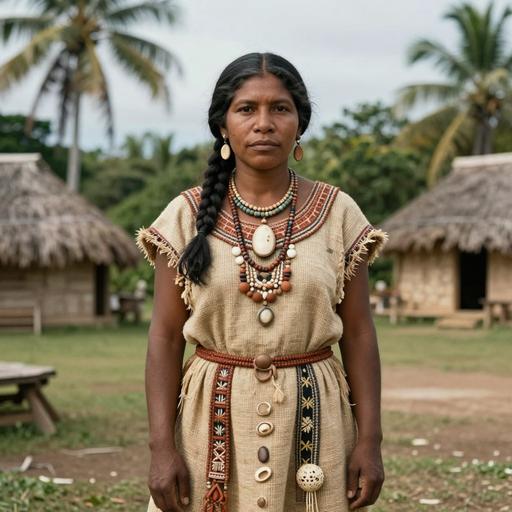
The Story
The journey of mtDNA haplogroup A
Origins and Evolution
mtDNA haplogroup A is a descendant of macro-haplogroup N and likely formed in Northeast/East Asia during the Late Pleistocene (roughly 20–40 kya, commonly centered in estimates near ~30 kya). From this ancestral Asian pool, distinct sublineages radiated within Siberia and East Asia, and one major derivative — A2 — became a founding Native American lineage during the Beringian/late glacial migrations into the Americas. Population-genetic and ancient-DNA studies support a scenario in which haplogroup A lineages were present among Upper Paleolithic and post-glacial hunter-gatherer groups in Northeast Asia and eastern Siberia, and contributed substantially to the maternal ancestry of indigenous peoples of the Americas.
Subclades
Within mtDNA haplogroup A there are multiple subclades with different geographic affinities. The most notable are:
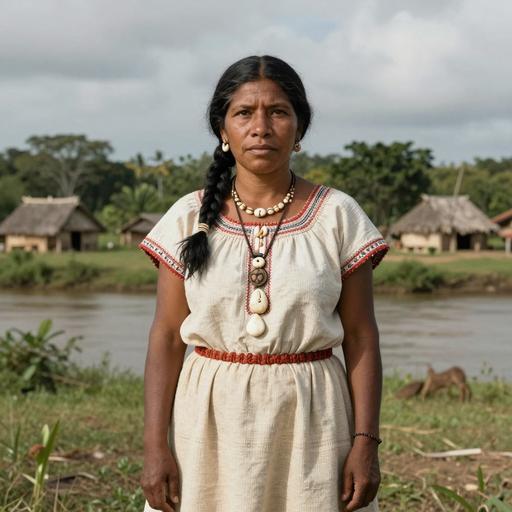
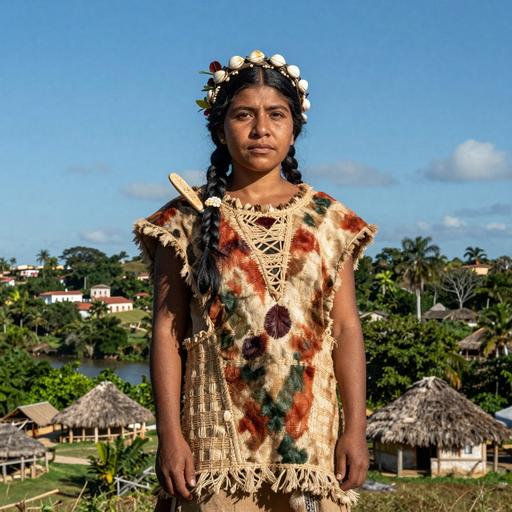
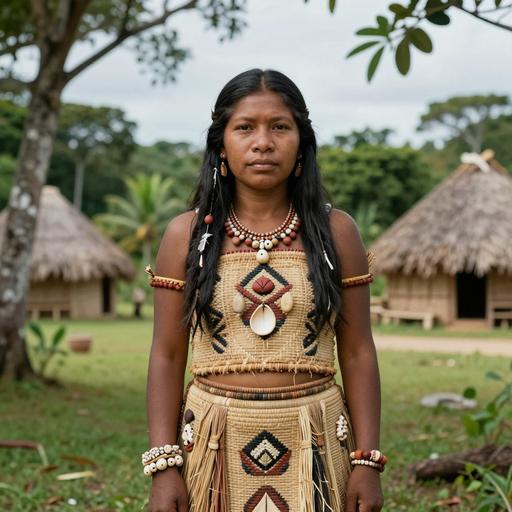
- A2 — the principal Native American branch, widespread across North, Central, and South America in many indigenous populations.
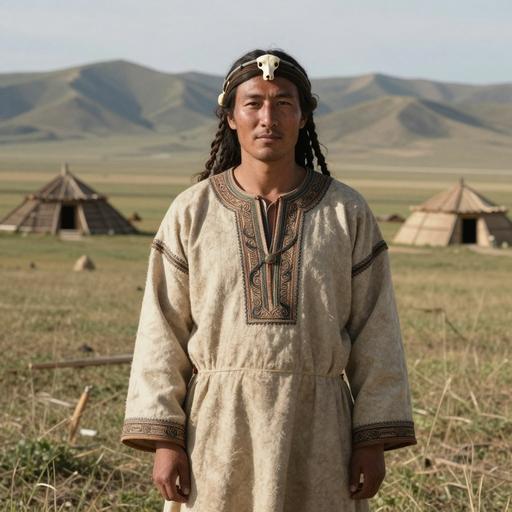
- East Asian and Siberian subclades (various A1, A4, etc. depending on different nomenclatures in the literature) that are found at varying frequencies in populations from the Russian Far East, northern China, Mongolia, Korea, and Japan.
These subclades differ in coalescence times: A2 shows a comparatively recent coalescence consistent with late-Pleistocene/early-Holocene entry into the Americas, whereas some East Asian/Siberian A lineages trace to older Pleistocene expansions within Eurasia.
Geographical Distribution
mtDNA A exhibits a clear East Asian–Siberian origin and a trans-Beringian distribution via its descendant A2 in the Americas. Key patterns are:
- High prevalence of A2 among many Native American groups (particularly in North and Central America) where it is one of the primary founding maternal lineages.
- Moderate frequencies of non-A2 A subclades among Northeast Asian, Siberian, and certain Central Asian populations (including indigenous Siberian groups, some Mongolian and northern Chinese populations, Koreans and Japanese).
- Low, sporadic presence in western Eurasia, usually traceable to recent gene flow or rare historical contacts.
Ancient DNA from Siberia and Beringia has repeatedly found A-lineage mitotypes in hunter-gatherer and early Holocene contexts, supporting the long-term presence of this lineage in northeastern Eurasia prior to the peopling of the Americas.
Historical and Cultural Significance
Haplogroup A is central to discussions of the peopling of the Americas: the presence of A2 in pre-Columbian remains and its phylogeographic pattern provide genetic evidence for a Beringian source and a late-Pleistocene/early-Holocene dispersal into the New World. In East Asia, A-lineages are found in populations associated with prehistoric coastal and inland hunter-gatherer cultures and later farming groups, such as the Jomon of Japan where mitochondrial diversity reflects continuity and local differentiation. Studies of modern and ancient populations use mtDNA A to trace migration corridors, population continuity versus replacement, and interactions between Siberian, East Asian, and Native American gene pools.
Conclusion
mtDNA haplogroup A is a well-documented maternal lineage whose phylogeography links Northeast/East Asia and the Americas. It is both an ancient East Asian/Siberian lineage and the source of one of the principal founding Native American maternal branches (A2). Because of its geographic breadth and clear archaeological and genetic signals, mtDNA A remains a focal marker for reconstructing Late Pleistocene population structure in northeastern Eurasia and the routes of early human migration into the Americas.
Key Points
- Origins and Evolution
- Subclades
- Geographical Distribution
- Historical and Cultural Significance
- Conclusion