Menu
mtDNA Haplogroup • Maternal Lineage

A10

mtDNA Haplogroup A10

~15,000 years ago
Central/East Asia (Siberia–Altai region)
1 subclades
Scroll to explore
Chapter I

The Story

The journey of mtDNA haplogroup A10

Origins and Evolution

mtDNA haplogroup A10 is a descendant branch of macro-haplogroup A, a lineage that originated in northeastern/East Asia during the Late Pleistocene. Based on its phylogenetic position and coalescence estimates relative to other A subclades, A10 most likely diverged during the terminal Pleistocene to early Holocene (roughly ~10–20 kya, here estimated ~15 kya) in a broad area spanning southern Siberia, the Altai region, and adjacent parts of Central and East Asia. Its establishment likely reflects regional population structure among post-glacial hunter-gatherer groups in northern Eurasia and early Holocene dispersals across Siberia.

Subclades (if applicable)

A10 is a relatively deep but low-diversity clade; population-level sequencing and phylogenies identify internal substructure in some datasets (reported as sublineages or sequence variants such as A10a in published trees), but the subclade taxonomy remains less extensively sampled than major A branches. Continued complete mitogenome sequencing from modern and ancient samples is clarifying internal branching and divergence times; for now A10 should be treated as a minor but phylogenetically distinct branch within haplogroup A with a few named sublineages in specialized databases.

Geographical Distribution

Today A10 is found at low frequencies and a patchy geographic distribution consistent with a core in southern Siberia and adjacent Central Asia and scattered presence elsewhere due to later movements. Modern occurrences have been reported in some Siberian ethnic groups, Turkic and Altai populations, and isolated individuals in Central Asian collections. Ancient DNA studies have recovered A10 or closely related sequences in Bronze Age / Iron Age contexts from the Eurasian steppe and Altai region, indicating the lineage was present among some prehistoric populations of the steppe corridor and therefore had opportunities for limited westward dispersal during Bronze and Iron Age population movements.

Historical and Cultural Significance

Because A10 is uncommon, it does not mark broad population replacements but is valuable as a tracer of localized maternal ancestry and microdemographic events. Its detection in ancient remains from Bronze Age steppe-related cultures (for example, finds reported from Altai and some steppe burials) suggests A10 contributed to the maternal gene pool of certain steppe communities, perhaps carried by hunter-gatherer or mixed farmer–forager groups who later interacted with steppe pastoralists. The haplogroup's presence in modern Siberian and some Central Asian groups today likely reflects continuity in northern Eurasian maternal lineages combined with later cultural and linguistic shifts (e.g., Turkic expansions) that redistributed low-frequency lineages.

Conclusion

mtDNA A10 is a minor but informative subclade of haplogroup A with origins in the Siberia–Altai/Central Asian sector of northern Eurasia in the Late Pleistocene/Early Holocene. Its low-frequency modern distribution and intermittent appearance in ancient steppe contexts make it useful for fine-scale studies of regional maternal continuity, post-glacial dispersals in Siberia, and the micro-history of Bronze–Iron Age steppe populations. Broader mitogenome sampling of both modern and ancient individuals will improve resolution of A10's internal branching and precise demographic history.

Key Points

  • Origins and Evolution
  • Subclades (if applicable)
  • Geographical Distribution
  • Historical and Cultural Significance
  • Conclusion
Chapter II

Tree & Relationships

Phylogenetic context and subclades

Evolution Path

This haplogroup's evolutionary journey from its earliest ancestor to the present.

Steps Haplogroup Age Estimate Archaeology Era Time Passed Immediate Descendants Tested Modern Descendants Ancient Connections
1 A10 Current ~15,000 years ago 🏹 Mesolithic 15,000 years 1 2 0
2 A ~30,000 years ago 🦴 Paleolithic 30,000 years 7 630 192

Siblings (6)

Other branches from the same parent haplogroup

Chapter III

Where in the World

Geographic distribution and modern presence

Place of Origin

Central/East Asia (Siberia–Altai region)

Modern Distribution

The populations where mtDNA haplogroup A10 is found include:

  1. Southern Siberian and Altai populations (e.g., indigenous Altaian groups)
  2. Turkic-speaking Central Asian groups (low frequency; e.g., some Kazakh/Altaians)
  3. Indigenous Siberian groups (reported sporadically among Evenks, Yakuts and neighboring peoples)
  4. Ancient Bronze Age steppe and Altai-associated cultures (e.g., Okunevo/Andronovo-area remains)
  5. Low-frequency occurrences in eastern parts of Eurasia and occasional detections in eastern Europe linked to past steppe-mediated gene flow
CHAPTER IV

When in Time

Your haplogroup in the context of human history

~20k years ago

Last Glacial Maximum

Peak of the last ice age, populations isolated

~15k years ago

Haplogroup A10

Your mtDNA haplogroup emerged in Central/East Asia (Siberia–Altai region)

Central/East Asia (Siberia–Altai region)
~10k years ago

Neolithic Revolution

Agriculture begins, settled communities form

~5k years ago

Bronze Age

Metalworking, writing, and early civilizations

~3k years ago

Iron Age

Iron tools, expanded trade networks

~2k years ago

Classical Antiquity

Greek and Roman civilizations flourish

Present

Present Day

Modern era

Your Haplogroup
Historical Era
Chapter IV-B

Linked Cultures

Ancient cultures associated with mtDNA haplogroup A10

Cultural Heritage

These ancient cultures have been linked to haplogroup A10 based on matching ancient DNA samples from archaeological excavations. The presence of this haplogroup in these cultures provides insights into the migrations and population movements of populations carrying this haplogroup.

Afanasievo Culture Early Avar Irkutsk Culture Kazakhstan Bronze Age Kitoi Kuenga Culture Lokomotiv Culture Ob River Culture Ust-Ida Culture Yenisei Culture
Culture assignments are based on archaeological context of ancient DNA samples and may represent regional associations during specific time periods.
Chapter V

Sample Catalog

7 direct carriers and 2 subclade carriers of haplogroup A10

9 / 9 samples
Portrait Sample Country Era Date Culture mtDNA Match
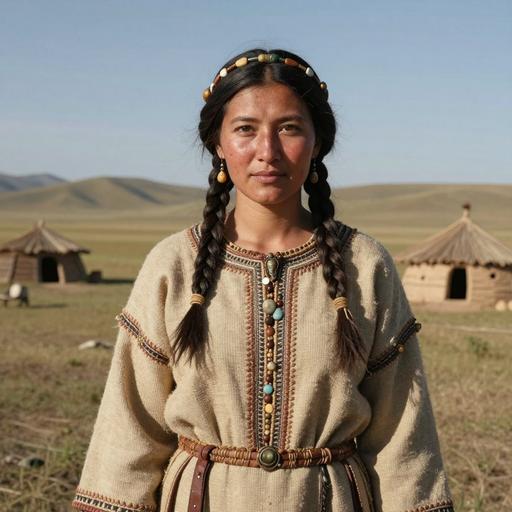
Portrait of ancient individual SZRV-54 from Hungary, dated 625 CE - 675 CE
SZRV-54
Hungary Early Avar Period Hungary 625 CE - 675 CE Early Avar A10 Direct
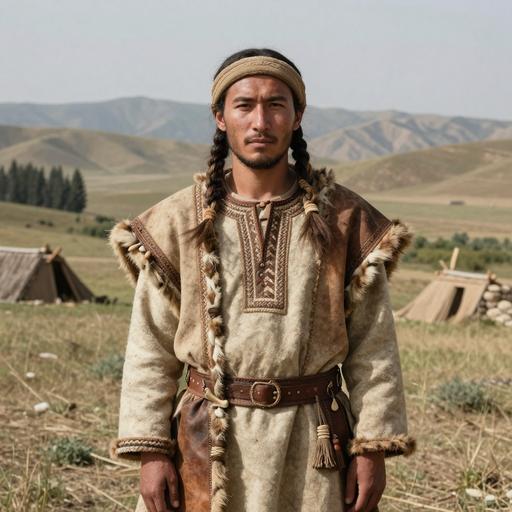
Portrait of ancient individual NEO57 from Kazakhstan, dated 3011 BCE - 2894 BCE
NEO57
Kazakhstan Early Bronze Age Kazakhstan 3011 BCE - 2894 BCE Kazakhstan Bronze Age A10 Direct
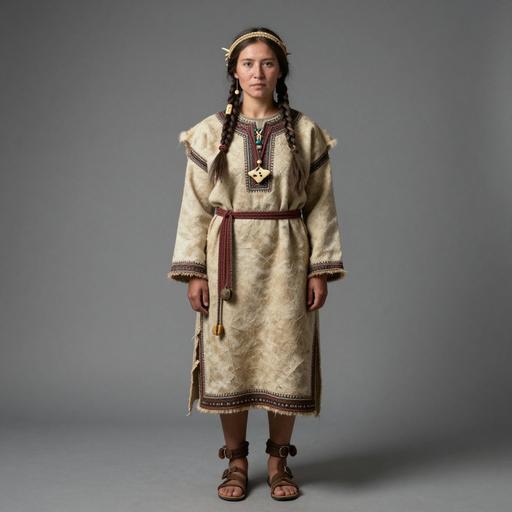
Portrait of ancient individual C3343 from China, dated 3093 BCE - 2911 BCE
C3343
China Bronze Age Afanasievo Culture Songshugou, Xinjiang, China 3093 BCE - 2911 BCE Afanasievo Culture A10 Direct
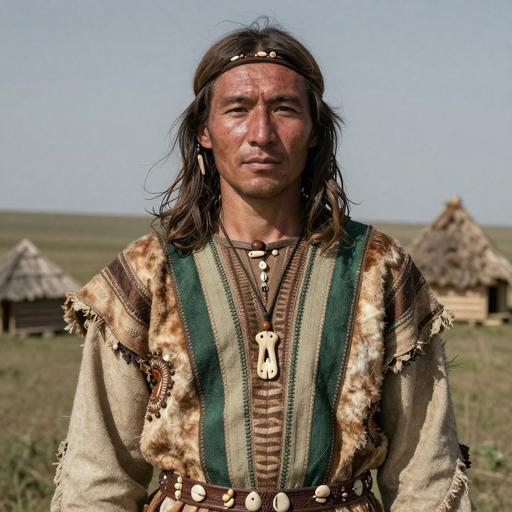
Portrait of ancient individual I1961 from Russia, dated 4239 BCE - 4002 BCE
I1961
Russia Northern Irkutsk 4239 BCE - 4002 BCE Irkutsk Culture A10 Direct
Portrait of ancient individual I1961 from Russia, dated 4239 BCE - 4002 BCE
I1961
Russia Northern Irkutsk 4239 BCE - 4002 BCE Irkutsk Culture A10 Direct
Portrait of ancient individual NEO923 from Russia, dated 4451 BCE - 4342 BCE
NEO923
Russia Ob River Culture of Northern Russia 4451 BCE - 4342 BCE Ob River Culture A10 Direct
Portrait of ancient individual NEO309 from Russia, dated 4489 BCE - 4346 BCE
NEO309
Russia Late Neolithic Ob River Culture of the Middle Irtysh Region 4489 BCE - 4346 BCE Ob River Culture A10 Direct
Portrait of ancient individual irk030 from Russia, dated 4215 BCE - 3953 BCE
irk030
Russia Neolithic Lena River, Russia 4215 BCE - 3953 BCE Lena River Neolithic A10a1b Downstream
Portrait of ancient individual irk030 from Russia, dated 4215 BCE - 3953 BCE
irk030
Russia Neolithic Cis-Baikal, Siberia 4215 BCE - 3953 BCE A10a1b Downstream
Chapter VI

Carrier Distribution Map

Geographic distribution of 9 ancient DNA samples (direct and subclade carriers of A10)

Direct carrier Subclade carrier
Time Period Filter
All Time Periods
Showing all samples
Chapter VII

Temporal Distribution

Distribution of carriers across archaeological periods

Chapter VIII

Geographic Distribution

Distribution by country of origin (direct and subclade carriers shown by default)

Chapter IX

Country × Era Distribution

Cross-tabulation of carrier countries and archaeological periods (direct and subclade carriers shown by default)

Data

Data & Provenance

Source information and data quality

Last Updated 2026-02-09
Data Source

We use the latest phylotree for MTDNA haplogroup classification and data.