The Story
The journey of mtDNA haplogroup A12A2A2
Origins and Evolution
mtDNA haplogroup A12A2A2 is nested within the A12A2A branch of haplogroup A, part of the broader East Asian mtDNA lineage A. Based on phylogenetic position and available ancient DNA, A12A2A2 most likely originated in Northeast Asia around 4 kya (mid-to-late Holocene). Its emergence fits a pattern of regional differentiation among maternal lineages after the initial postglacial expansions into northern East Asia. The lineage appears to have remained at low frequency and largely localized, a pattern consistent with founder effects, genetic drift, and population continuity in isolated coastal and riverine hunter-gatherer groups.
Subclades
As of current published and curated databases, A12A2A2 is a relatively deep but low-frequency terminal branch with very limited recognized downstream substructure. Few or no well-documented downstream subclades have been reported at appreciable frequency, which is consistent with the haplogroup's rarity and limited sampling in some affected populations. Future high-resolution sequencing of additional samples from the Russian Far East, Hokkaido, Kamchatka and adjacent regions could reveal further micro-branches.
Geographical Distribution
A12A2A2 shows a geographically restricted distribution concentrated in Northeast and northern East Asia, with sporadic occurrences elsewhere in East and Central Asia. Modern occurrences and available ancient DNA point to presence among:
- Indigenous Siberian groups (Evenks, Yakuts and other Tungusic- and Turkic-speaking peoples)
- Coastal Russian Far East peoples (Ulchi, Nivkh)
- Ainu and Jomon-descended populations of northern Japan
- Low-frequency occurrences among northern Han Chinese and Koreans
- Sporadic detections in Mongolian, Central Asian, Kamchatka and Kuril populations
The haplogroup's pattern—localized high persistence in coastal and island contexts with low-level inland and trans-regional occurrences—matches expectations for a Holocene lineage that persisted in relatively small, semi-isolated communities.
Historical and Cultural Significance
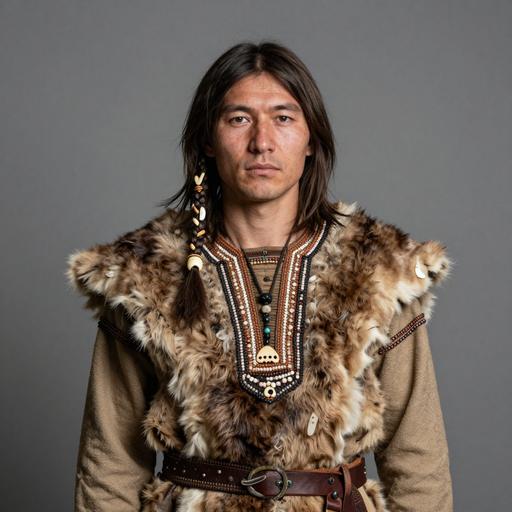
A12A2A2's associations with groups such as the Ainu, Ulchi, Nivkh and other Russian Far East peoples tie it to longstanding Holocene coastal and riverine hunter-gatherer traditions in the Northwest Pacific. Archaeological cultures of relevance include communities with Jomon-related ancestry in northern Japan and Okhotsk-related coastal cultures in the Russian Far East. The lineage's survival in these groups likely reflects demographic continuity, localized endogamy, and the demographic impacts of later expansions (farmers, pastoralists, and historic migrations) that diluted its frequency elsewhere.
Two ancient DNA occurrences attributed to A12A2A2 reinforce its antiquity in the region and provide direct archaeological context for the haplogroup's presence in Holocene northeastern Eurasia.
Genetic Associations and Co-occurrence
In populations carrying A12A2A2, mtDNA haplogroups such as D4, C4, and G1 are commonly found alongside it, reflecting typical northern East Asian maternal pools. On the paternal side, Y-DNA lineages typical of the region (for example, N-related and C-related lineages) often characterize the same populations, although mtDNA and Y-DNA histories can differ due to sex-biased demographic processes.
Conclusion
mtDNA A12A2A2 is a rare, regionally restricted maternal lineage that illustrates micro-scale maternal differentiation in Holocene Northeast Asia. Its distribution among coastal hunter-gatherer-descended groups like the Ainu, Ulchi, and Nivkh, together with a couple of ancient DNA hits, supports a model of local origin and long-term persistence rather than broad, recent expansion. Continued targeted sampling and full mitogenome sequencing in under-sampled northeastern Eurasian populations will refine age estimates and reveal any hidden substructure within this lineage.
Key Points
- Origins and Evolution
- Subclades
- Geographical Distribution
- Historical and Cultural Significance
- Genetic Associations and Co-occurrence