The Story
The journey of mtDNA haplogroup B4A1A1A
Origins and Evolution
mtDNA haplogroup B4A1A1A is a downstream subclade of B4A1A1 within macro-haplogroup B4. It derives from the B4A lineage that is characteristic of populations involved in the Austronesian expansion. Based on phylogenetic relationships and coalescence estimates for related B4 subclades, B4A1A1A most likely arose in Island Southeast Asia or Taiwan during the Late Holocene (roughly 3.0–4.0 kya). Its emergence fits the timeframe of the maritime Austronesian dispersal that carried maternal lineages from Taiwanese/Island Southeast Asian source populations into Remote Oceania.
Genetically, B4A1A1A is identified by a small number of diagnostic control-region and coding-region mutations that place it as a derived branch beneath B4A1A1. The precise naming and internal branching in the literature vary (older literature sometimes groups related motifs under broad labels such as the "Polynesian motif"), but modern full-mitogenome studies resolve B4A1A1A and its immediate sublineages as Pacific-associated maternal markers.
Subclades
B4A1A1A includes further downstream diversity that is often geographically structured across the Pacific. Some sublineages are concentrated in Remote Oceania (Micronesia and Polynesia), while others appear at lower frequency in Island Southeast Asia and Taiwan. In some publications, very closely related subclades (sometimes labeled B4A1A1A1 or similar) are highlighted as the classic Pacific/Polynesian motif; high-resolution mitogenomes are required to confidently place samples into these fine-scale subbranches.
Geographical Distribution
The modern distribution of B4A1A1A is centered on Island Southeast Asia and the Pacific:
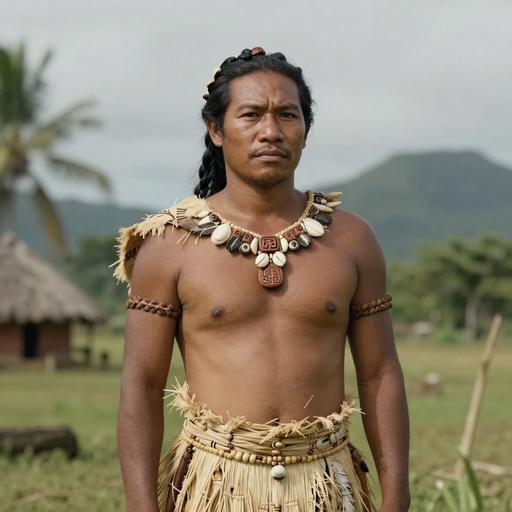
- High frequencies occur in many Polynesian and some Micronesian populations, where the lineage represents one of the dominant maternal types.
- Moderate to low frequencies are observed among populations in the Philippines, eastern Indonesia and parts of Island Melanesia, reflecting Austronesian dispersal and subsequent admixture with local groups.
- Detectable low frequencies are found in southern Chinese and other mainland East Asian coastal groups, reflecting either backflow, coastal contact, or low-level gene flow.
- Very low frequencies can be observed in some modern populations in the Americas where historical or recent Pacific/Asian admixture introduced B4-derived lineages.
Ancient DNA studies have recovered B4-derived lineages in archaeological contexts connected to the Austronesian/Lapita horizon; in your database B4A1A1A appears in multiple ancient samples, consistent with its role in prehistoric Pacific settlement.
Historical and Cultural Significance
B4A1A1A is closely tied to the maritime cultures responsible for the settlement of Remote Oceania. The lineage's distribution matches archaeological and linguistic models of the Austronesian expansion and the Lapita cultural complex (the early seafaring pottery-associated horizon that spread into Near and then Remote Oceania around 3.3–2.8 kya). As such, B4A1A1A and its subclades are commonly used in population genetics and molecular anthropology as maternal markers of Austronesian-speaking ancestral movements and subsequent founder events that shaped Polynesian maternal gene pools.
The lineage also illustrates classical demographic processes: founder effects during island colonization (producing high local frequencies), admixture with pre-existing Island Melanesian maternal lineages in some regions, and persistence of ancestral diversity in source areas such as Taiwan and parts of Island Southeast Asia.
Conclusion
mtDNA haplogroup B4A1A1A is a Pacific-oriented maternal lineage that emerged from the broader B4A stem in Island Southeast Asia/Taiwan in the Late Holocene and expanded with Austronesian-speaking seafarers into Micronesia and Polynesia. Its pattern of high frequency in remote island populations and lower presence in source and coastal regions reflects maritime dispersal, island founder events, and subsequent regional admixture. High-resolution mitogenome sequencing and ancient DNA continue to refine its internal structure and help reconstruct the timing and routes of Pacific settlement.
Key Points
- Origins and Evolution
- Subclades
- Geographical Distribution
- Historical and Cultural Significance
- Conclusion