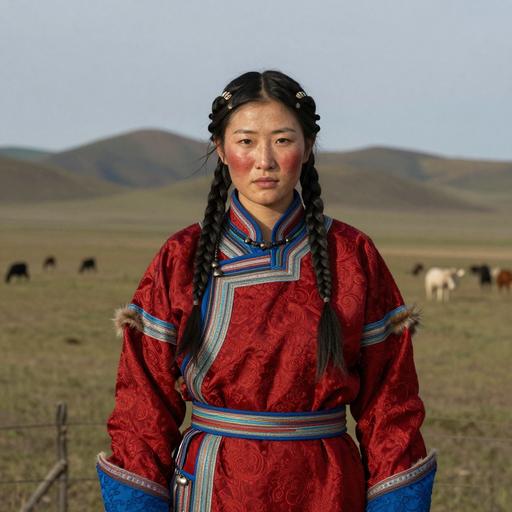
The Story
The journey of mtDNA haplogroup B4F
Origins and Evolution
mtDNA haplogroup B4F is a derived branch of the broader haplogroup B4, which itself diversified in East/Southeast Asia during the Late Pleistocene. Based on the tree position within B4 and comparative coalescence with neighboring B4 subclades, B4F most likely arose in the early Holocene (on the order of ~8 kya in our estimate), after the initial diversification of B4. Its emergence is plausibly tied to coastal and island populations in mainland Southeast Asia and Island Southeast Asia where maritime foraging and early food-producing economies fostered localized maternal lineages.
Genetic dating and phylogeographic patterns for closely related B4 lineages show repeated episodes of local differentiation followed by dispersal during the Holocene; B4F fits this pattern as a relatively low-frequency lineage that persisted in insular contexts. The detection of B4F in at least one ancient DNA sample supports its continuity in archaeological sequences, although current ancient sample coverage is limited and more data are required to refine its time-depth and migratory history.
Subclades
At present, B4F appears to be a minor branch with few well-characterized downstream subclades publicly reported; many published mitogenomes classify B4F lineages at the basal B4F node or with shallow internal diversity. This limited resolution likely reflects both a genuinely small effective population size for the haplogroup and sampling gaps in many island and coastal groups. Increased whole-mitogenome sequencing of Austronesian-speaking and Island Southeast Asian populations may reveal additional internal structure (e.g., B4F1, B4F2) and provide better age estimates.
Geographical Distribution
B4F is concentrated in coastal and insular East and Southeast Asia with occurrences recorded in:
- Taiwan and Austronesian-speaking indigenous groups of Taiwan,
- Parts of Island Southeast Asia including the Philippines, eastern Indonesia and coastal Borneo/Sulawesi populations,
- Low-frequency occurrences in broader East Asian groups (e.g., Han Chinese and nearby populations) and some Pacific islanders; occasional detections in Melanesian-admixed island populations have been reported.
Frequencies are typically low to moderate where present, reflecting a localized rather than continent-wide signature. Its geographic pattern is consistent with lineages that either differentiated on islands/coastal zones or were carried by small-scale maritime movements during the Holocene.
Historical and Cultural Significance
Because B4 is central to the maternal component of the Austronesian expansion, B4F is of particular interest for studies of regional demographic processes tied to seafaring, language spread, and island colonization. While B4a1a1 (the "Polynesian motif") marks long-range Pacific dispersals, other B4 subclades such as B4F likely represent regional maternal lineages that accompanied local expansions and interactions rather than large-scale trans-Pacific movement.
The presence of B4F in indigenous Taiwanese and Island Southeast Asian populations connects it to the prehistoric maritime networks that underpinned the spread of Austronesian languages and associated material cultures (e.g., early Neolithic coastal settlements and later Lapita-associated movements in adjacent regions). However, unlike the Polynesian motif, B4F has not been identified as a major marker of long-distance Pacific colonization.
Conclusion
B4F is a localized, early Holocene daughter of B4 reflecting coastal and island maternal histories in East and Southeast Asia. Its current characterization is limited by sampling density: additional complete mitogenomes from Taiwan, the Philippines, eastern Indonesia, and Pacific islands are needed to clarify its internal structure, precise age, and role in Holocene maritime population dynamics. For now, B4F is best understood as a modest but informative maternal lineage tied to regional seafaring and islander population histories.
Key Points
- Origins and Evolution
- Subclades
- Geographical Distribution
- Historical and Cultural Significance
- Conclusion