Menu
mtDNA Haplogroup • Maternal Lineage

F4B

mtDNA Haplogroup F4B

~6,000 years ago
East / Southeast Asia
1 subclades
6 ancient samples
Scroll to explore
Chapter I

The Story

The journey of mtDNA haplogroup F4B

Origins and Evolution

Haplogroup F4B is a subclade of mtDNA haplogroup F4, itself nested within the broader haplogroup F family common in East and Southeast Asia. Based on its phylogenetic position and observed diversity, F4B most likely coalesced during the early to mid-Holocene (several thousand years after the initial formation of haplogroup F), reflecting a regional diversification of maternal lineages associated with post-glacial and early farming expansions across East and Southeast Asia. Molecular-clock estimates for F4B are necessarily approximate, but its divergence from sibling F4 lineages is consistent with a time depth on the order of ~5–8 kya.

Subclades

Within F4B there are further sub-branches defined by additional private mutations; however, sampling remains uneven and some subclades are rare or geographically restricted. Ancient DNA recovery and high-resolution sequencing of modern samples continue to refine the internal structure of F4B. At present, F4B is best treated as a regional Holocene lineage with a small number of recognizable downstream branches that show geographic localization (for example, lineages concentrated in insular Southeast Asia versus mainland East Asia).

Geographical Distribution

F4B is observed primarily across East and Southeast Asia, with highest frequencies in some populations of southern China and island Southeast Asia and lower but detectable frequencies in nearby regions. Modern surveys and limited ancient DNA evidence indicate presence among Han Chinese, Japanese (including lineages traceable to Jomon/Yayoi interactions), Koreans, Vietnamese, Tai-Kadai groups (e.g., Zhuang), Austronesian-speaking populations (Formosan, Filipino, Indonesian, Malay), and various Mainland Southeast Asian groups (Lao, Khmer). Low- to moderate-frequency occurrences have been reported in parts of Near Oceania and sporadically in some Central Asian and southern Siberian groups, reflecting later gene flow and long-distance contacts.

Historical and Cultural Significance

Because F4B sits within a set of maternal lineages that expanded during the Holocene, it is often interpreted in the context of Neolithic demographic expansion and subsequent maritime dispersals. Its presence among Austronesian-speaking populations and in some Near Oceanian island groups links it to maternal contributions in the Austronesian expansion out of Taiwan and through Island Southeast Asia (the Lapita and later dispersals). On the mainland, F4B likely participated in the complex demographic processes of southern China and Mainland Southeast Asia, including interactions between hunter-gatherer groups and incoming farmers.

The identification of at least one archaeological (ancient DNA) sample carrying F4B supports its continuity in regional contexts and its utility for tracing maternal lineages through archaeological time, though the ancient sample count remains small and emphasizes the need for further ancient DNA work.

Conclusion

F4B is a regionally important Holocene maternal lineage derived from haplogroup F4, characteristic of East and Southeast Asian population structure and implicated in Neolithic and Austronesian-era movements. While not usually a high-frequency lineage across all populations, its distribution and phylogenetic placement make it a useful marker for studying maternal ancestry, local demographic history, and maritime dispersals in Island Southeast Asia and adjacent regions. Continued dense sampling and ancient DNA recovery will improve resolution of its subclades and historical trajectories.

Key Points

  • Origins and Evolution
  • Subclades
  • Geographical Distribution
  • Historical and Cultural Significance
  • Conclusion
Chapter II

Tree & Relationships

Phylogenetic context and subclades

Evolution Path

This haplogroup's evolutionary journey from its earliest ancestor to the present.

Steps Haplogroup Age Estimate Archaeology Era Time Passed Immediate Descendants Tested Modern Descendants Ancient Connections
1 F4B Current ~6,000 years ago 🪨 Chalcolithic 6,000 years 1 8 6
2 F4 ~9,000 years ago 🌾 Neolithic 9,000 years 2 16 0
3 F ~28,000 years ago 🦴 Paleolithic 28,000 years 3 82 6

Siblings (1)

Other branches from the same parent haplogroup

Chapter III

Where in the World

Geographic distribution and modern presence

Place of Origin

East / Southeast Asia

Modern Distribution

The populations where mtDNA haplogroup F4B is found include:

  1. Han Chinese
  2. Japanese (including Jomon/Yayoi descendant groups)
  3. Koreans
  4. Vietnamese
  5. Thai and other Tai-Kadai speaking groups (e.g., Zhuang)
  6. Austronesian-speaking populations (Taiwanese Indigenous/Formosan, Filipinos, Indonesians, Malays)
  7. Tibeto-Burman groups (low to moderate frequencies)
  8. Indigenous groups of Mainland Southeast Asia (e.g., Lao, Khmer)
  9. Indigenous and admixed populations in Near Oceania (low to moderate frequencies in some island populations)
  10. Certain Central Asian and southern Siberian groups (generally low frequencies)
CHAPTER IV

When in Time

Your haplogroup in the context of human history

~10k years ago

Neolithic Revolution

Agriculture begins, settled communities form

~6k years ago

Haplogroup F4B

Your mtDNA haplogroup emerged in East / Southeast Asia

East / Southeast Asia
~5k years ago

Bronze Age

Metalworking, writing, and early civilizations

~3k years ago

Iron Age

Iron tools, expanded trade networks

~2k years ago

Classical Antiquity

Greek and Roman civilizations flourish

Present

Present Day

Modern era

Your Haplogroup
Historical Era
Chapter IV-B

Linked Cultures

Ancient cultures associated with mtDNA haplogroup F4B

Cultural Heritage

These ancient cultures have been linked to haplogroup F4B based on matching ancient DNA samples from archaeological excavations. The presence of this haplogroup in these cultures provides insights into the migrations and population movements of populations carrying this haplogroup.

Chinese Bronze-Iron Early Kazakh Iron Late Medieval Mongolian Roman Republic Taiwanese Iron Ust-Belaya Culture Yellow River Culture
Culture assignments are based on archaeological context of ancient DNA samples and may represent regional associations during specific time periods.
Chapter V

Sample Catalog

1 direct carrier and 5 subclade carriers of haplogroup F4B

6 / 6 samples
Portrait Sample Country Era Date Culture mtDNA Match
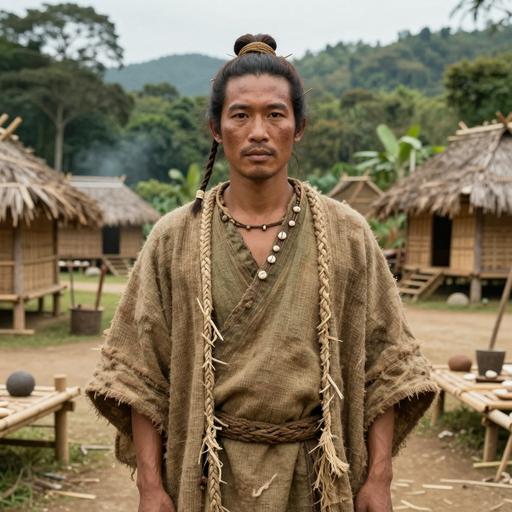
Portrait of ancient individual I13695 from Taiwan, dated 431 CE - 556 CE
I13695
Taiwan Iron Age Taiwan 431 CE - 556 CE Taiwanese Iron F4b Direct
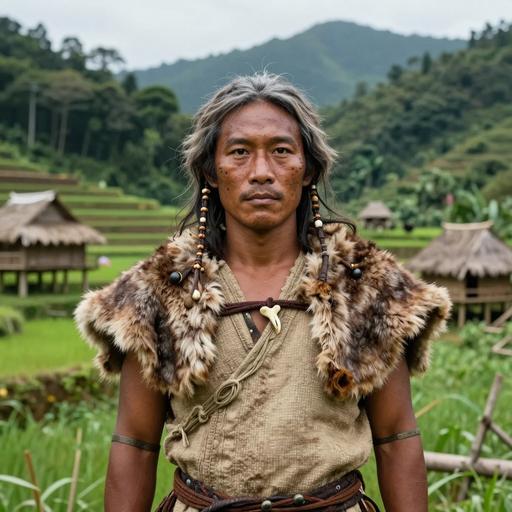
Portrait of ancient individual I3736 from Taiwan, dated 1 CE - 800 CE
I3736
Taiwan Iron Age Taiwan 1 CE - 800 CE Taiwanese Iron F4b1 Downstream
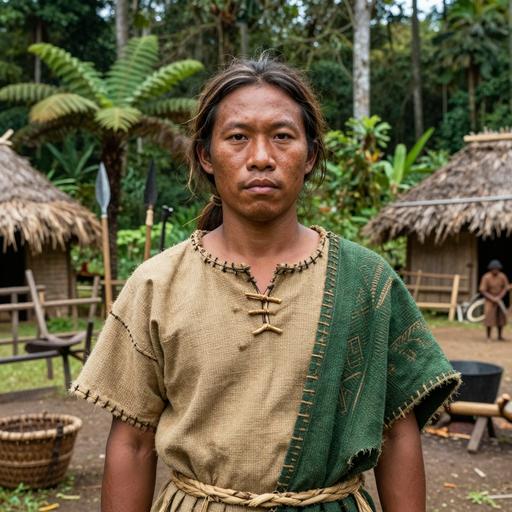
Portrait of ancient individual I14926 from Taiwan, dated 1 CE - 800 CE
I14926
Taiwan Iron Age Taiwan 1 CE - 800 CE Taiwanese Iron F4b1 Downstream
Portrait of ancient individual I15160 from Taiwan, dated 1 CE - 800 CE
I15160
Taiwan Iron Age Taiwan 1 CE - 800 CE Taiwanese Iron F4b1 Downstream
Portrait of ancient individual I15159 from Taiwan, dated 1 CE - 800 CE
I15159
Taiwan Iron Age Taiwan 1 CE - 800 CE Taiwanese Iron F4b1 Downstream
Portrait of ancient individual I3617 from Taiwan, dated 246 CE - 365 CE
I3617
Taiwan Iron Age Taiwan 246 CE - 365 CE Taiwanese Iron F4b1 Downstream
Chapter VI

Carrier Distribution Map

Geographic distribution of 6 ancient DNA samples (direct and subclade carriers of F4B)

Direct carrier Subclade carrier
Time Period Filter
All Time Periods
Showing all samples
Chapter VII

Temporal Distribution

Distribution of carriers across archaeological periods

Chapter VIII

Geographic Distribution

Distribution by country of origin (direct and subclade carriers shown by default)

Chapter IX

Country × Era Distribution

Cross-tabulation of carrier countries and archaeological periods (direct and subclade carriers shown by default)

Data

Data & Provenance

Source information and data quality

Last Updated 2026-02-16
Confidence Score 50/100
Coverage Low
Data Source

We use the latest phylotree for MTDNA haplogroup classification and data.