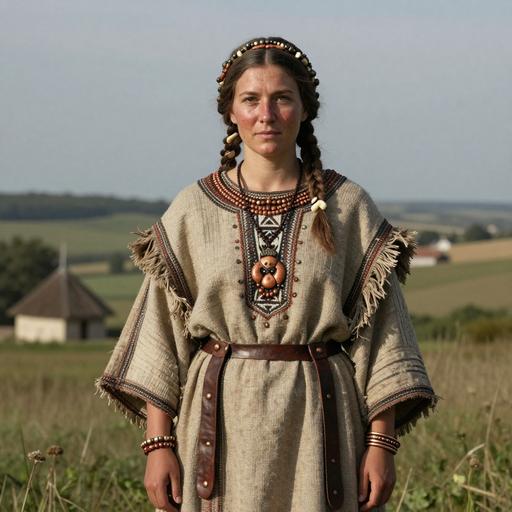
The Story
The journey of mtDNA haplogroup I3A
Origins and Evolution
Haplogroup I3A is a subclade of mtDNA haplogroup I3, itself a branch of the broader West Eurasian haplogroup I. Given the parent clade I3 has been dated to roughly the early Holocene (~12 kya) in the Near East / southeastern Europe, I3A most likely arose slightly later in the early Neolithic or late postglacial period (estimated here at ~9 kya). Its emergence is plausibly tied to local diversification of maternal lineages in Anatolia, the southern Caucasus, or adjacent parts of the Balkans during a period of population growth and mobility associated with early farming and postglacial recolonization.
Subclades
I3A may itself include minor downstream branches detectable only in high-resolution complete mitogenomes. As with many low-frequency mtDNA subclades, fine-scale structure is often revealed by ancient DNA and deep sequencing; presently I3A appears as a relatively shallow branching lineage under I3, with limited but geographically informative variation. Ongoing sequencing of modern and ancient samples can reveal further subclades and refine coalescence estimates.
Geographical Distribution
Modern and ancient occurrences of I3A are concentrated in the Near East and the Caucasus, with lower but detectable presence in southern and eastern Europe and scattered occurrences farther afield. The pattern is consistent with a Near Eastern origin followed by localized spread with Neolithic farmers and later regional movements. Frequencies are generally low at the population level, but the haplogroup can be regionally enriched in some Anatolian and Caucasus communities and is represented sporadically in ancient Neolithic contexts in southeastern Europe.
Historical and Cultural Significance
I3A's distribution and dating link it to the early agricultural expansions that began in Anatolia and the Levant and spread into southeastern Europe. The haplogroup is therefore useful in studies tracing maternal lineages of early farmers and their interactions with local hunter-gatherers during the Neolithic transition. Its presence in some ancient Neolithic samples supports a role in the demic diffusion of farming. Later, low-frequency persistence of I3A in the Caucasus and parts of southern Europe indicates continuity and localized survival through the Bronze Age and into historic periods.
Conclusion
mtDNA I3A represents a regional West Eurasian maternal lineage that likely formed in the Near East or adjacent southeastern Europe in the early Holocene and spread at low-to-moderate frequencies with Neolithic and postglacial demographic processes. While uncommon in modern populations, it provides a valuable marker for reconstructing maternal ancestry and migration events tied to the origins and spread of early farming in western Asia and southeastern Europe.
Key Points
- Origins and Evolution
- Subclades
- Geographical Distribution
- Historical and Cultural Significance
- Conclusion