The Story
The journey of mtDNA haplogroup K2B1A
Origins and Evolution
mtDNA haplogroup K2B1A is a subclade nested within K2B1, itself a branch of haplogroup K2 and ultimately of the broader haplogroup K. Based on the phylogenetic position of K2B1 and the archaeological record of maternal lineages associated with early farming, K2B1A most plausibly arose in the Near East / Anatolia region during the Late Glacial to Early Holocene, shortly before or during the onset of Neolithic population expansions (estimated here at roughly ~7 kya for the K2B1A split). The lineage likely formed as part of the broader diversification of K-lineages that accompanied demographic growth in refugial and early farming populations across the Near East.
Given its derivation from K2B1 (a clade with a documented presence in Anatolia, the Caucasus and southern Europe) and the observed distribution of K subclades in ancient DNA, K2B1A is best interpreted as a Neolithic-associated maternal lineage that moved with farming communities into Europe and the Mediterranean basin.
Subclades (if applicable)
K2B1A is itself a downstream branch of K2B1. Published phylogenies and population surveys identify multiple minor downstream variants within the wider K2B1 complex; some of these may represent regional founder events (for example on Mediterranean islands or within isolated highland populations). At present, K2B1A is treated as a defined subclade of K2B1 with restricted, low-to-moderate frequency occurrence in modern populations. Continued mitogenome sequencing and targeted aDNA recovery will be required to resolve finer substructure within K2B1A and to identify clear, geographically restricted daughter clades.
Geographical Distribution
The modern distribution of K2B1A mirrors the Neolithic dispersal routes from Anatolia into Europe and the Mediterranean. Highest representation is recorded in Anatolia and adjacent Near Eastern populations, with persistent low-to-moderate frequencies across Southern Europe (Iberia, Italy, Greece and Mediterranean islands such as Sardinia) and the Caucasus. The lineage is also present, at lower frequencies, in parts of Western and Northern Europe (including the British Isles and Scandinavia), and in some North African coastal populations reflecting historic Near Eastern gene flow. Small occurrences in parts of Central Asia likely reflect later west–east contacts and long-distance mobility.
Ancient DNA recovery has identified K2B1 and related K subclades in a range of Neolithic and post-Neolithic archaeological contexts (the parent K2B1 appears in multiple aDNA samples), supporting a Neolithic-era expansion into Europe.
Historical and Cultural Significance
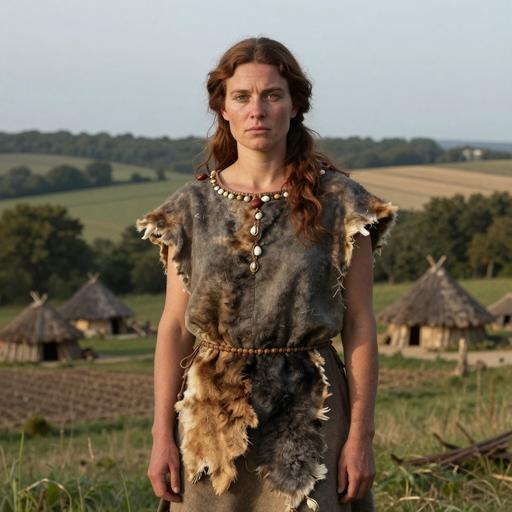
K2B1A is principally associated with populations that participated in the Neolithic transition. Its distribution aligns with the spread of Anatolian-origin early farmers (e.g., LBK-related groups) into central and southern Europe. In archaeological terms, K2B1A (and related K subclades) can serve as one of several maternal markers indicative of early farmer ancestry in Europe.
In later periods K2B1A persisted within regional populations and became incorporated into diverse cultural groups. Its presence in some Ashkenazi Jewish mitochondrial pools (at low–moderate representation within the broader diversity of K) reflects historical demographic processes linking the Levant/Anatolia to Jewish diaspora populations. The lineage's survival in island and isolated populations (such as Sardinia and some Aegean islands) is consistent with founder effects and relative demographic continuity in those regions.
Conclusion
mtDNA K2B1A is best understood as a Neolithic-era maternal lineage that originated in the Near East / Anatolia and spread into Europe with early farmers, maintaining low-to-moderate frequencies in southern Europe, the Caucasus and the Near East, and appearing sporadically elsewhere due to subsequent migrations and drift. While the clade is not among the most frequent European mtDNA lineages, it provides useful phylogeographic signal for tracing Near Eastern-derived maternal ancestry in Mediterranean and adjacent populations. Additional whole-mitogenome sequencing and ancient DNA sampling will refine its internal structure, precise age, and detailed migration history.
Key Points
- Origins and Evolution
- Subclades (if applicable)
- Geographical Distribution
- Historical and Cultural Significance
- Conclusion