Menu
mtDNA Haplogroup • Maternal Lineage

L0D3

mtDNA Haplogroup L0D3

~40,000 years ago
Southern Africa
1 subclades
Scroll to explore
Chapter I

The Story

The journey of mtDNA haplogroup L0D3

Origins and Evolution

mtDNA haplogroup L0d3 is a derived branch of the ancient maternal macro-lineage L0d, which itself is one of the most basal and time‑deep clades of the human mitochondrial phylogeny and is strongly associated with southern African forager (Khoe‑San) populations. While the parent haplogroup L0d has coalescence estimates on the order of ~120 kya, L0d3 represents a later diversification within this deep southern African radiation. Coalescent and phylogeographic patterns suggest L0d3 arose in southern Africa during the Late Pleistocene or early Holocene (order of tens of thousands of years ago), reflecting local differentiation of maternal lineages among hunter‑gatherer groups that persisted in the region.

Subclades

As a subclade of L0d, L0d3 sits alongside sister branches such as L0d1 and L0d2; the internal substructure of L0d3 is relatively limited in published datasets compared with the broader L0d diversity, reflecting either a smaller effective maternal population size for the L0d3-bearing groups or incomplete sampling. Targeted high-resolution mtDNA sequencing in Khoe‑San and adjacent populations can reveal finer sublineages within L0d3 and clarify its internal diversity and geographic substructure.

Geographical Distribution

L0d3 is geographically concentrated in southern Africa, with its highest frequencies observed in Khoe‑San groups (for example Ju|'hoan, !Kung, Nama) and detectable presence in neighboring populations. The pattern of occurrence is consistent with deep local ancestry in southern African foragers plus later gene flow: lower-frequency occurrences in Bantu-speaking populations of southern Africa reflect maternal admixture during and after the Bantu expansions, and small numbers of L0d3 have been reported in eastern and central African groups consistent with historical or prehistoric contacts. Rare occurrences among African-descended populations in the Americas reflect the transatlantic slave trade and subsequent diasporic dispersal. Ancient DNA recoveries that include L0d lineages (including L0d3 in a small number of samples) provide direct temporal evidence for continuity of these maternal lineages in the region through the Holocene.

Historical and Cultural Significance

Because L0d3 is nested within the deep L0d radiation that characterizes Khoe‑San maternal ancestry, it is an important marker for reconstructing population structure and demographic history in southern Africa. Its persistence in forager groups and its presence at lower frequencies in neighboring agriculturalist populations illustrate patterns of sex‑biased admixture and the resilience of local maternal lineages despite cultural and subsistence shifts (e.g., the arrival of pastoralism and later Bantu agriculturalists). In archaeological and genetic studies, L0d3 can therefore help identify maternal continuity associated with Later Stone Age forager contexts and to track episodes of admixture into Iron Age and historic populations.

Conclusion

L0d3 is a regionally informative mitochondrial lineage whose distribution and diversity document long-term maternal continuity in southern Africa and localized population differentiation within the broader, very ancient L0d clade. While concentrated among Khoe‑San peoples, its low-level presence in other African populations and in the diaspora reflects admixture and human movements over the Holocene and historic periods. Increased sampling and higher‑resolution sequencing of ancient and present-day individuals will continue to refine the age estimates and substructure of L0d3 and improve its utility for reconstructing southern African demographic history.

Key Points

  • Origins and Evolution
  • Subclades
  • Geographical Distribution
  • Historical and Cultural Significance
  • Conclusion
Chapter II

Tree & Relationships

Phylogenetic context and subclades

Evolution Path

This haplogroup's evolutionary journey from its earliest ancestor to the present.

Steps Haplogroup Age Estimate Archaeology Era Time Passed Immediate Descendants Tested Modern Descendants Ancient Connections
1 L0D3 Current ~40,000 years ago 🦴 Paleolithic 40,000 years 1 1 0
2 L0d ~120,000 years ago 🦴 Paleolithic 120,000 years 3 21 4
3 L0 ~170,000 years ago 🦴 Paleolithic 170,000 years 4 245 6
4 L ~160,000 years ago 🦴 Paleolithic 160,000 years 7 18,987 5

Siblings (2)

Other branches from the same parent haplogroup

Chapter III

Where in the World

Geographic distribution and modern presence

Place of Origin

Southern Africa

Modern Distribution

The populations where mtDNA haplogroup L0d3 is found include:

  1. Khoe-San groups of southern Africa (e.g., Ju|'hoan, !Kung, Nama)
  2. Various southern African Bantu-speaking populations (low-to-moderate frequency due to admixture)
  3. Some East African populations at low-to-moderate frequencies (reflecting ancient and historic contacts)
  4. Central African forager groups (low frequency)
  5. African-descended populations in the Americas (rare, due to the transatlantic slave trade)
  6. Occasional low-frequency occurrences in North Africa and the Near East (historical admixture)
CHAPTER IV

When in Time

Your haplogroup in the context of human history

~50k years ago

Upper Paleolithic

Advanced tool-making, art, and cultural explosion

~40k years ago

Haplogroup L0D3

Your mtDNA haplogroup emerged in Southern Africa

Southern Africa
~20k years ago

Last Glacial Maximum

Peak of the last ice age, populations isolated

~10k years ago

Neolithic Revolution

Agriculture begins, settled communities form

~5k years ago

Bronze Age

Metalworking, writing, and early civilizations

~3k years ago

Iron Age

Iron tools, expanded trade networks

~2k years ago

Classical Antiquity

Greek and Roman civilizations flourish

Present

Present Day

Modern era

Your Haplogroup
Historical Era
Chapter IV-B

Linked Cultures

Ancient cultures associated with mtDNA haplogroup L0D3

Cultural Heritage

These ancient cultures have been linked to haplogroup L0D3 based on matching ancient DNA samples from archaeological excavations. The presence of this haplogroup in these cultures provides insights into the migrations and population movements of populations carrying this haplogroup.

Fingira Culture Hora Culture Makwasinyi Malawian LSA Mtwapa Pemba Phase I Tanzanian Prehistoric Taukome Culture Terminal Stone Age
Culture assignments are based on archaeological context of ancient DNA samples and may represent regional associations during specific time periods.
Chapter V

Sample Catalog

3 direct carriers and 1 subclade carrier of haplogroup L0D3

4 / 4 samples
Portrait Sample Country Era Date Culture mtDNA Match
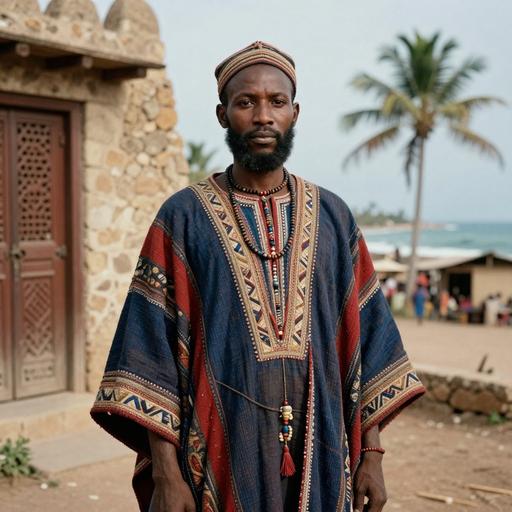
Portrait of ancient individual I19423 from Kenya, dated 1323 CE - 1423 CE
I19423
Kenya Swahili Culture of Mtwapa 1323 CE - 1423 CE Mtwapa L0d3 Direct
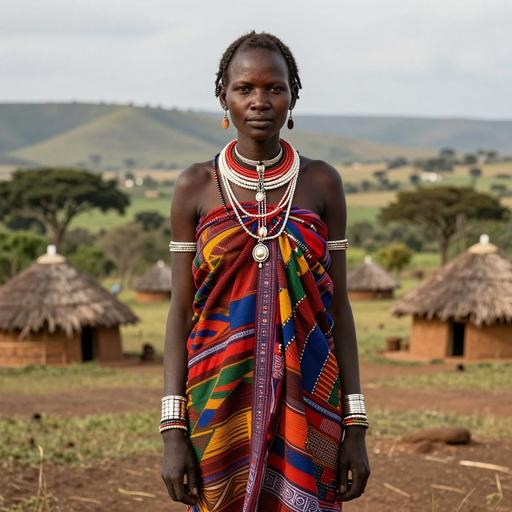
Portrait of ancient individual I14780 from Kenya, dated 1650 CE - 1950 CE
I14780
Kenya Makwasinyi (Kenya) 1650 CE - 1950 CE Makwasinyi L0d3 Direct
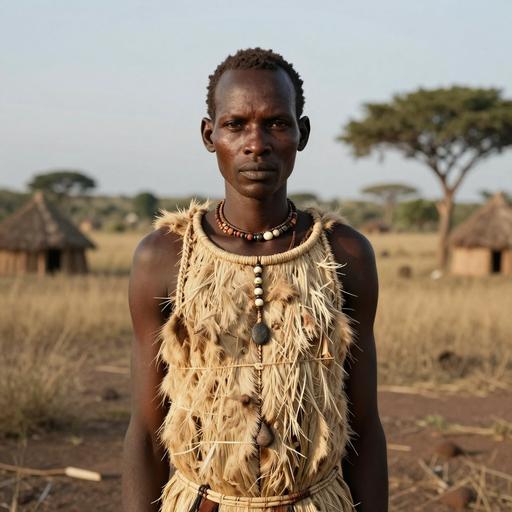
Portrait of ancient individual I19528 from Malawi, dated 15050 BCE - 12050 BCE
I19528
Malawi Late Stone Age Malawi 15050 BCE - 12050 BCE Malawian LSA L0d3 Direct
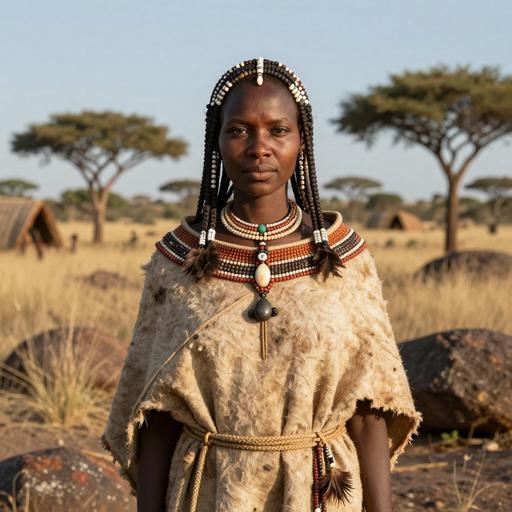
Portrait of ancient individual TAU001 from Botswana, dated 900 CE - 1000 CE
TAU001
Botswana Taukome Early Iron Age in Botswana 900 CE - 1000 CE Taukome Culture L0d3b1 Downstream
Chapter VI

Carrier Distribution Map

Geographic distribution of 4 ancient DNA samples (direct and subclade carriers of L0D3)

Direct carrier Subclade carrier
Time Period Filter
All Time Periods
Showing all samples
Chapter VII

Temporal Distribution

Distribution of carriers across archaeological periods

Chapter VIII

Geographic Distribution

Distribution by country of origin (direct and subclade carriers shown by default)

Chapter IX

Country × Era Distribution

Cross-tabulation of carrier countries and archaeological periods (direct and subclade carriers shown by default)

Data

Data & Provenance

Source information and data quality

Last Updated 2026-02-16
Confidence Score 50/100
Coverage Low
Data Source

We use the latest phylotree for MTDNA haplogroup classification and data.