Menu
mtDNA Haplogroup • Maternal Lineage

T2B11

mtDNA Haplogroup T2B11

~8,000 years ago
Near East / Mediterranean fringe
1 subclades
Scroll to explore
Chapter I

The Story

The journey of mtDNA haplogroup T2B11

Origins and Evolution

mtDNA haplogroup T2B11 is a downstream subclade nested within T2B1, itself part of the broader T2 lineage. The T2 clade is generally associated with post-glacial and early Neolithic maternal lineages that expanded from the Near East and adjacent Mediterranean regions into Europe during the early Holocene. Based on its phylogenetic position beneath T2B1, T2B11 most likely arose after the primary T2B1 diversification, during the Neolithic or shortly thereafter (a reasonable estimate is on the order of several thousand years after the ~11 kya origin of T2B1), and thus reflects regional differentiation of farmer-associated mitochondrial diversity on the Mediterranean fringe.

Subclades

At present, T2B11 appears to be a relatively low-diversity subclade with few deeply branching named sublineages reported in public mtDNA phylogenies; many identifications are singletons or small clusters within population surveys and ancient DNA datasets. Its primary phylogenetic context is as a branch of T2B1, and further internal resolution will depend on denser full mitogenome sampling and targeted ancient DNA recovery.

Geographical Distribution

T2B11 is rare but detectable in regions historically linked to Neolithic dispersals and subsequent Mediterranean interactions. Modern and ancient samples indicate presence at low-to-moderate frequencies in Southern Europe (Italy, Iberia, the Balkans), sporadic occurrences in Central and Eastern Europe, and occurrences in the Near East (Anatolia, Levant). Lower-frequency occurrences are reported in North Africa, the Caucasus, and Central Asia, reflecting either prehistoric gene flow across the Mediterranean and Near East or later movements. In some population surveys and genealogical datasets, T2B11 also appears sporadically among Jewish maternal lineages, consistent with broader T2B/T2B1 occurrences in these communities.

Historical and Cultural Significance

Because of its placement within the T2B1/T2 maternal complex, T2B11 is best interpreted as part of the maternal genetic signal carried by early farmers who spread agriculture into Europe from Anatolia and adjacent Mediterranean regions. Its pattern — concentrated in Mediterranean and Southern European contexts with lower frequencies inland — fits scenarios of coastal and inland Neolithic dispersal (for example, Cardial/Impressed Ware maritime expansions and overland Anatolian-derived Neolithic streams). The haplogroup's persistence into later periods and occasional presence in Bronze Age and historical-era samples indicates continuity and local differentiation rather than a single transient event.

Ancient DNA and Modern Studies

T2B11 has been observed in limited numbers in both modern population surveys and a small number of ancient DNA samples; these occurrences help anchor the clade geographically to the Mediterranean-Near Eastern corridor across the Holocene. Additional full mitogenome sequences from archaeological contexts would be valuable to refine its time-depth and migration history.

Conclusion

In summary, T2B11 is a relatively rare, regionally focused subclade of T2B1 that likely emerged on the Near Eastern / Mediterranean fringe in the early-to-middle Holocene and reflects the maternal diversity of Neolithic farmers and their descendants across Southern Europe and the adjacent Near East. Ongoing mitogenome sequencing and ancient DNA recovery will clarify its internal structure and finer-scale dispersal history.

Key Points

  • Origins and Evolution
  • Subclades
  • Geographical Distribution
  • Historical and Cultural Significance
  • Ancient DNA and Modern Studies
Chapter II

Tree & Relationships

Phylogenetic context and subclades

Evolution Path

This haplogroup's evolutionary journey from its earliest ancestor to the present.

Steps Haplogroup Age Estimate Archaeology Era Time Passed Immediate Descendants Tested Modern Descendants Ancient Connections
1 T2B11 Current ~8,000 years ago 🌾 Neolithic 8,000 years 1 5 0
2 T2B1 ~11,000 years ago 🌾 Neolithic 11,000 years 6 21 0
3 T2B ~14,000 years ago 🏹 Mesolithic 14,000 years 9 275 413
4 T2 ~21,000 years ago 🏹 Mesolithic 21,000 years 11 918 70
5 T ~27,000 years ago 🦴 Paleolithic 27,000 years 2 1,615 84
6 JT ~45,000 years ago 🦴 Paleolithic 45,000 years 2 3,237 1
7 N ~60,000 years ago 🦴 Paleolithic 60,000 years 15 15,452 13
8 L3 ~70,000 years ago 🦴 Paleolithic 70,000 years 11 17,621 6
9 L ~160,000 years ago 🦴 Paleolithic 160,000 years 7 18,987 5

Siblings (5)

Other branches from the same parent haplogroup

Chapter III

Where in the World

Geographic distribution and modern presence

Place of Origin

Near East / Mediterranean fringe

Modern Distribution

The populations where mtDNA haplogroup T2B11 is found include:

  1. Southern and Central European populations (Italy, Iberia, Balkans)
  2. Eastern European populations
  3. Near Eastern populations (Anatolia, Levant)
  4. North African populations (at lower frequencies)
  5. Caucasus populations (sporadic occurrences)
  6. Central Asian populations (low frequencies)
  7. Jewish populations (including some Ashkenazi lineages)
CHAPTER IV

When in Time

Your haplogroup in the context of human history

~10k years ago

Neolithic Revolution

Agriculture begins, settled communities form

~8k years ago

Haplogroup T2B11

Your mtDNA haplogroup emerged in Near East / Mediterranean fringe

Near East / Mediterranean fringe
~5k years ago

Bronze Age

Metalworking, writing, and early civilizations

~3k years ago

Iron Age

Iron tools, expanded trade networks

~2k years ago

Classical Antiquity

Greek and Roman civilizations flourish

Present

Present Day

Modern era

Your Haplogroup
Historical Era
Chapter IV-B

Linked Cultures

Ancient cultures associated with mtDNA haplogroup T2B11

Cultural Heritage

These ancient cultures have been linked to haplogroup T2B11 based on matching ancient DNA samples from archaeological excavations. The presence of this haplogroup in these cultures provides insights into the migrations and population movements of populations carrying this haplogroup.

Bell Beaker Corded Ware Croatian Bronze Age Danish Early Neolithic Jagodnjak Culture Lusatian Culture Maros Roman Hispania Unetice Västerbjers Culture
Culture assignments are based on archaeological context of ancient DNA samples and may represent regional associations during specific time periods.
Chapter V

Sample Catalog

15 direct carriers and 2 subclade carriers of haplogroup T2B11

17 / 17 samples
Portrait Sample Country Era Date Culture mtDNA Match
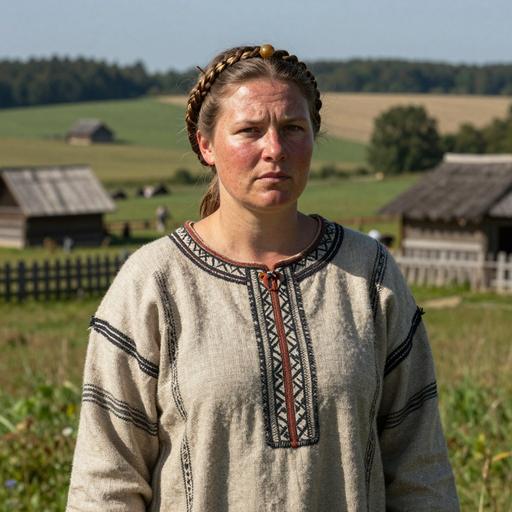
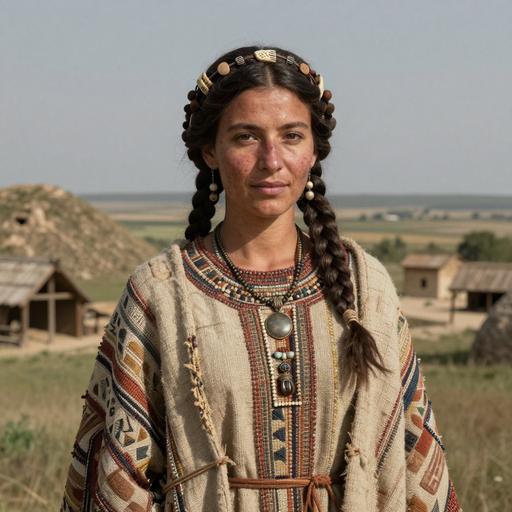
Portrait of ancient individual I6492 from Spain, dated 200 CE - 500 CE
I6492
Spain Roman Period Spain 200 CE - 500 CE Roman Hispania T2b11 Direct
Portrait of ancient individual I7158 from Spain, dated 200 CE - 500 CE
I7158
Spain Roman Period Spain 200 CE - 500 CE Roman Hispania T2b11 Direct
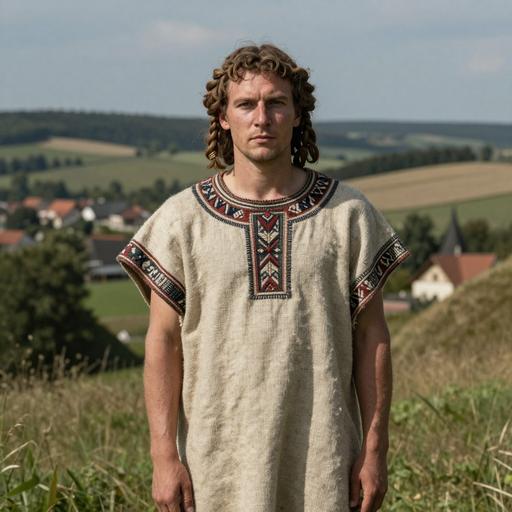
Portrait of ancient individual PCA0182 from Poland, dated 1000 CE - 1200 CE
PCA0182
Poland Iron Age Lusatian culture of Poland 1000 CE - 1200 CE Lusatian Culture T2b11 Direct
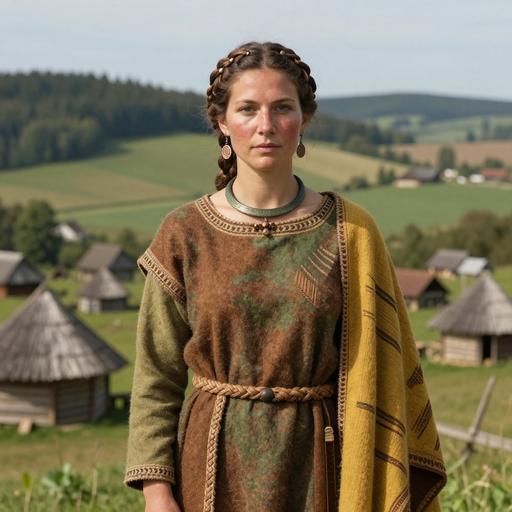
Portrait of ancient individual I18721 from Croatia, dated 1500 BCE - 800 BCE
I18721
Croatia Middle to Late Bronze Age Croatia 1500 BCE - 800 BCE Croatian Bronze Age T2b11 Direct
Portrait of ancient individual JAG58 from Croatia, dated 1800 BCE - 1600 BCE
JAG58
Croatia Middle Bronze Age Jagodnjak, Croatia 1800 BCE - 1600 BCE Jagodnjak Culture T2b11 Direct
Portrait of ancient individual MOK19A from Serbia, dated 2100 BCE - 1800 BCE
MOK19A
Serbia The Maros Culture in Serbia 2100 BCE - 1800 BCE Maros T2b11 Direct
Portrait of ancient individual LEU031 from Germany, dated 2136 BCE - 1956 BCE
LEU031
Germany Early Bronze Age Unetice Culture, Germany 2136 BCE - 1956 BCE Unetice T2b11 Direct
Portrait of ancient individual LEU050 from Germany, dated 2201 BCE - 2035 BCE
LEU050
Germany Early Bronze Age Unetice Culture, Germany 2201 BCE - 2035 BCE Unetice T2b11 Direct
Portrait of ancient individual KO1004 from Czech Republic, dated 2291 BCE - 2140 BCE
KO1004
Czech Republic Bell Beaker Culture, Bohemia, Czech Republic 2291 BCE - 2140 BCE Bell Beaker T2b11 Direct
Portrait of ancient individual pcw191 from Poland, dated 2455 BCE - 2147 BCE
pcw191
Poland Corded Ware Culture Southeast Poland 2455 BCE - 2147 BCE Corded Ware T2b11 Direct
Chapter VI

Carrier Distribution Map

Geographic distribution of 17 ancient DNA samples (direct and subclade carriers of T2B11)

Direct carrier Subclade carrier
Time Period Filter
All Time Periods
Showing all samples
Chapter VII

Temporal Distribution

Distribution of carriers across archaeological periods

Chapter VIII

Geographic Distribution

Distribution by country of origin (direct and subclade carriers shown by default)

Chapter IX

Country × Era Distribution

Cross-tabulation of carrier countries and archaeological periods (direct and subclade carriers shown by default)

Data

Data & Provenance

Source information and data quality

Last Updated 2026-02-16
Confidence Score 50/100
Coverage Low
Data Source

We use the latest phylotree for MTDNA haplogroup classification and data.