Menu
mtDNA Haplogroup • Maternal Lineage

U5A2A2

mtDNA Haplogroup U5A2A2

~12,000 years ago
Northern and Eastern Europe
1 subclades
Scroll to explore
Chapter I

The Story

The journey of mtDNA haplogroup U5A2A2

Origins and Evolution

mtDNA haplogroup U5A2A2 is a subclade of U5a (specifically downstream of U5A2A) and sits within the broader U5 lineage, which is one of the primary maternal markers of European hunter-gatherer populations. The emergence of U5A2A2 is best interpreted in the context of post-Last Glacial Maximum (LGM) demographic processes: as ice sheets retreated and habitats reopened in Northern and Eastern Europe, surviving hunter-gatherer groups expanded and diversified. Based on phylogenetic position and comparisons with related U5 subclades, U5A2A2 most likely formed in the Late Pleistocene to early Holocene (roughly ~12 kya), representing a northern European maternal lineage that persisted through the Mesolithic and into later periods.

Subclades (if applicable)

As a relatively downstream and specific subclade of U5A2A, U5A2A2 functions as an intermediate branch connecting more basal U5a diversity with locally derived daughter lineages. Depending on the ongoing refinement of the mitochondrial phylogeny as more full mtDNA genomes are sampled, U5A2A2 may be subdivided further in future studies; at present it is best treated as a geographically informative clade rather than a deeply diversified lineage with many known internal subclades.

Geographical Distribution

U5A2A2 is concentrated in northern parts of Europe, with the highest relative frequencies recorded among Scandinavian populations and some Finno-Ugric groups (including the Saami and Finnish populations). It also appears across the eastern Baltic and northwestern Russia at moderate frequencies, with lower and patchy occurrences in Western and Central Europe. Occasional low-frequency occurrences in the Caucasus, parts of Central Asia and isolated instances reported in North Africa represent either ancient dispersal, later gene flow, or rare migration events.

Ancient DNA studies of Mesolithic European hunter-gatherers show high representation of U5 lineages overall, and while U5A2A2 is a more derived and localized branch, the pattern of continuity from Mesolithic to historic populations in northern Europe supports a scenario of long-term maternal continuity in these regions.

Historical and Cultural Significance

The distribution of U5A2A2 aligns with archaeological evidence for post-LGM recolonization and sustained hunter-gatherer presence in northern Europe. This haplogroup is therefore informative for studies of European prehistory that investigate continuity versus replacement, particularly in Fennoscandia and the Baltic. In later periods, the clade persists through the Neolithic and Bronze Age in northern contexts, often coexisting with incoming farmer-associated maternal lineages and later steppe-associated signals, reflecting female-line continuity amid broader shifts in population structure.

For genetic genealogy, U5A2A2 can be a useful marker for tracing maternal ancestry connected to northern Europe and for distinguishing lineages that derive from Mesolithic hunter-gatherer maternal pools versus those introduced by Neolithic or Bronze Age migrations.

Conclusion

U5A2A2 represents a geographically informative, post-LGM northern European mtDNA lineage that encapsulates aspects of Mesolithic maternal continuity in Scandinavia, Finland, and neighboring regions. While not the most common U5 subclade overall, its persistence in specific northern populations makes it valuable for reconstructing maternal demographic history and for genealogical inference tied to northern and northeastern Europe.

Key Points

  • Origins and Evolution
  • Subclades (if applicable)
  • Geographical Distribution
  • Historical and Cultural Significance
  • Conclusion
Chapter II

Tree & Relationships

Phylogenetic context and subclades

Evolution Path

This haplogroup's evolutionary journey from its earliest ancestor to the present.

Steps Haplogroup Age Estimate Archaeology Era Time Passed Immediate Descendants Tested Modern Descendants Ancient Connections
1 U5A2A2 Current ~12,000 years ago 🌾 Neolithic 12,000 years 1 2 0
2 U5A2A ~14,000 years ago 🏹 Mesolithic 14,000 years 2 47 59
3 U5A2 ~18,000 years ago 🏹 Mesolithic 18,000 years 6 119 0
4 U5a ~27,000 years ago 🦴 Paleolithic 27,000 years 1 126 110
5 U ~46,000 years ago 🦴 Paleolithic 46,000 years 12 2,835 110
6 R ~60,000 years ago 🦴 Paleolithic 60,000 years 12 10,987 57
7 N ~60,000 years ago 🦴 Paleolithic 60,000 years 15 15,452 13
8 L3 ~70,000 years ago 🦴 Paleolithic 70,000 years 11 17,621 6
9 L ~160,000 years ago 🦴 Paleolithic 160,000 years 7 18,987 5

Siblings (1)

Other branches from the same parent haplogroup

Chapter III

Where in the World

Geographic distribution and modern presence

Place of Origin

Northern and Eastern Europe

Modern Distribution

The populations where mtDNA haplogroup U5A2A2 is found include:

  1. Northern Europeans (Scandinavia, Finland)
  2. Saami people of Fennoscandia
  3. Eastern Europeans (Baltic states, northwestern Russia)
  4. Western and Central Europeans at lower to moderate frequencies
  5. Ancient European hunter-gatherer populations (Mesolithic archaeological contexts)
  6. Populations in the Caucasus at low frequencies
  7. Isolated occurrences in North Africa and Central Asia (low frequency)
CHAPTER IV

When in Time

Your haplogroup in the context of human history

~12k years ago

Haplogroup U5A2A2

Your mtDNA haplogroup emerged in Northern and Eastern Europe

Northern and Eastern Europe
~10k years ago

Neolithic Revolution

Agriculture begins, settled communities form

~5k years ago

Bronze Age

Metalworking, writing, and early civilizations

~3k years ago

Iron Age

Iron tools, expanded trade networks

~2k years ago

Classical Antiquity

Greek and Roman civilizations flourish

Present

Present Day

Modern era

Your Haplogroup
Historical Era
Chapter IV-B

Linked Cultures

Ancient cultures associated with mtDNA haplogroup U5A2A2

Cultural Heritage

These ancient cultures have been linked to haplogroup U5A2A2 based on matching ancient DNA samples from archaeological excavations. The presence of this haplogroup in these cultures provides insights into the migrations and population movements of populations carrying this haplogroup.

Asturian Culture Iron Gates Culture Mesolithic Ukrainian Ukrainian Neolithic Vlasac Culture
Culture assignments are based on archaeological context of ancient DNA samples and may represent regional associations during specific time periods.
Chapter V

Sample Catalog

4 subclade carriers of haplogroup U5A2A2 (no exact U5A2A2 samples sequenced yet)

4 / 4 samples
Portrait Sample Country Era Date Culture mtDNA Match
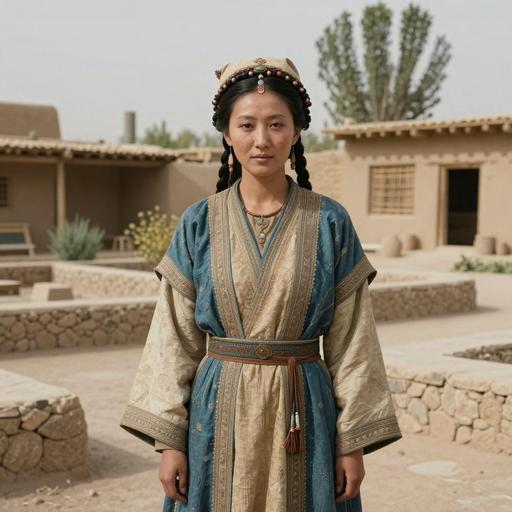
Portrait of ancient individual C3631 from China, dated 84 CE - 239 CE
C3631
China Historical Sampula, China 84 CE - 239 CE Sampula U5a2a2a Downstream
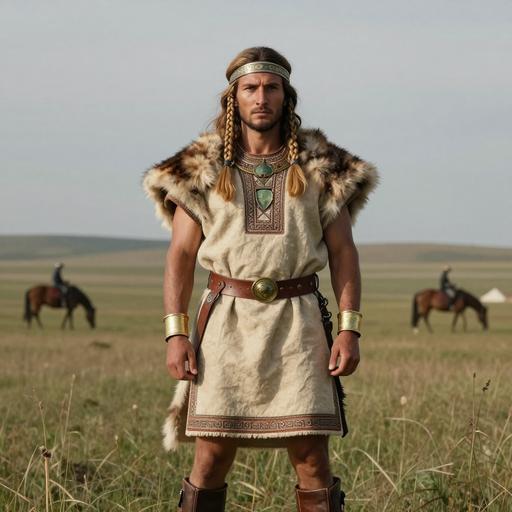
Portrait of ancient individual MJ-33 from Ukraine, dated 758 BCE - 416 BCE
MJ-33
Ukraine Iron Age Western Scythian Culture, Ukraine 758 BCE - 416 BCE Western Scythian U5a2a2a Downstream
Portrait of ancient individual MJ-33 from Ukraine, dated 758 BCE - 416 BCE
MJ-33
Ukraine The Scythian Culture 758 BCE - 416 BCE U5a2a2a Downstream
Portrait of ancient individual C4265 from China, dated 991 CE - 1031 CE
C4265
China Historical Period Tangbalesayi, Xinjiang, China 991 CE - 1031 CE Tangbalesayi Culture U5a2a2a Downstream
Chapter VI

Carrier Distribution Map

Geographic distribution of 4 ancient DNA samples (direct and subclade carriers of U5A2A2)

Subclade carrier
Time Period Filter
All Time Periods
Showing all samples
Chapter VII

Temporal Distribution

Distribution of carriers across archaeological periods

Chapter VIII

Geographic Distribution

Distribution by country of origin (direct and subclade carriers shown by default)

Chapter IX

Country × Era Distribution

Cross-tabulation of carrier countries and archaeological periods (direct and subclade carriers shown by default)

Data

Data & Provenance

Source information and data quality

Last Updated 2026-02-16
Confidence Score 50/100
Coverage Low
Data Source

We use the latest phylotree for MTDNA haplogroup classification and data.