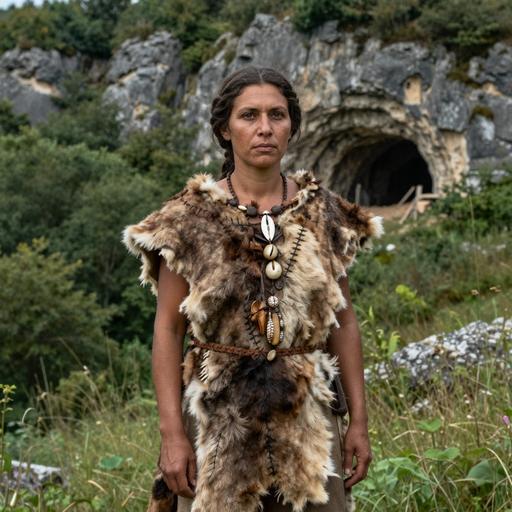
The Story
The journey of mtDNA haplogroup U6*
Origins and Evolution
mtDNA haplogroup U6 is widely interpreted as a North African-centered maternal lineage that arose from the broader haplogroup U. The designation U6* indicates basal or unclassified lineages within U6 that do not fall into the well-defined downstream subclades (for example U6a, U6b). Phylogenetic and phylogeographic analyses support an origin in North Africa in the Upper Paleolithic (~35 kya), consistent with a model of an early back‑migration of U-derived lineages into North Africa from Eurasia, followed by in situ diversification.
Genetic dating and diversity patterns show higher haplotype diversity for U6 in North African populations than in peripheral regions, supporting a long-term presence and local differentiation. Subsequent demographic events — including Holocene climatic changes, Neolithic movements, and historic contacts across the Mediterranean — redistributed some U6 lineages into Iberia, the Near East, and East Africa.
Subclades (if applicable)
U6 contains several recognized subclades (notably U6a, U6b, U6c, and derived branches). The label U6* is used when a sequence belongs to the U6 clade but cannot be confidently assigned to a named downstream branch. Key features of subclades:
- U6a: the most widespread U6 subclade across North Africa and detectable at low frequencies in southern Iberia and the Near East; commonly interpreted as a major post‑Pleistocene expansion within North Africa.
- U6b: often seen in western parts of North Africa and the Canary Islands (linked to indigenous Guanche lineages).
- U6c/d (and other minor branches): more localized branches with lower frequencies and variable geographic distributions.
U6* represents those lineages that are basal or insufficiently resolved relative to these named branches; such basal lineages can be especially informative about early population structure and migration events when included in ancient DNA and high-resolution mitogenome studies.
Geographical Distribution
Modern distribution: U6 (including U6*) attains its highest frequencies and greatest diversity in North African populations, particularly among Berber-speaking groups. Lower-frequency occurrences are found in the Canary Islands (ancient Guanche remains and modern inhabitants), the Iberian Peninsula (southern Spain and Portugal), parts of the Near East, and select populations in East Africa (reflecting bidirectional interactions across the Sahara and along the Red Sea/Indian Ocean littoral).
Ancient DNA: U6 lineages appear in Paleolithic and later North African contexts in a small number of archaeogenetic datasets, consistent with a long-term regional presence. The detection of U6 in dated archaeological samples helps anchor the timing of its local diversification and provides direct evidence of maternal continuity in parts of the Maghreb.
Historical and Cultural Significance
U6 lineages are frequently invoked in studies of North African population history because they provide a maternal genetic signal of deep, regionally autochthonous ancestry. High frequencies among Berber groups make U6 a marker often used to trace North African maternal heritage in diaspora and admixed populations.
Through time, U6 has been redistributed at low frequencies by several cultural and demographic processes: post‑glacial re-expansions, Neolithic cultural dispersals (both demic and cultural transmission), and historic contacts across the Mediterranean (Phoenician, Roman, Islamic periods) and with sub‑Saharan and East African groups. In Iberia, U6 presence at low levels is commonly interpreted as the result of prehistoric trans‑Mediterranean gene flow and later historic interactions.
Conclusion
As a basal component of the U6 phylogeny, U6* is important for reconstructing the earliest phases of maternal lineage diversification in North Africa and for understanding the timing and routes of human movements across the western Mediterranean and into adjacent regions. Careful mitogenome sequencing and incorporation of ancient DNA continue to refine the internal branching of U6 and the geographic history recorded by its basal and derived lineages.
Key Points
- Origins and Evolution
- Subclades (if applicable)
- Geographical Distribution
- Historical and Cultural Significance
- Conclusion