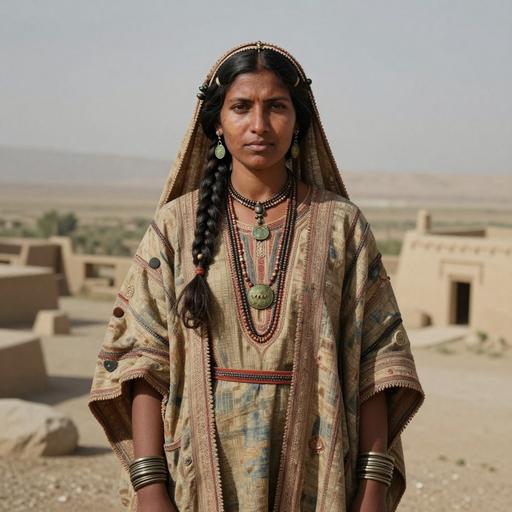
The Story
The journey of mtDNA haplogroup Z3A1A
Origins and Evolution
mtDNA haplogroup Z3A1A is a recently derived subclade of Z3A1, itself a branch of haplogroup Z which has a deep northern Eurasian distribution. Based on the time depth of its parent (Z3A1, ~4.5 kya) and the phylogenetic placement of Z3A1A, this subclade most plausibly arose in Central or Northeast Asia during the mid-to-late Holocene (roughly ~3.0 kya). Its emergence fits the pattern of localized diversification of maternal lineages in Siberia and the adjacent steppe and forest-steppe zones during and after the Bronze Age, a period of increased mobility and cultural interactions across Inner Eurasia.
Genetic evidence from modern population surveys and a small number of ancient DNA samples (three reported cases in available datasets) supports a scenario where Z3A1A represents a regional offshoot that expanded at low to moderate frequency among populations speaking Mongolic, Tungusic and Turkic languages, and subsequently spread more diffusely through later historical migrations.
Subclades
As a fine-scale terminal subclade, Z3A1A currently has limited documented internal branching in publicly available phylogenies compared with higher-level Z lineages. Where sub-structure is observed, it tends to reflect recent, geographically localized diversification within Siberia and adjacent parts of Central Asia. Continued mitogenome sequencing in under-sampled groups may reveal additional internal clades and clearer coalescent dates.
Geographical Distribution
Z3A1A shows its highest relative prevalence in northern and central parts of Inner Eurasia. It is most commonly reported among Tungusic-speaking groups and populations in the Yakut (Sakha) and Mongolic spheres, with moderate presence in southern Siberian Turkic groups (e.g., Tuvan and Altai) and low-to-moderate frequencies in some Central Asian Turkic populations (e.g., Kazakh, Kyrgyz). Very low-frequency occurrences have been documented in a small number of northern European (Finnic/Uralic) and occasional East Asian samples, and there are sporadic reports of extremely rare occurrences in Indigenous peoples of the Americas — a pattern consistent with occasional long-distance dispersal or ancient shared ancestry mediated through northern Eurasian routes.
Historical and Cultural Significance
The distribution of Z3A1A aligns with several historical processes in northern Eurasia. Its timing and geography make it compatible with population dynamics associated with Bronze Age and Iron Age steppe networks and with later historical expansions of Mongolic and Turkic-speaking groups across Siberia and Central Asia. In particular, lineages like Z3A1A can reflect female-mediated gene flow accompanying pastoralist mobility, trade and conquest, as well as later regional movements such as the dispersal of Yakut ancestors northeastward into the Lena River basin during the last millennium.
Because it occurs at low to moderate frequency, Z3A1A is best interpreted as a regional marker of northern Eurasian maternal ancestry rather than a signature of a single archaeological culture. Its presence in a small number of ancient DNA individuals supports continuity of related maternal lineages in some archaeological contexts, but broader sampling is needed to tie the clade to specific prehistoric cultures definitively.
Conclusion
mtDNA haplogroup Z3A1A is a geographically focused, late-Holocene maternal lineage deriving from Z3A1 in Central/Northeast Asia. It highlights the continued diversification of northern Eurasian maternal lineages during and after the Bronze Age and is found today mainly among Siberian, Mongolic and Turkic-speaking populations with rare occurrences outside this core area. Further mitogenome sequencing and ancient DNA sampling in underrepresented regions will help refine its age, internal structure and the historical processes that shaped its distribution.
Key Points
- Origins and Evolution
- Subclades
- Geographical Distribution
- Historical and Cultural Significance
- Conclusion