The Story
The journey of Y-DNA haplogroup D1
Origins and Evolution
Haplogroup D1 is an early Eurasian paternal lineage that branched from the parent haplogroup D (CTS3946) during the Upper Paleolithic, likely after D emerged from the DE node. Estimates based on phylogenetic position and divergence from sibling branches place the origin of D1 broadly in East to South-Central Asia roughly ~45 thousand years ago (kya). After its initial split, D1 appears to have undergone long periods of local isolation and differentiation, producing geographically distinct subclades that remained at relatively high frequency in isolated or highland populations.
Subclades
D1 is an intermediate clade that contains the geographically structured downstream lineages most commonly associated with: Tibetan and other highland Tibeto-Burman groups, the Jomon-derived lineages in the Japanese archipelago (including Ainu and some Ryukyuan groups), and the D lineages observed among the Andaman Islanders. The internal branching pattern of D1 shows deep splits separating these regional clusters, consistent with early Paleolithic diversification followed by regional genetic drift and founder effects. Modern genetic surveys and ancient DNA indicate that different D1 subbranches persisted and evolved largely in situ rather than spreading widely across Eurasia.
Geographical Distribution
D1 today shows a strongly patchy and regionally concentrated distribution. It reaches its highest relative frequencies in certain Tibetan and Himalayan populations, in the Ainu and some Jomon-descended Japanese groups, and at very high frequency in some Andaman Islander groups (e.g., Onge and Jarawa). Outside these focal areas, D1 occurs at low and scattered frequencies across mainland East Asia (including some Han Chinese), parts of Southeast Asia, and isolated Himalayan foothill populations (Nepal, Myanmar). This distribution pattern reflects early colonization routes into East and South Asia followed by long-term isolation of localized populations.
Historical and Cultural Significance
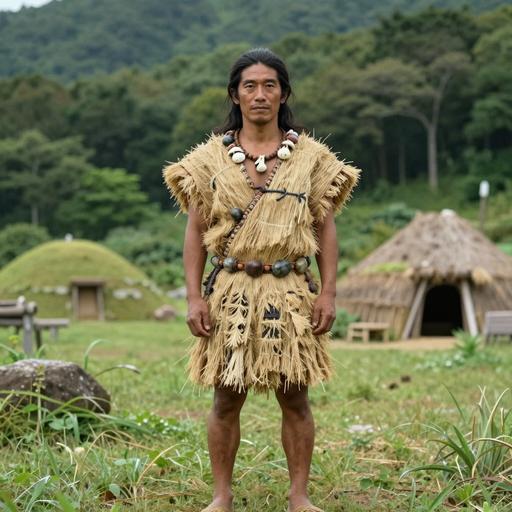
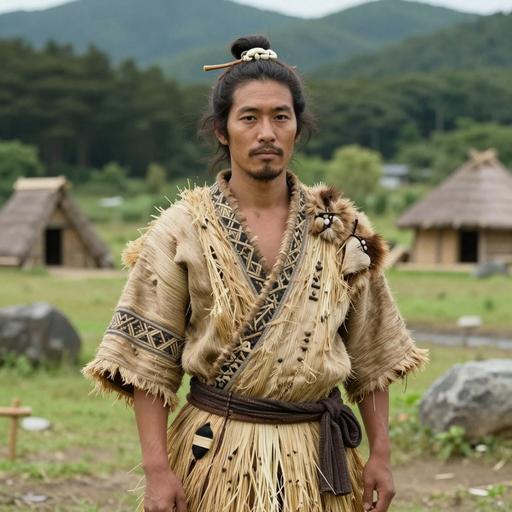
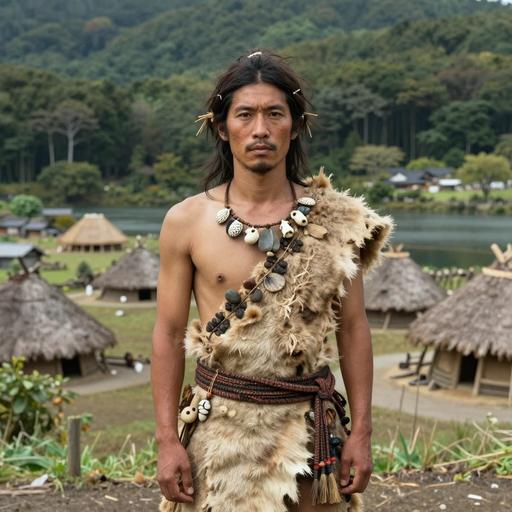
Because D1 is associated with populations that often retained hunter-gatherer or early forager lifestyles for long periods (for example, the Jomon of Japan and the indigenous peoples of the Andaman Islands), the haplogroup is frequently cited in discussions of pre-Neolithic population structure in East and Southeast Asia. In the Tibetan Plateau, D1 lineages persisted and became integrated with later Tibeto-Burman expansions, contributing to the unique genetic profile of highland groups. The haplogroup's persistence in these culturally distinctive groups makes D1 a useful marker for tracing ancient population continuity, founder events, and microevolutionary processes in isolated regions.
Conclusion
Haplogroup D1 represents a legacy of early Upper Paleolithic diversification in East and South-Central Asia, followed by prolonged local differentiation. Its strong geographic clustering in Tibet, the Japanese archipelago (Jomon/Ainu), and the Andaman Islands highlights the role of isolation, drift, and ancient population structure in shaping modern paternal lineages across Asia. Combined with analyses of other Y haplogroups (notably C and O) and maternal lineages, D1 helps reconstruct the complex mosaic of Asian prehistory.
Key Points
- Origins and Evolution
- Subclades
- Geographical Distribution
- Historical and Cultural Significance
- Conclusion