Menu
Y-DNA Haplogroup • Paternal Lineage

E1B1B1B1A1

Y-DNA Haplogroup E1B1B1B1A1

~2,000 years ago
Northwest Africa (Maghreb)
0 subclades
Scroll to explore
Chapter I

The Story

The journey of Y-DNA haplogroup E1B1B1B1A1

Origins and Evolution

E1B1B1B1A1 is a downstream branch of the well-known Northwest African E-M81 paternal lineage (broadly E1b1b1b1a in older nomenclatures). Its phylogenetic position as a subclade of the Maghrebi E-M81 cluster ties it to a Late Holocene, North African expansion, most likely reflecting localized diversification after the primary E-M81 spread across Berber-speaking populations. Based on the coalescence times estimated for closely related E-M81 subclades and the available ancient DNA hits, a reasonable estimate for the origin of E1B1B1B1A1 is in the last 1–2 thousand years (here approximated at ~1.5 kya), consistent with a Holocene founder/expansion event rather than a deep Pleistocene branch.

Subclades (if applicable)

As a downstream lineage of E-M81, E1B1B1B1A1 may itself contain internal subbranches, but published resolution and sampling remain limited compared with upstream nodes. Where sampled, the pattern often shows low internal diversity and signatures of recent expansion or founder events, which is typical of subclades that have experienced population growth from a small number of male founders (for example in island or localized tribal contexts). Further high-resolution sequencing and broader regional sampling will be required to fully resolve named subclades and their internal phylogeny.

Geographical Distribution

E1B1B1B1A1 is concentrated in the Maghreb (Morocco, Algeria, Tunisia) where its parent lineage E-M81 is most common. The highest frequencies are observed among Berber-speaking and other indigenous North African groups, and the lineage is prominent among indigenous Canary Island (Guanche) remains and their modern descendants, consistent with documented founder effects during the peopling of the islands. Secondary presence is found in southern Iberia (particularly coastal and southwestern provinces of Spain and Portugal), reflecting centuries of maritime contact, migration and admixture across the western Mediterranean. Low-frequency occurrences are recorded along the Northwest African coast, in Saharan-edge populations (Mauritania, Western Sahara), and sporadically in the Near East and other Mediterranean regions due to historic movements.

Historical and Cultural Significance

Because E1B1B1B1A1 is nested within a lineage strongly associated with Berber populations, its distribution tracks historical demographic processes in Northwest Africa: localized expansions, island colonization events (the Guanche of the Canary Islands), and cross-Mediterranean contacts that deposited Maghrebi paternal ancestry into southern Iberia. The inferred time depth (late Holocene) suggests that some of the present-day patterning could reflect population dynamics during the Iron Age, Late Antiquity and Medieval periods (including Phoenician, Roman, Vandal, Byzantine and later Islamic-era movements and trade networks) that knit North Africa and Iberia together. Archaeogenetic recovery of several ancient samples assigned to this branch (seven in the database referenced) supports its identification in archaeological contexts, often tied to North African and Canary Island remains.

Conclusion

E1B1B1B1A1 is a geographically focused, relatively recent Maghrebi subclade of the E-M81 complex that illustrates how localized founder effects and historical contact shaped paternal lineages in the western Mediterranean. It is of particular interest for studies of Berber population history, the peopling of the Canary Islands, and Iberian–North African genetic exchanges. Continued targeted Y-chromosome sequencing and ancient DNA sampling in Northwest Africa and Iberia will refine its age, internal structure, and historical dynamics.

Key Points

  • Origins and Evolution
  • Subclades (if applicable)
  • Geographical Distribution
  • Historical and Cultural Significance
  • Conclusion
Chapter II

Tree & Relationships

Phylogenetic context and subclades

Evolution Path

This haplogroup's evolutionary journey from its earliest ancestor to the present.

Steps Haplogroup Age Estimate Archaeology Era Time Passed Immediate Descendants Tested Modern Descendants Ancient Connections
1 E1B1B1B1A1 Current ~2,000 years ago 🏰 Medieval 1,500 years 0 257 0

Subclades (0)

Terminal branch - no known subclades

Chapter III

Where in the World

Geographic distribution and modern presence

Place of Origin

Northwest Africa (Maghreb)

Modern Distribution

The populations where Y-DNA haplogroup E1B1B1B1A1 is found include:

  1. Berber and Maghrebi populations of Morocco, Algeria, and Tunisia
  2. Indigenous Canary Island (Guanche) descendants and modern Canary Islanders
  3. Southern Iberian populations (southern Spain and Portugal), especially coastal and southwestern areas
  4. Northwest African coastal populations and Saharan-edge groups (Mauritania, Western Sahara)
  5. Low-frequency occurrences in parts of the Near East and broader Mediterranean due to historic contact

Regional Presence

Northern Africa (Maghreb) High
Southern Europe (Iberia) Moderate
Western Africa (Saharan edge) Moderate
Western Europe (coastal regions) Low
Western Asia / Near East Low
CHAPTER IV

When in Time

Your haplogroup in the context of human history

~10k years ago

Neolithic Revolution

Agriculture begins, settled communities form

~5k years ago

Bronze Age

Metalworking, writing, and early civilizations

~3k years ago

Iron Age

Iron tools, expanded trade networks

~2k years ago

Classical Antiquity

Greek and Roman civilizations flourish

~1k years ago

Haplogroup E1B1B1B1A1

Your Y-DNA haplogroup emerged in Northwest Africa (Maghreb)

Northwest Africa (Maghreb)
Present

Present Day

Modern era

Your Haplogroup
Historical Era
Chapter IV-B

Linked Cultures

Ancient cultures associated with Y-DNA haplogroup E1B1B1B1A1

Cultural Heritage

These ancient cultures have been linked to haplogroup E1B1B1B1A1 based on matching ancient DNA samples from archaeological excavations. The presence of this haplogroup in these cultures provides insights into the migrations and population movements of populations carrying this haplogroup.

Al-Andalus Danish Medieval Early Avar Emirate Culture German Jewish Guanche Hyrax Hill Iron Age Pastoral Lukenya Hill Culture Molo Cave Culture Pastoral Neolithic Tell Atchana Xaro Culture
Culture assignments are based on archaeological context of ancient DNA samples and may represent regional associations during specific time periods.
Chapter V

Sample Catalog

3 direct carriers of haplogroup E1B1B1B1A1

3 / 3 samples
Portrait Sample Country Era Date Culture Y-DNA Match
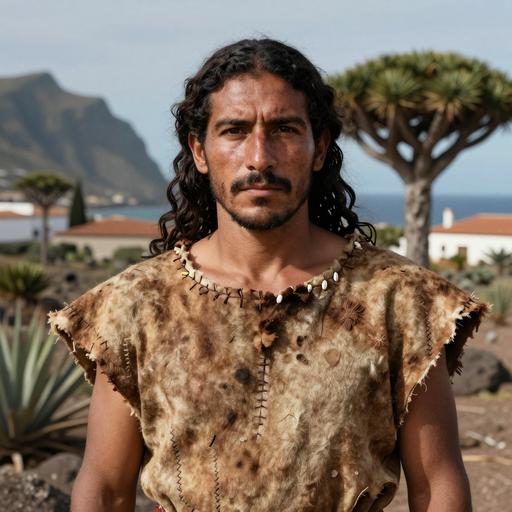
Portrait of ancient individual gun012 from Canary Islands, dated 593 CE - 660 CE
gun012
Canary Islands The Guanche People of the Canary Islands 593 CE - 660 CE Guanche E1b1b1b1a1 Direct
Portrait of ancient individual gun011 from Canary Islands, dated 704 CE - 887 CE
gun011
Canary Islands The Guanche People of the Canary Islands 704 CE - 887 CE Guanche E1b1b1b1a1 Direct
Portrait of ancient individual gun002_Rodriguez from Canary Islands, dated 1031 CE - 1159 CE
gun002_Rodriguez
Canary Islands The Guanche People of the Canary Islands 1031 CE - 1159 CE Guanche E1b1b1b1a1 Direct
Chapter VI

Carrier Distribution Map

Geographic distribution of 3 ancient DNA samples (direct and subclade carriers of E1B1B1B1A1)

Direct carrier
Time Period Filter
All Time Periods
Showing all samples
Chapter VII

Temporal Distribution

Distribution of carriers across archaeological periods

Chapter VIII

Geographic Distribution

Distribution by country of origin (direct and subclade carriers shown by default)

Chapter IX

Country × Era Distribution

Cross-tabulation of carrier countries and archaeological periods (direct and subclade carriers shown by default)

Data

Data & Provenance

Source information and data quality

Last Updated 2026-02-16
Confidence Score 50/100
Coverage Low
Data Source

We use the latest phylotree for YDNA haplogroup classification and data.