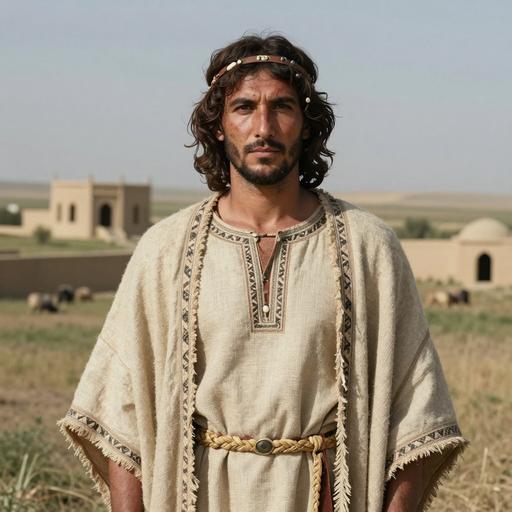
The Story
The journey of Y-DNA haplogroup G1
Origins and Evolution
Haplogroup G1 is a primary branch of Y-DNA haplogroup G (M201). While the parent clade G likely arose in the Near East / Caucasus region during the Upper Paleolithic, G1 appears to have split from other G lineages later and shows a concentration of diversity focused on the Iranian plateau and adjoining parts of Central Asia and the southern Caucasus. Coalescence and phylogenetic studies and comparative geographic patterns suggest an origin for G1 on the order of ~15–25 kya, with much of its subsequent diversification occurring during the Late Upper Paleolithic to Early Holocene and continuing through the Bronze Age.
Subclades (if applicable)
G1 contains several downstream subclades defined in modern phylogenies (commonly labeled as G1a, G1b, and further branches depending on marker resolution). Many of these sub-branches show restricted geographic distributions: some lineages are concentrated in western and central Iran, others occur in parts of Turkmenistan, Kazakhstan and among specific Caucasus groups. Because research sampling has historically emphasized Europe and some Near Eastern locales, the full internal structure of G1 is still being refined as more high‑coverage Y-chromosome sequences become available.
Geographical Distribution
G1 is most commonly observed at appreciable frequencies in Iran, parts of Central Asia (Turkmen, some Kazakh and Uzbek groups), and among certain populations of the southern Caucasus. It is generally rarer in Anatolia and the Levant compared with other G subclades, and it occurs only sporadically in Europe, where G2a dominates the Neolithic farmer signal. Small frequencies of G1 have been reported in some Jewish paternal lineages and in scattered Mediterranean samples, reflecting historical migrations and demographic contacts.
Historical and Cultural Significance
G1's spatial pattern and ages of its subclades suggest involvement primarily in regional processes on the Iranian plateau and adjacent steppe zones rather than the early Neolithic spread of farming into Europe (which is linked more strongly to G2a). G1 lineages plausibly participated in Bronze Age movements across Iran and Central Asia, later medieval migrations, and local demographic events that shaped modern population structure in the Middle East and Central Asia. In some locales, elevated G1 frequencies correlate with groups historically associated with highland and pastoralist lifeways.
Because G1 is relatively uncommon in ancient European farming contexts and more concentrated in Iran/Central Asia, its presence can be informative in genetic genealogy for tracing paternal ancestry to those regions and for distinguishing Near Eastern/Central Asian paternal inputs from the Anatolian‑Neolithic signal.
Conclusion
G1 is a geographically focused branch of haplogroup G that provides a complementary perspective to the better‑known G2a Neolithic signal. It highlights the genetic complexity of the Near East and Central Asia across the Late Pleistocene, Holocene and into historical times. Continued dense sampling and whole‑Y sequencing across Iran, the Caucasus and Central Asia will refine the internal structure and migration history of G1 and improve its utility for population history and genealogy.
Key Points
- Origins and Evolution
- Subclades (if applicable)
- Geographical Distribution
- Historical and Cultural Significance
- Conclusion