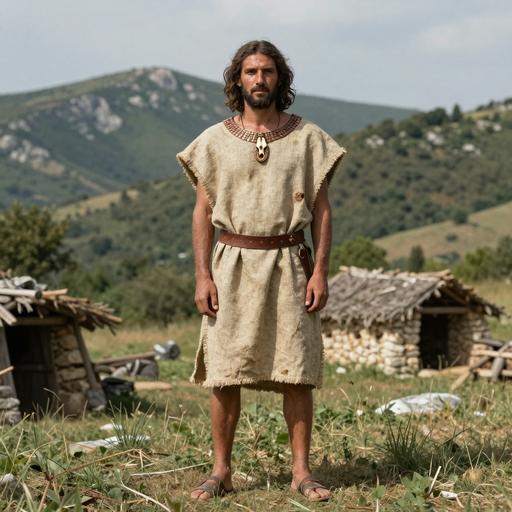
The Story
The journey of Y-DNA haplogroup G2A
Origins and Evolution
Y-DNA haplogroup G2A is a downstream branch of haplogroup G2 and is best understood as the lineage most closely linked to the early Neolithic farming expansions from Anatolia and the Near East into Europe. Based on phylogenetic position and ancient DNA evidence, G2A likely diversified in the Near East or Anatolia during the early Holocene (roughly 8–10 kya) and accompanied migrating farming communities into Europe by both continental (LBK-style) and maritime (Cardial/Impressed Ware) routes.
Genetic studies of Early European Farmers (EEF) and ancient Anatolian individuals repeatedly recover high proportions of G2A lineages, indicating a strong founder effect during the Neolithic dispersal. Later demographic events — notably the Bronze Age migrations from the Pontic-Caspian steppe carrying R1a/R1b lineages — greatly reduced the relative frequency of G2A across much of Europe, though pockets of higher frequency and diversity remain in some regions.
Subclades
G2A comprises multiple subclades with differing geographic signatures. Ancient DNA and modern surveys show a variety of downstream branches; some are most common among Neolithic-derived populations in Europe, while others retain greater diversity in Anatolia and the Caucasus. Modern subclades of G2A can be locally concentrated (for example in parts of Southern Europe or in the Caucasus), reflecting both the initial Neolithic founder effects and subsequent regional demographic histories. Detailed SNP-based subclade assignments (from high-resolution testing) refine migration and local continuity patterns but the overall pattern remains: G2A is a hallmark of early farmer ancestry.
Geographical Distribution
Today G2A is distributed in a patchy way that reflects ancient migration, drift, and later population replacements. Key features of its distribution are:
- High representation in ancient Neolithic samples across central and western Europe (LBK, Cardial contexts) and in early Anatolian farmer remains.
- Persisting elevated frequencies in parts of Southern Europe (notably Sardinia, parts of Italy and the western Mediterranean) where Neolithic ancestry remained relatively insulated from later steppe influxes.
- A presence in the Caucasus and parts of the Near East and Anatolia, where overall G diversity (including non-G2A branches) is greatest.
- Low but detectable frequencies in parts of Western Europe, the eastern Mediterranean, North Africa, and Central Asia reflecting complex historical contacts.
Ancient DNA demonstrates that G2A was much more common in European populations prior to the Bronze Age; modern distributions therefore underrepresent the Neolithic demographic importance of this haplogroup.
Historical and Cultural Significance
G2A's principal significance in population genetics and archaeology stems from its tight association with the Neolithic agricultural transition in Europe. In many early farmer sites (LBK, Cardial, and other Neolithic contexts), G2A forms a major component of male lineages, linking genetic data to archaeological models of migration and cultural transmission of farming technology.
As Europe moved into the Bronze Age, large-scale migrations from the steppe introduced different paternal lineages and reshaped the male-biased genetic landscape; G2A commonly declined in frequency but remained important for reconstructing the Neolithic substrate in modern populations and in ancient demographic models. G2A is also of interest in studies of the Caucasus and Anatolia, where high diversity of haplogroup G suggests long-term regional continuity and inferences about refugia and local differentiation.
Conclusion
G2A is a cornerstone lineage for understanding the Neolithic spread of farming from Anatolia/Near East into Europe. Its prominence in ancient farmer genomes, coupled with persistence in southern and island populations today, makes it a key marker for tracing early agriculturalist migrations, subsequent demographic shifts, and regional continuity in Europe and the Near East. High-resolution subclade analysis continues to refine routes and timings of these events as more ancient and modern genomes are analyzed.
Key Points
- Origins and Evolution
- Subclades
- Geographical Distribution
- Historical and Cultural Significance
- Conclusion