Menu
Y-DNA Haplogroup • Paternal Lineage

N1A1A1A1A1A2A1A2

Y-DNA Haplogroup N1A1A1A1A1A2A1A2

~20 years ago
Fennoscandia (Northern Europe)
0 subclades
Scroll to explore
Chapter I

The Story

The journey of Y-DNA haplogroup N1A1A1A1A1A2A1A2

Origins and Evolution

Haplogroup N1A1A1A1A1A2A1A2 sits as a very shallow, terminal branch within the broader N1 phylogeny. Because it is nested several levels deep under N1 and under the parent N1A1A1A1A1A2A1A, the mutation that defines this subclade represents a very recent single-event origin — a private SNP/short branch that likely arose within a small community in Fennoscandia. Lineages like this are typically the result of a recent male-line founder effect or pedigree-level expansion rather than a deep prehistoric demographic event.

Population genetics of haplogroup N in northern Eurasia shows older, widely distributed branches (linked to postglacial expansions and Uralic-associated movements) and many very recent microclades that mark local family expansions. N1A1A1A1A1A2A1A2 conforms to that pattern: its phylogenetic position, very low diversity, and limited geographic spread point to a post-medieval, localized emergence.

Subclades

At present, N1A1A1A1A1A2A1A2 appears to be a terminal or near-terminal microclade with little or no recognized internal branching in public SNP trees. That means it is likely represented by a small number of closely related individuals sharing the defining SNP(s). Over time, with denser sampling and family-level testing, very shallow downstream subclades (private variants) may be discovered, which would make this lineage useful for surname and close‑kin inference in genealogical contexts.

Geographical Distribution

The distribution of this microclade is strongly centered on Fennoscandia. Current observations and reasonable inference from its parent clade indicate the highest incidence among Finnish and other northern Scandinavian populations, with presence among Sámi and coastal northern Swedish/Norwegian groups. There are occasional isolated matches in Baltic coastal communities, northern Russian samples, and very rare hits in northeastern Eurasian datasets — these are best interpreted as either historical contacts or sporadic matches rather than evidence for an ancient trans‑Eurasian distribution.

Because the haplogroup is so recent and geographically restricted, its overall frequency in any national population is typically low, but it can be moderate within a local community or extended pedigree where the founder effect occurred.

Historical and Cultural Significance

Given its very recent origin, N1A1A1A1A1A2A1A2 is unlikely to be associated with broad prehistoric cultural complexes such as Corded Ware or Yamnaya. Instead, its value is primarily genealogical and anthropological: it can mark recent family lineages, regional founder events, and micro-population structure within Fennoscandia. It may show elevated incidence in communities with strong endogamy or in isolated coastal or inland settlements.

The haplogroup may also overlap with speakers of Uralic languages in northern Europe, and with ethnolinguistic groups such as the Sámi, but those associations are modern and localized rather than reflecting deep prehistoric migrations.

Conclusion

N1A1A1A1A1A2A1A2 is a textbook example of a very recent, geographically constrained Y-DNA microclade. It is most useful for high-resolution genealogical work and for studying recent demographic events in northern Scandinavia rather than for reconstructing ancient population movements. As more high-coverage Y-chromosome data are collected from Fennoscandia and neighboring areas, the internal structure and precise age of this microclade may be refined, potentially resolving whether it represents a single family expansion or a slightly older local lineage.

Key Points

  • Origins and Evolution
  • Subclades
  • Geographical Distribution
  • Historical and Cultural Significance
  • Conclusion
Chapter II

Tree & Relationships

Phylogenetic context and subclades

Evolution Path

This haplogroup's evolutionary journey from its earliest ancestor to the present.

Steps Haplogroup Age Estimate Archaeology Era Time Passed Immediate Descendants Tested Modern Descendants Ancient Connections
1 N1A1A1A1A1A2A1A2 Current ~20 years ago 🏭 Modern <100 years 0 0 0

Subclades (0)

Terminal branch - no known subclades

Chapter III

Where in the World

Geographic distribution and modern presence

Place of Origin

Fennoscandia (Northern Europe)

Modern Distribution

The populations where Y-DNA haplogroup N1A1A1A1A1A2A1A2 is found include:

  1. Finns and other Northern Finnish regional groups (notably in parts of Finland)
  2. Sámi (Saami) and other Fennoscandian populations
  3. Northern Swedes and Norwegians in coastal and border areas
  4. Estonians, Latvians and some coastal Baltic communities (rare)
  5. Northern Russians and Komi (low frequency and isolated matches)
  6. Very rare occurrences among indigenous Siberian samples (e.g., isolated matches in northeastern datasets)
  7. Scattered single-case reports in other Uralic-speaking or neighboring populations (e.g., very rare reports in Hungary or Belarusian border regions)

Regional Presence

Northern Europe (Fennoscandia) Moderate
Baltic Sea Coast Low
Northern Asia (Siberia, isolated) Low
CHAPTER IV

When in Time

Your haplogroup in the context of human history

~10k years ago

Neolithic Revolution

Agriculture begins, settled communities form

~5k years ago

Bronze Age

Metalworking, writing, and early civilizations

~3k years ago

Iron Age

Iron tools, expanded trade networks

~2k years ago

Classical Antiquity

Greek and Roman civilizations flourish

~20 years ago

Haplogroup N1A1A1A1A1A2A1A2

Your Y-DNA haplogroup emerged in Fennoscandia (Northern Europe)

Fennoscandia (Northern Europe)
Present

Present Day

Modern era

Your Haplogroup
Historical Era
Chapter IV-B

Linked Cultures

Ancient cultures associated with Y-DNA haplogroup N1A1A1A1A1A2A1A2

Cultural Heritage

These ancient cultures have been linked to haplogroup N1A1A1A1A1A2A1A2 based on matching ancient DNA samples from archaeological excavations. The presence of this haplogroup in these cultures provides insights into the migrations and population movements of populations carrying this haplogroup.

Avar Culture Post-Medieval Swedish Pre-Viking Swedish Slab Grave Culture Viking Viking Culture
Culture assignments are based on archaeological context of ancient DNA samples and may represent regional associations during specific time periods.
Chapter V

Sample Catalog

1 direct carrier of haplogroup N1A1A1A1A1A2A1A2

1 / 1 samples
Portrait Sample Country Era Date Culture Y-DNA Match
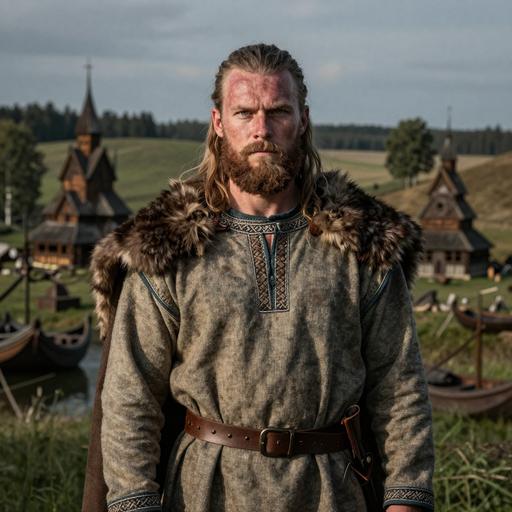
Portrait of ancient individual VK395 from Sweden, dated 900 CE - 1200 CE
VK395
Sweden Viking Age Sweden 900 CE - 1200 CE Viking N1a1a1a1a1a2a1a2 Direct
Chapter VI

Carrier Distribution Map

Geographic distribution of 1 ancient DNA sample (direct and subclade carriers of N1A1A1A1A1A2A1A2)

Direct carrier
Time Period Filter
All Time Periods
Showing all samples
Chapter VII

Temporal Distribution

Distribution of carriers across archaeological periods

Chapter VIII

Geographic Distribution

Distribution by country of origin (direct and subclade carriers shown by default)

Chapter IX

Country × Era Distribution

Cross-tabulation of carrier countries and archaeological periods (direct and subclade carriers shown by default)

Data

Data & Provenance

Source information and data quality

Last Updated 2026-02-16
Confidence Score 50/100
Coverage Low
Data Source

We use the latest phylotree for YDNA haplogroup classification and data.