Menu
Y-DNA Haplogroup • Paternal Lineage

R1A1A1B1A3B

Y-DNA Haplogroup R1A1A1B1A3B

~1,000 years ago
Eastern/Central Europe
0 subclades
2 ancient samples
Scroll to explore
Chapter I

The Story

The journey of Y-DNA haplogroup R1A1A1B1A3B

Origins and Evolution

R1A1A1B1A3B is a terminal/subterminal branch of the R1a-M458 (R1A1A1B1A3) radiation. R1a-M458 is a well-characterized lineage tied to Central and Eastern Europe and often associated with early Slavic paternal ancestry; R1A1A1B1A3B represents a later split within that regional cluster. Based on the parent-clade age (~1.8 kya) and patterns of downstream diversity in modern and limited ancient samples, a reasonable estimate for origin of R1A1A1B1A3B is the first millennium CE (roughly 1.1 kya), consistent with diversification during the early medieval period when localized male lineages expanded in tandem with social and demographic changes.

This haplogroup likely formed by one or a few defining SNPs on the M458-derived backbone and subsequently accumulated short-range microsatellite and SNP diversity reflecting local founder effects, endogamy in certain communities, and medieval population movements.

Subclades

As a comparatively downstream designation, R1A1A1B1A3B may contain limited documented substructure in public databases; where present, subclades are expected to be geographically concentrated and young (medieval). Many lineages in the R1a-M458 tree show star-like expansions tied to single or few founders, and R1A1A1B1A3B likely follows that pattern: small internal branches with some named SNPs in commercial/academic kits but a majority of phylogenetic resolution depending on high-coverage sequencing or targeted SNP testing.

Geographical Distribution

R1A1A1B1A3B shows its highest frequencies in Eastern and Central Europe, particularly in areas with strong historical Slavic presence. Modern sampling indicates concentration in Poland, western Ukraine, Belarus and adjacent western Russian regions, with measurable presence in the Czech lands, Slovakia and Hungary. It is also found at moderate-to-low frequency in the Baltic states and in some Scandinavian locales where medieval contacts (trade, migration, Viking activity) and later historical movements introduced Central/Eastern European paternal lineages. Isolated low-frequency occurrences in Central and South Asia, the Caucasus, and the Near East are most consistent with later migrations, long-distance mobility, or recent gene flow rather than primary origin.

Ancient DNA: the clade is scarce in published ancient samples to date; the presence of one identified aDNA instance (noted in the source dataset) corroborates a medieval context rather than a deep prehistoric origin for this precise subclade.

Historical and Cultural Significance

Because R1A1A1B1A3B is nested within R1a-M458, a lineage often linked to Slavic paternal ancestry, its distribution and age suggest it expanded during the early medieval period associated with the consolidation and demographic growth of Slavic-speaking communities. Associations with early Slavic cultural horizons and medieval settlement processes are consistent with the phylogeography and age estimate. Secondary spread to Scandinavia can be explained by Viking-era and later medieval mobility, and scattered occurrences farther afield likely reflect historical migrations, military movements, trade networks, or modern population transfers.

Genetically, this haplogroup is informative for fine-scale paternal ancestry in Central and Eastern Europe: it can help distinguish lineages that derive from medieval local founders versus older, pan-European R1a subclades.

Conclusion

R1A1A1B1A3B is a young, regionally concentrated R1a subclade that documents localized paternal diversification in Eastern/Central Europe during the medieval era. Its value for genetic genealogy is high for tracing recent paternal ancestries within Slavic and neighboring populations, but deeper resolution and ancient DNA evidence are still limited; targeted high-resolution SNP testing and more ancient samples would refine its internal structure and historical dynamics.

Key Points

  • Origins and Evolution
  • Subclades
  • Geographical Distribution
  • Historical and Cultural Significance
  • Conclusion
Chapter II

Tree & Relationships

Phylogenetic context and subclades

Evolution Path

This haplogroup's evolutionary journey from its earliest ancestor to the present.

Steps Haplogroup Age Estimate Archaeology Era Time Passed Immediate Descendants Tested Modern Descendants Ancient Connections
1 R1A1A1B1A3B Current ~1,000 years ago 🏰 Medieval 1,100 years 0 10 2

Subclades (0)

Terminal branch - no known subclades

Siblings (1)

Other branches from the same parent haplogroup

Chapter III

Where in the World

Geographic distribution and modern presence

Place of Origin

Eastern/Central Europe

Modern Distribution

The populations where Y-DNA haplogroup R1A1A1B1A3B is found include:

  1. Eastern Europeans (especially Poland, Ukraine, Belarus, and western Russia)
  2. Central Europeans (Poland, Czech lands, Slovakia, Hungary)
  3. Baltic populations (Latvia, Lithuania, Estonia)
  4. Broad Slavic-speaking populations (East and some West Slavs)
  5. Some Scandinavian populations (areas with medieval and Viking-era contacts)
  6. Central Asian populations (low to moderate incidence via later contacts)
  7. South Asian populations (rare/introgressed occurrences, especially NW India/Pakistan)
  8. Caucasus and Near Eastern populations (rare/introgressed occurrences)

Regional Presence

Eastern Europe High
Central Europe High
Northern Europe Moderate
Central Asia Low
South Asia Low
Near East / Caucasus Low
CHAPTER IV

When in Time

Your haplogroup in the context of human history

~10k years ago

Neolithic Revolution

Agriculture begins, settled communities form

~5k years ago

Bronze Age

Metalworking, writing, and early civilizations

~3k years ago

Iron Age

Iron tools, expanded trade networks

~2k years ago

Classical Antiquity

Greek and Roman civilizations flourish

~1k years ago

Haplogroup R1A1A1B1A3B

Your Y-DNA haplogroup emerged in Eastern/Central Europe

Eastern/Central Europe
Present

Present Day

Modern era

Your Haplogroup
Historical Era
Chapter IV-B

Linked Cultures

Ancient cultures associated with Y-DNA haplogroup R1A1A1B1A3B

Cultural Heritage

These ancient cultures have been linked to haplogroup R1A1A1B1A3B based on matching ancient DNA samples from archaeological excavations. The presence of this haplogroup in these cultures provides insights into the migrations and population movements of populations carrying this haplogroup.

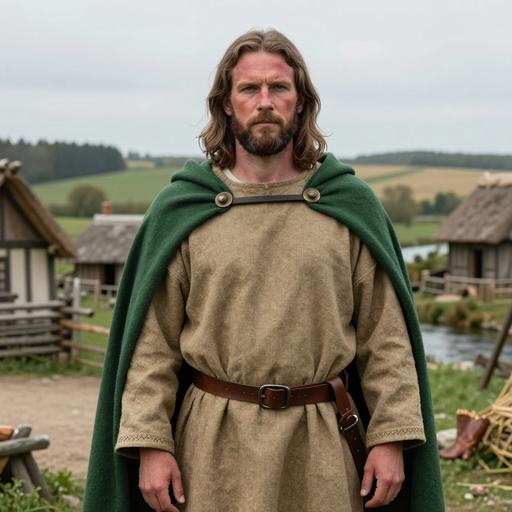
Faroese Norse Pagan Viking Viking Culture Zealand Saxon
Culture assignments are based on archaeological context of ancient DNA samples and may represent regional associations during specific time periods.
Chapter V

Sample Catalog

1 direct carrier and 1 subclade carrier of haplogroup R1A1A1B1A3B

2 / 2 samples
Portrait Sample Country Era Date Culture Y-DNA Match
Portrait of ancient individual GRS-A1 from Iceland, dated 870 CE - 1000 CE
GRS-A1
Iceland Pre-Christian Period Iceland 870 CE - 1000 CE Norse Pagan R1a1a1b1a3b Direct
Portrait of ancient individual DRU003 from Germany, dated 600 CE - 900 CE
DRU003
Germany Saxon Medieval Drantum, Germany 600 CE - 900 CE Saxon Drantum R1a1a1b1a3b2 Downstream
Chapter VI

Carrier Distribution Map

Geographic distribution of 2 ancient DNA samples (direct and subclade carriers of R1A1A1B1A3B)

Direct carrier Subclade carrier
Time Period Filter
All Time Periods
Showing all samples
Chapter VII

Temporal Distribution

Distribution of carriers across archaeological periods

Chapter VIII

Geographic Distribution

Distribution by country of origin (direct and subclade carriers shown by default)

Chapter IX

Country × Era Distribution

Cross-tabulation of carrier countries and archaeological periods (direct and subclade carriers shown by default)

Data

Data & Provenance

Source information and data quality

Last Updated 2026-02-16
Confidence Score 50/100
Coverage Low
Data Source

We use the latest phylotree for YDNA haplogroup classification and data.