Menu
Y-DNA Haplogroup • Paternal Lineage

R1B1

Y-DNA Haplogroup R1B1

~26,000 years ago
West Eurasia
2 subclades
Scroll to explore
Chapter I

The Story

The journey of Y-DNA haplogroup R1B1

Origins and Evolution

R1B1 represents an early split within the broader R1b family. Based on its phylogenetic position and coalescence expectations for neighboring branches, R1B1 most plausibly arose in West Eurasia during the Upper Paleolithic (roughly the Late Glacial period, tens of thousands of years ago). The lineage predates the major Late Neolithic and Bronze Age radiations but provided the ancestral background for several downstream subclades that later expanded across Europe and parts of western Asia and Africa.

Genetic studies show that many of the large modern R1b expansions (for example, the M269-associated expansion in western Europe and the V88-associated expansion into parts of Africa) derive from lineages that branched from early R1b ancestors like R1B1. Ancient DNA has clarified that different downstream R1b lineages moved into Europe at different times: some in postglacial recolonization phases, some with Neolithic farmers, and some during large Bronze Age population movements.

Subclades (if applicable)

R1B1 is ancestral to multiple downstream lineages within the R1b phylogeny. While modern nomenclature emphasizes SNP-defined clades (for example, branches identified by markers such as M269 or V88), R1B1 can be thought of as a deep internal node that gave rise to both the major European R1b branches (including the M269-dominated clades responsible for much of Western European R1b diversity) and other geographically distinct branches (such as V88-related lineages found in parts of Africa). Specific subclade assignments require SNP resolution; archaeological associations depend on which downstream branch is present.

Geographical Distribution

Today, lineages deriving from R1B1-type ancestry are most frequent in Western Europe, with substantial presence across the British Isles, France, Iberia, and parts of Central Europe. Lower-frequency but notable occurrences appear in the Near East, the Caucasus, North Africa, parts of Central Asia, and among some African groups (e.g., Chadic-speaking populations) where downstream branches (e.g., V88) expanded southward.

The distribution reflects a long history of movement: postglacial recolonization of Europe, Neolithic farmer–hunter-gatherer interactions, and Bronze Age migrations from the Pontic–Caspian steppe. The relative contributions of these processes differ by region and are best resolved by looking at finer downstream SNP-defined clades rather than the broad R1B1 label alone.

Historical and Cultural Significance

  • Postglacial and Mesolithic periods: Early R1B1-related lineages likely participated in the recolonization of temperate Europe after the Last Glacial Maximum, contributing to regional paternal diversity.
  • Neolithic period: Interaction between incoming farmers and local foragers redistributed paternal lineages; some R1b-derived branches persisted or assimilated into Neolithic contexts in Europe and the Near East.
  • Bronze Age: The most dramatic shifts in R1b frequencies in Western Europe are associated with Bronze Age expansions (notably branches of R1b such as those defined by M269), which reshaped the genetic landscape of Europe and are visible in ancient DNA from Yamnaya-related, Corded Ware–related, and Bell Beaker contexts.

Archaeologically, particular downstream R1b lineages are tied to cultures that mediated large-scale population movements (e.g., Steppe pastoralist groups and Bell Beaker populations), but the broad R1B1 node is older than any single archaeological culture.

Conclusion

R1B1 is best understood as a deep, pre-Neolithic node within the R1b family that served as the source for several later, geographically and culturally important subclades. Modern distributions concentrated in Western Europe and scattered occurrences in the Near East, Caucasus, North Africa, and Central Asia reflect a complex history of Paleolithic origins, Neolithic interactions, and Bronze Age expansions. Detailed interpretation for any population requires downstream SNP analysis to identify which R1b subclade is present and to link it to specific demographic events.

Key Points

  • Origins and Evolution
  • Subclades (if applicable)
  • Geographical Distribution
  • Historical and Cultural Significance
  • Conclusion
Chapter II

Tree & Relationships

Phylogenetic context and subclades

Evolution Path

This haplogroup's evolutionary journey from its earliest ancestor to the present.

Steps Haplogroup Age Estimate Archaeology Era Time Passed Immediate Descendants Tested Modern Descendants Ancient Connections
1 R1B1 Current ~26,000 years ago 🦴 Paleolithic 26,000 years 2 138 0
2 R1b ~66,000 years ago 🦴 Paleolithic 66,000 years 2 206 126

Siblings (1)

Other branches from the same parent haplogroup

Chapter III

Where in the World

Geographic distribution and modern presence

Place of Origin

West Eurasia

Modern Distribution

The populations where Y-DNA haplogroup R1B1 is found include:

  1. Western Europeans (especially in the British Isles, France, and Spain)
  2. Central Europeans (Germany, Switzerland, Austria)
  3. Some populations in Eastern Europe
  4. Basques
  5. North Africans (lower frequencies)
  6. Sub-Saharan African groups (notably some Chadic-speaking peoples, lower frequencies)
  7. Populations in the Caucasus region
  8. Some populations in the Middle East
  9. Some populations in Central Asia

Regional Presence

Western Europe High
Central Europe High
Eastern Europe Moderate
Near East Moderate
North Africa Low
Sub-Saharan Africa Low
Central Asia Low
Caucasus Low
CHAPTER IV

When in Time

Your haplogroup in the context of human history

~26k years ago

Haplogroup R1B1

Your Y-DNA haplogroup emerged in West Eurasia

West Eurasia
~20k years ago

Last Glacial Maximum

Peak of the last ice age, populations isolated

~10k years ago

Neolithic Revolution

Agriculture begins, settled communities form

~5k years ago

Bronze Age

Metalworking, writing, and early civilizations

~3k years ago

Iron Age

Iron tools, expanded trade networks

~2k years ago

Classical Antiquity

Greek and Roman civilizations flourish

Present

Present Day

Modern era

Your Haplogroup
Historical Era
Chapter IV-B

Linked Cultures

Ancient cultures associated with Y-DNA haplogroup R1B1

Cultural Heritage

These ancient cultures have been linked to haplogroup R1B1 based on matching ancient DNA samples from archaeological excavations. The presence of this haplogroup in these cultures provides insights into the migrations and population movements of populations carrying this haplogroup.

Blatterhohle Chinese Dongtalede Culture Early Bronze Age Armenian Iron Gates Culture Kindoki Sahaxibei Culture Zhagunluke Culture
Culture assignments are based on archaeological context of ancient DNA samples and may represent regional associations during specific time periods.


Chapter V

Sample Catalog

3 direct carriers and 97 subclade carriers of haplogroup R1B1

50 / 50 samples
Portrait Sample Country Era Date Culture Y-DNA Match
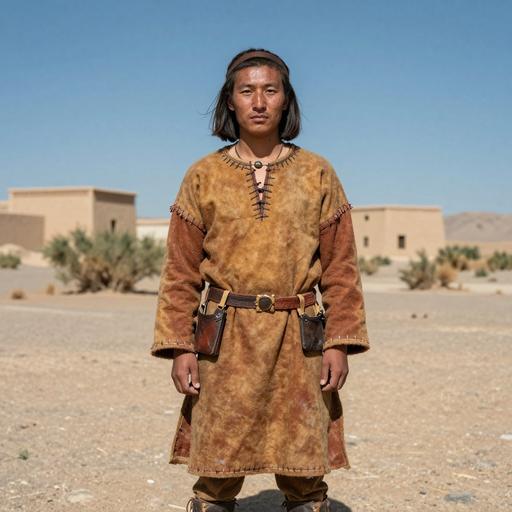
Portrait of ancient individual C3652 from China, dated 50 BCE - 61 BCE
C3652
China Iron Age Zhagunluke, Xinjiang, China 50 BCE - 61 BCE Zhagunluke Culture R1b1~ Direct
Portrait of ancient individual C3666 from China, dated 161 BCE - 8 BCE
C3666
China Iron Age Zhagunluke, Xinjiang, China 161 BCE - 8 BCE Zhagunluke Culture R1b1~ Direct
Portrait of ancient individual C833 from China, dated 342 BCE - 54 BCE
C833
China Iron Age Zhagunluke, Xinjiang, China 342 BCE - 54 BCE Zhagunluke Culture R1b1~ Direct
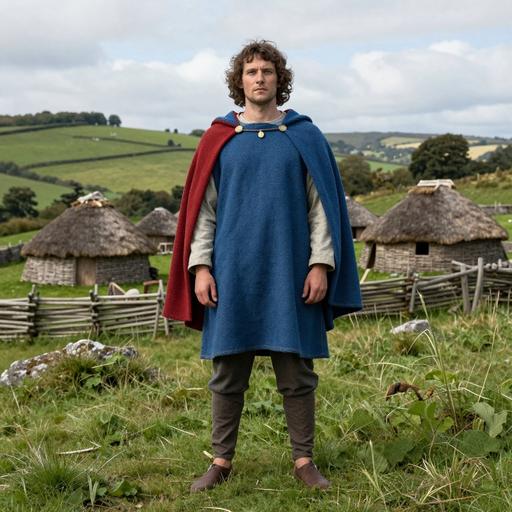
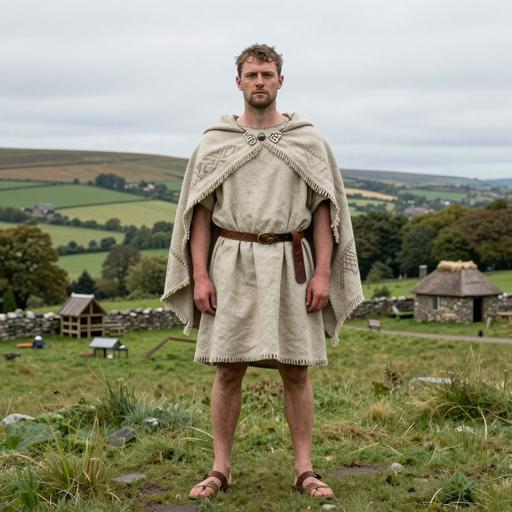
Portrait of ancient individual I19047 from United Kingdom, dated 1 CE - 50 CE
I19047
United Kingdom Late Iron Age England 1 CE - 50 CE British Late Iron Age R1b1a1b Downstream
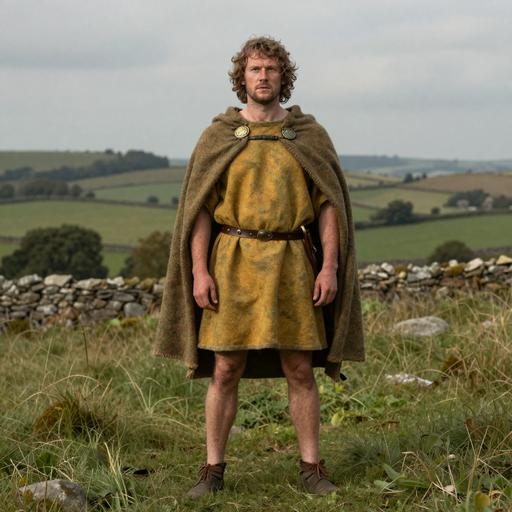
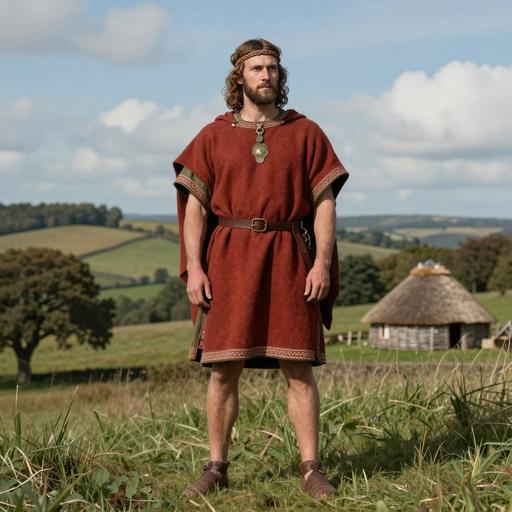
Portrait of ancient individual I2824 from United Kingdom, dated 41 BCE - 121 BCE
I2824
United Kingdom Late Iron Age Scotland 41 BCE - 121 BCE Scottish Iron Age R1b1a1b Downstream
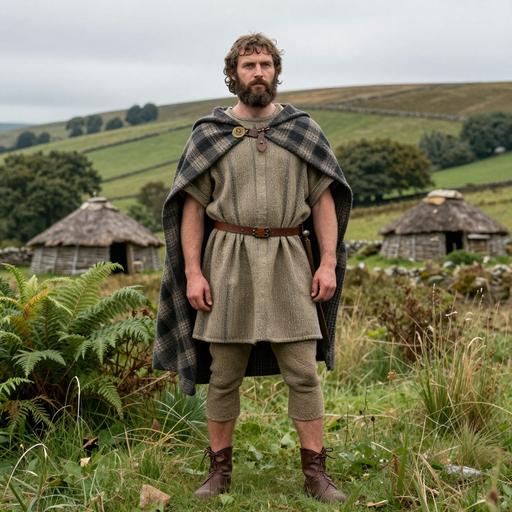
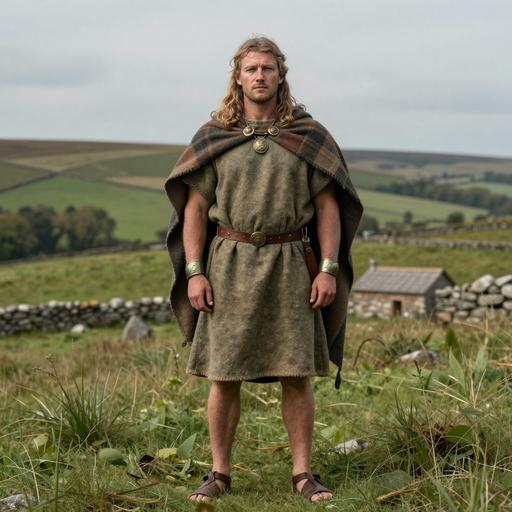
Portrait of ancient individual I16504 from United Kingdom, dated 42 BCE - 116 BCE
I16504
United Kingdom Iron Age Scotland 42 BCE - 116 BCE Scottish Iron Age R1b1a1b1a1a2c1 Downstream
Portrait of ancient individual I3568 from United Kingdom, dated 42 BCE - 119 BCE
I3568
United Kingdom Late Iron Age Scotland 42 BCE - 119 BCE Scottish Iron Age R1b1a1b1a1a2c1a4b2b1 Downstream
Portrait of ancient individual I27385 from United Kingdom, dated 43 BCE - 117 BCE
I27385
United Kingdom Late Iron Age Scotland 43 BCE - 117 BCE Scottish Iron Age R1b1a1b1a1a2c1 Downstream
Portrait of ancient individual I21302 from United Kingdom, dated 46 BCE - 117 BCE
I21302
United Kingdom Late Iron Age England 46 BCE - 117 BCE British Late Iron Age R1b1a1b1a1a2c1 Downstream
Portrait of ancient individual I22062 from United Kingdom, dated 50 BCE - 116 BCE
I22062
United Kingdom Late Iron Age East Yorkshire, England 50 BCE - 116 BCE Late Iron Age R1b1a1b1a1a2c1 Downstream
Chapter VI

Carrier Distribution Map

Geographic distribution of 100 ancient DNA samples (direct and subclade carriers of R1B1)

Direct carrier Subclade carrier
Time Period Filter
All Time Periods
Showing all samples
Chapter VII

Temporal Distribution

Distribution of carriers across archaeological periods

Chapter VIII

Geographic Distribution

Distribution by country of origin (direct and subclade carriers shown by default)

Chapter IX

Country × Era Distribution

Cross-tabulation of carrier countries and archaeological periods (direct and subclade carriers shown by default)

Data

Data & Provenance

Source information and data quality

Last Updated 2026-02-16
Confidence Score 50/100
Coverage Low
Data Source

We use the latest phylotree for YDNA haplogroup classification and data.