Neanderthal Heritage Report

Download PDF creates a visual, rasterized copy. Use Print for selectable text and better assistive-technology support.

Neanderthal

Preparing your personal report

Preparing the available report content...

Your report will open automatically.

Skip to main content

The archaic collection / Personal report

(SSUAJF) Demo Report

NeanderthalEchoes of another humanity.

Explore the traces of an ancient human story through your recorded estimate, genetic variants and the science that puts them in context.

This sample's Neanderthal percentage is withheld. The method that produced it is not reliable in this range, so no figure is shown rather than a misleading one.

Your report estimate

A model-based result, not a family tree or a prediction of health.

555 recorded variant matches / 4,454 in the report panel

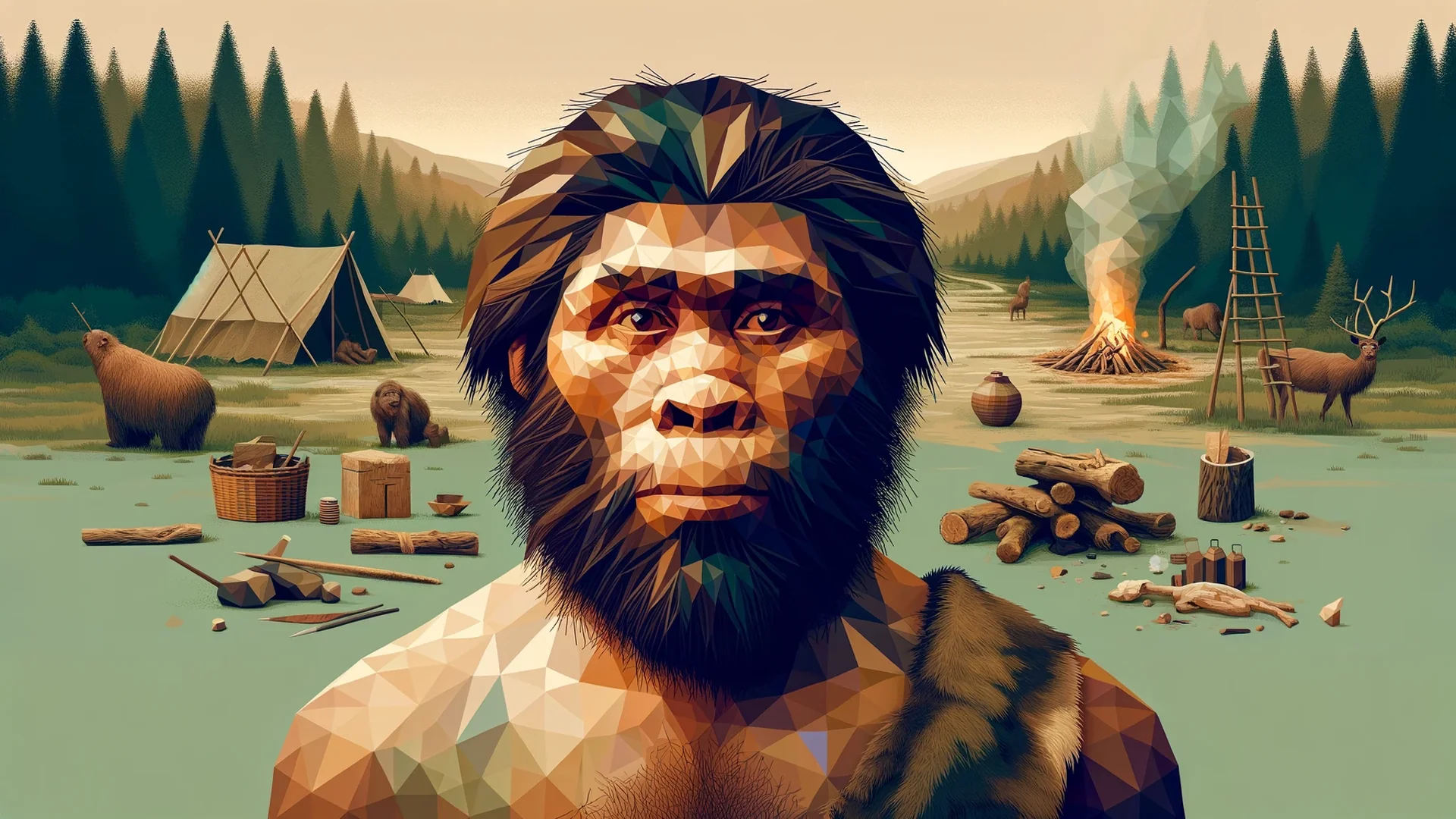
Illustrative scene accompanying the Neanderthal report
NeanderthalReport artwork, not a reconstruction of this sample

AI-generated artistic reconstruction, not a photograph of the individual.

Chapter I

An ancient human story

The ancient world behind your recorded results

Beyond the ancient genome is a human story: lives lived in changing landscapes, leaving traces for us to study.

For over 300,000 years, Neanderthals inhabited the vast landscapes of Europe and western Asia. Their tools and archaeological remains offer glimpses of life in changing Ice Age environments.

Questions about their care for one another, symbolic expression and communication remain part of an evolving scientific picture. Archaeology and genetic research offer different pieces of that picture.

Between 60,000 and 40,000 years ago, when modern humans arrived in their world, contact between ancient human populations left a genetic record that researchers continue to investigate. Ancient interbreeding provides context for the genetic similarities studied in this report.

Ancient lives, studied through the traces they left behind.
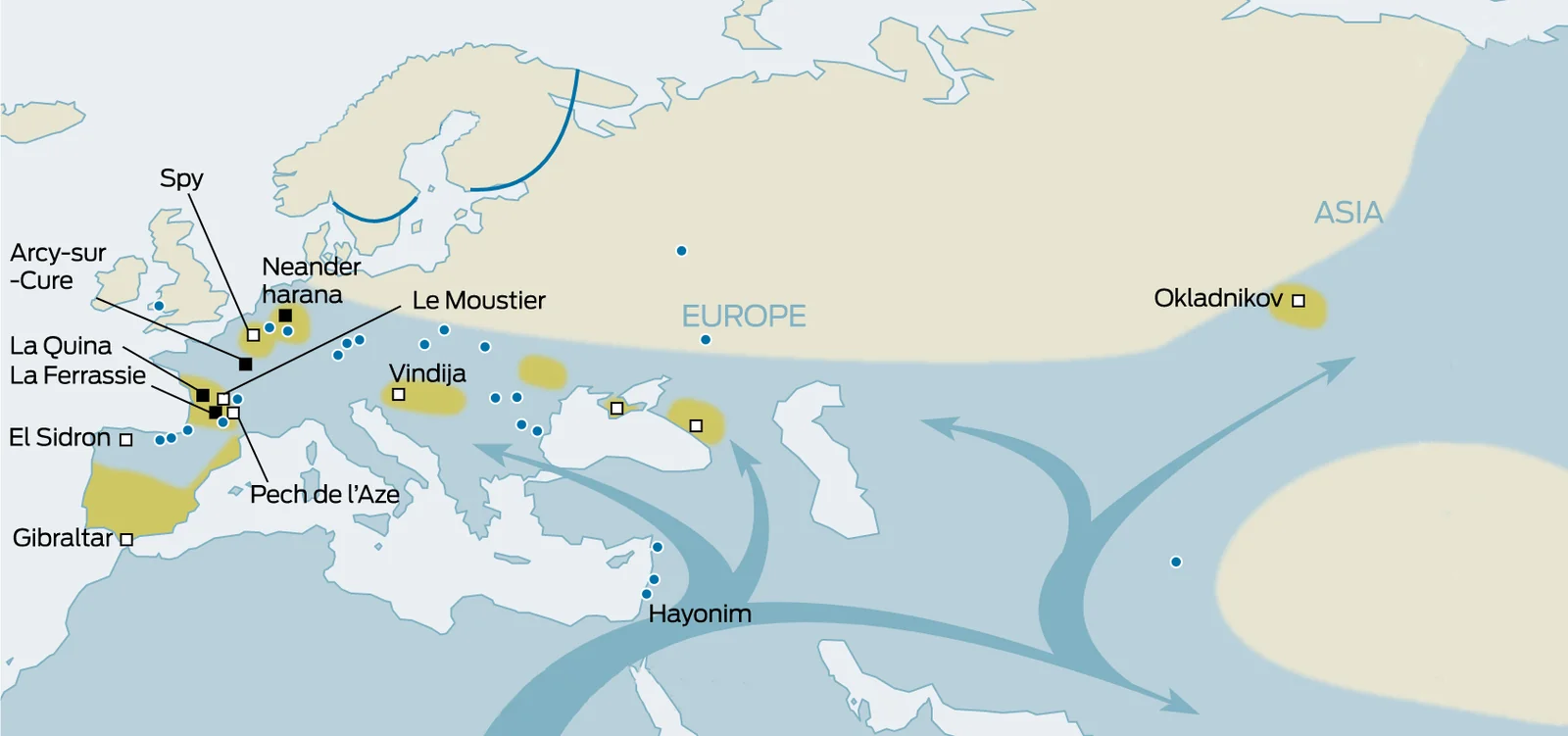
Neanderthal Geographic Distribution

Neanderthals inhabited a vast range across Europe and western Asia, adapting to diverse environments from Mediterranean coasts to Siberian steppes.

Map showing Neanderthal migration and settlement patterns across Europe and Asia

Open the illustration in full size to explore major sites and routes

Chapter II

Adaptation & research

General research context, not a personal health assessment

The topics below describe general research associations. This report does not assess your individual medical risk, confirm a benefit or diagnose a condition.

Potential Benefits

  • Enhanced immune response to certain pathogens
  • Improved blood coagulation and clotting
  • Better adaptation to high-altitude environments
  • Enhanced fat metabolism in cold climates
  • Increased bone density and strength
  • Better UV protection and skin resilience

Health Considerations

  • Increased susceptibility to certain autoimmune disorders
  • Higher risk of allergies and sensitivities
  • Potential impact on mental health traits
  • Modified pain sensitivity and perception
  • Variations in nicotine and substance processing
  • Possible increased Type 2 diabetes risk

Modern Population Distribution

East Asians (China, Japan, Korea)
2.3-2.6%
Europeans (Various populations)
1.8-2.4%
South Asians (India, Pakistan)
1.6-2.2%
Native Americans
1.5-2.0%
Sub-Saharan Africans
Minimal
Chapter III

Your variant associations

Explore the associations recorded in this report panel

These entries describe associations linked to variants in the report panel. A detected variant does not establish that you express a trait, and a missing variant does not rule it out. The percentages below describe matched panel alleles, not the probability of a trait.

Shorter Height

We found the variant that reduces 1% your height

1 of 2 variants 50%

Higher Height

We found the variant that may increase your height

1 of 2 variants 50%

Dandruff

You are more likely to have dandruff

1 of 2 variants 50%

Sprint Vs Distance

You are more likely to be better sprinter than distance runner

1 of 10 variants 10%

Sense Of Direction

You are more likely to have worse sense of direction

1 of 2 variants 50%
Chapter IV

The Science Behind Your Results

Reference genomes, panel markers and interpretation limits

Your Neanderthal ancestry report is built on established scientific methods, comparing your DNA against authenticated ancient genomes from archaeological sites across Europe.

Reference Genomes

Analysis against high-quality Neanderthal genomes from Vindija Cave, Denisova Cave, and other authenticated sites.

4454 Variants

The markers included in this report panel provide context for the recorded variant matches. Panel coverage and the input file affect which markers are available.

Validated Methods

Statistical algorithms based on population genetics methodologies published in leading scientific journals.

Peer-Reviewed

Built on research from Science, Nature, and Cell, among other sources of paleogenomic scholarship.

Frequently Asked Questions

Neanderthal DNA identification involves several sophisticated methods: your DNA is compared against multiple high-quality Neanderthal genomes from fossil remains, we analyze 4454 validated genetic variants, advanced statistical algorithms identify archaic DNA patterns, and rigorous quality control ensures accuracy.

The report records 555 variant matches in its panel. This estimate should be interpreted with the report methodology and input coverage. It does not identify specific ancestors, establish a precise count of genomic positions or predict a medical outcome.

Multiple interbreeding events occurred between 60,000-40,000 years ago as modern humans migrated out of Africa. The Middle East, Europe, and western Asia served as primary contact zones. These events fundamentally shaped the genetic makeup of all non-African populations, providing crucial adaptations for life outside Africa.

Neanderthal DNA has significant impacts on modern immune function. Benefits include enhanced pathogen recognition, improved viral response, and better adaptation to Eurasian diseases. However, some variants are linked to increased autoimmune susceptibility, allergies, and enhanced inflammatory responses. Many immune variants that cause problems today were actually advantageous when humans first encountered new pathogens outside Africa.

Chapter V

Deeper Understanding

What your results mean and how to interpret them

Understanding Your Results

Your report records 555 variant matches. Read these as model and panel results, alongside their coverage and limitations. They do not establish a particular family lineage or an individual health outcome.

Key Takeaways
  • Report estimate: The displayed percentage is the result recorded by this report model.
  • Adaptive Significance: Many of these variants provided survival advantages for life outside Africa
  • Health context: Population-level associations are not a diagnosis or a prediction for this sample.
  • Population context: Reference populations help interpret research and do not determine personal identity.
  • Coverage matters: Different input files and panel versions may produce different recorded matches.
Your recorded result
Neanderthal
555 recorded variant matches
out of 4454 identified

A similarity estimate does not divide personal identity into ancient and modern categories.

AI ASSISTANT by DNAGENICS

Enabled until 2027-11-29 03:44 UTC

Ask for an explanation of this report. AI interpretations are inferential and are not proof of ancestry or medical advice.

Try these questions:

Sample Database Updated 01 Oct 2026
Algorithm Version v1.0
Chapter VI

Your Heritage Summary

A concise keepsake of your recorded estimate and panel associations.

Neanderthal Heritage Report

Demo Report
555 Variant matches
5 Panel associations

Top panel associations

#1
Shorter Height 50%
#2
Higher Height 50%
#3
Dandruff 50%
Interpretation Model-based estimate
Scope Genetic similarity, not a family tree

Variant associations are informational. They do not confirm that a characteristic is expressed or establish an individual health risk.

Our ancestry software has grown from the desktop tools we released in 2018. A public sample shows how reference populations shape a comparison. How our analysis works

DEMO Sample report with example data. Not your results.
SAMPLE REPORT Example DNA profile This is a sample report with example data. It is not your personal report, and the results do not describe you.
Use code for 35% off • Expires Nov 30, 12:59 PM CET