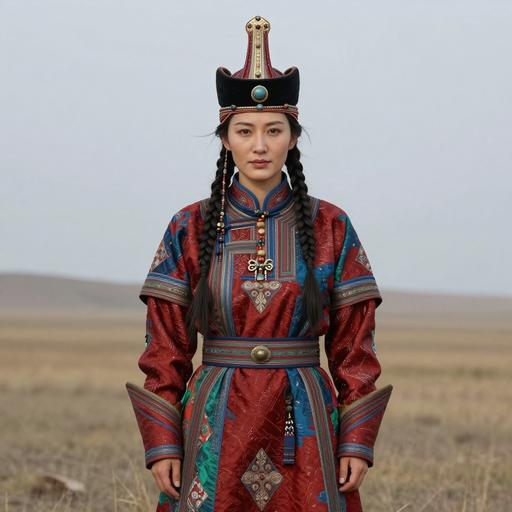
The Story
The journey of mtDNA haplogroup A11A
Origins and Evolution
mtDNA haplogroup A11A is a downstream branch of haplogroup A11, itself a member of the broader haplogroup A1 clade that diversified in northeastern/East Asia during the early Holocene. Based on its phylogenetic position under A11 and the geographic pattern of related lineages, A11A most likely arose in the coastal or near-coastal regions of the Russian Far East / northern Japan area approximately ~8 thousand years ago (kya). The lineage is characterized by a small number of defining mitochondrial control-region and coding-region mutations (reported in limited sequencing studies), and it appears to have remained at low frequency and geographically localized compared with more widespread East Asian mtDNA clades.
Genetic and population-genetic evidence suggests A11A persisted primarily among maritime hunter-gatherer groups and their descendants, with limited downstream diversification visible in modern sampling. The scarcity of A11A in large modern datasets implies either a historically small effective population size for carriers or loss/absorption into expanding neighboring populations over the Holocene.
Subclades (if applicable)
At present, A11A is recognized as a narrow subclade of A11 with few well-differentiated downstream branches reported in public databases. Coverage is limited: deep whole-mitogenome sequencing of additional individuals will be needed to resolve any internal substructure reliably. Because of the small sample size, many reported A11A assignments come from hypervariable-region (HVR) or partial-sequence matches; robust coding-region variation or complete-mitogenome phylogenies remain the best path to identify and validate subclades.
Geographical Distribution
A11A shows a geographically focused distribution centered on the Russian Far East and northern Japan, with occasional low-frequency occurrences across northeast Asia. Populations and regions with reported A11A (or closely related A11 lineages) include:
- Indigenous Siberian groups of the Russian Far East (for example, Nivkh, Ulchi and related coastal groups).
- Northern Japanese populations with elevated Jomon or Ainu-related ancestry (sporadic occurrences reflecting continuity or admixture with mainland groups).
- Northeast Asian populations (very low frequency) including northern Han Chinese, Koreans and Mongolian groups in certain localities.
- Extremely rare detections reported in some Central Asian or neighboring groups, typically at very low frequency and often attributable to recent gene flow or sampling noise.
Ancient DNA evidence for A11A is currently limited; at least one ancient individual with A11-class mtDNA has been reported in published aDNA datasets from coastal Northeast Asia, consistent with an origin and continuity in maritime hunter-gatherer populations.
Historical and Cultural Significance
Because A11A is concentrated in coastal and northern areas, it is particularly informative for reconstructing maternal ancestry among Jomon, Okhotsk, and other Holocene coastal hunter-gatherer cultures in the Russian Far East and northern Japan. Its presence in modern Ainu- and Jomon-admixed populations aligns with archaeological and genomic models in which localized maternal lineages persisted among island and coastal communities even as mainland populations shifted during the Neolithic and Bronze Age.
A11A's low frequency in broad sampling suggests it did not participate in large-scale expansions that spread other East Asian mtDNA lineages (for example, agricultural-associated expansions). Instead, A11A more likely reflects long-term regional continuity, population structure, and localized demographic histories (small effective sizes, founder effects, and genetic drift) in high-latitude coastal environments.
Conclusion
mtDNA haplogroup A11A is a rare, regionally concentrated maternal lineage derived from A11 that provides a focused window onto the maternal genetic landscape of Holocene coastal Northeast Asia. While current data are limited, A11A is best interpreted as part of the legacy of northern coastal hunter-gatherer populations (including Jomon- and Okhotsk-affiliated groups) and merits further sampling and complete-mitogenome sequencing to clarify its substructure, age, and historical dynamics.
Key Points
- Origins and Evolution
- Subclades (if applicable)
- Geographical Distribution
- Historical and Cultural Significance
- Conclusion