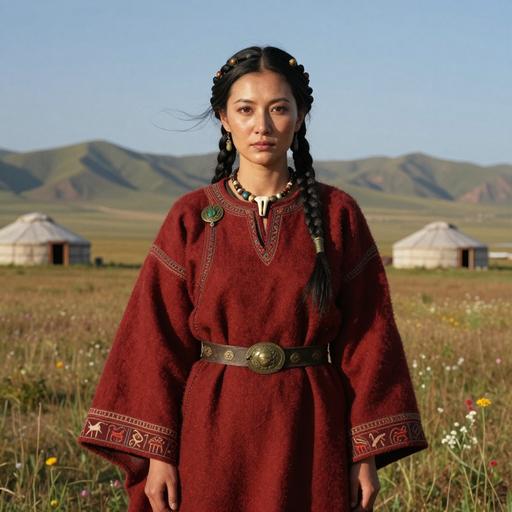
The Story
The journey of mtDNA haplogroup A11
Origins and Evolution
mtDNA haplogroup A11 is a downstream branch of haplogroup A (with the intermediate parent commonly labeled AA in some phylogenies). Haplogroup A as a whole is an East Asian lineage that arose during the Upper Paleolithic; A11 appears to be a Holocene subclade that split from other A lineages after the Last Glacial Maximum, probably during the Late Pleistocene to early Holocene (roughly within the last ~5–15 kya). Because sampling of A11 remains limited, age estimates are best considered provisional and derived by phylogenetic position relative to better-characterized A subclades.
Genetically, A11 is defined by private and shared control-region and coding-region mutations that place it within the broader A radiation across northeastern Eurasia. Its presence in modern and a small number of ancient samples indicates a regional diversification of maternal lineages in the Amur–Okhotsk–Sakhalin corridor and adjacent Siberian landscapes.
Subclades (if applicable)
Current phylogenies and population surveys report a few internal branches within A11 (sometimes annotated as A11a, A11b, etc. in different datasets), but these subclades are sparsely represented in public databases. Because of the low number of high-quality full mitogenomes assigned to A11, many potential subclade splits remain provisional and require deeper sequencing (complete mtGenome data) and broader geographic sampling to validate and date accurately.
Geographical Distribution
A11 appears concentrated in Northeast Asia and parts of North Asia, with detections at low-to-moderate frequency in:
- Tungusic-speaking groups and other indigenous peoples of the Russian Far East
- Mongolic-speaking populations in eastern Siberia and Mongolia
- Some populations of northeastern China (Amur basin, Heilongjiang/Liaoning)
Sporadic occurrences or low-frequency detections have also been reported in neighboring areas (e.g., parts of central Siberia and the Korean peninsula), consistent with localized gene flow and historic mobility across the region. Overall, A11 is uncommon in large-scale surveys and therefore often overlooked in broad continental summaries.
Historical and Cultural Significance
Because A11 is regionally concentrated, it can be informative for reconstructing maternal ancestry and prehistoric demography in the Amur–Okhotsk region and adjacent parts of Siberia. The clade may reflect the maternal legacy of Neolithic and post-Neolithic hunter-gatherer communities of the Russian Far East and Amur basin, and it may also be present among descendants of later movements (e.g., medieval coastal contacts, nomadic expansions).
Limited ancient DNA evidence from coastal and riverine archaeological contexts (for example, Okhotsk-related sites and Amur Neolithic sites) suggests continuity of some maternal lineages in the region from the Neolithic into historic times, but specific attribution of A11 to any single archaeological horizon remains tentative until more ancient mitogenomes are published.
Conclusion
mtDNA A11 is a localized, moderately deep maternal lineage nested within haplogroup A that is most informative at regional scales in Northeast Asia. Its relative rarity and under-sampling mean that expanded complete-mitogenome surveys and targeted ancient DNA studies are needed to refine its age, internal structure, and precise historical dynamics. For now, A11 serves as a marker of maternal diversity among Tungusic-, Mongolic- and Siberian-associated populations and contributes to the finer-scale reconstruction of population history in northeastern Eurasia.
Key Points
- Origins and Evolution
- Subclades (if applicable)
- Geographical Distribution
- Historical and Cultural Significance
- Conclusion