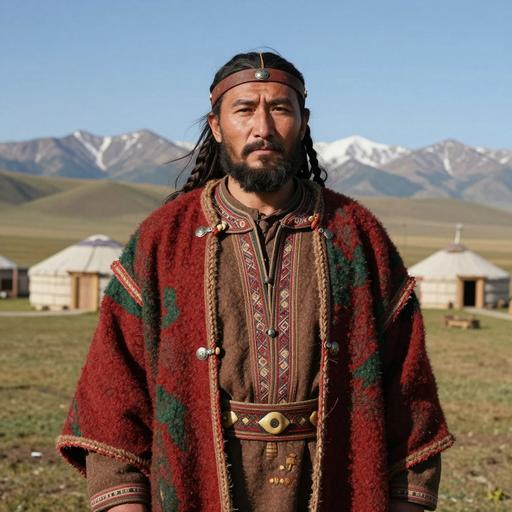
The Story
The journey of mtDNA haplogroup A15C
Origins and Evolution
mtDNA haplogroup A15C is a derived branch nested within haplogroup A15 (itself a descendant of A1). Based on the parent clade's early Holocene emergence and the geographic patterning of A15 lineages, A15C most plausibly arose during the early to mid-Holocene (roughly 8 kya, within the range of uncertainty typical for regional mtDNA subclades) in the Amur–Okhotsk–Hokkaido region or adjacent parts of northeastern Asia. Its origin is consistent with postglacial population expansions and regional differentiation among coastal and inland hunter-gatherer groups in far northeastern Asia.
Phylogenetically, A15C carries the defining mutations of A15 plus one or more private mutations that distinguish it from sister branches. The subclade shows limited deep branching in published datasets, indicating either a relatively recent origin or undersampling of the region in high-resolution mitogenome studies.
Subclades
At present, A15C appears to be a relatively tight subclade with few well-differentiated downstream clades publicly reported; this can reflect a young time depth, limited sequencing of regional populations, or both. As more complete mitochondrial genomes from the Amur–Okhotsk, Sakhalin, Hokkaido, and neighboring Siberian populations become available, additional internal structure of A15C may be revealed and allow finer resolution of migration and demographic events.
Geographical Distribution
A15C is geographically concentrated in the northeast/East Asian corridor linking the Amur basin, the Russian Far East (including Sakhalin and Kamchatka), and northern Japan (Hokkaido). Modern occurrences are observed at low to moderate frequencies in: indigenous Siberian groups (e.g., Evenks, Ulchi, Nivkh) at localized low-to-moderate levels, Ainu and some Jomon-descended populations in Hokkaido at low-to-moderate frequencies, and scattered occurrences among Northeast Asian populations (northern Han, Koreans, Mongolians) and coastal East Asian groups at very low frequency. A15C has also been observed in a small number of ancient DNA samples from the region, supporting continuity of maternal lineages through the Holocene in northeastern Asia.
The distribution pattern of A15C mirrors that of several other maternal lineages associated with northern coastal and inland hunter-gatherers (for example, local subclades of D4, G1, and N9b), suggesting shared demographic histories of refugial persistence and postglacial expansion along the Amur–Okhotsk–Hokkaido corridor.
Historical and Cultural Significance
Because A15C is concentrated among populations historically associated with maritime and riverine hunter-gatherer economies in northeastern Asia, it is informative for studies of the Jomon cultural complex, Ainu ethnogenesis, and the genetic structure of indigenous Siberian peoples. The presence of A15C in both modern groups and limited ancient samples suggests maternal-line continuity in this region across the Holocene, and it can help trace local population persistence, gene flow between the mainland and Hokkaido/Sakhalin, and interactions between coastal foragers and inland groups.
A15C's low overall frequency and regional specificity make it less useful for broad-scale continental reconstructions but valuable for high-resolution regional and microevolutionary studies, such as reconstructing maternal ancestry of archaeological individuals or testing hypotheses about migration routes (coastal vs. inland) in northeastern Asia.
Conclusion
A15C is a geographically localized mtDNA subclade of A15 that most likely arose in northeastern Asia during the early Holocene. Its distribution among Ainu/Jomon-descended populations and indigenous Siberian groups, together with its presence in a small number of ancient samples, supports a scenario of regional continuity and restricted maternal gene flow in the Amur–Okhotsk–Hokkaido corridor. Better sampling and more complete mitogenomes from the Russian Far East, Sakhalin, Hokkaido, and adjacent mainland regions will refine its age estimate, internal structure, and historical role.
Key Points
- Origins and Evolution
- Subclades
- Geographical Distribution
- Historical and Cultural Significance
- Conclusion