The Story
The journey of mtDNA haplogroup A15
Origins and Evolution
mtDNA haplogroup A15 is best understood as an intermediate maternal lineage nested beneath the provisional parent clade AA1, itself placed within the broader mtDNA haplogroup A radiation. Haplogroup A is well established as a major East Asian and Beringian maternal lineage with deep roots in Upper Paleolithic East Asia; by contrast, A15 — as an internal subclade — likely represents a post-glacial/early Holocene diversification that occurred after the Last Glacial Maximum as northern Eurasian populations expanded and fragmented into regional groups.
Because AA1 (the immediate parent) is still being refined in reference trees such as Phylotree and because sampling for rare A subclades is incomplete in many northern populations, estimates for A15 must remain provisional. The placement of A15 within the A/AA1 branch suggests a time depth on the order of the early Holocene (roughly 8–15 kya), consistent with demographic expansions and mobility among hunter-gatherer groups in Northeast Asia and adjacent Siberia.
Subclades
If present, downstream subclades of A15 are likely to be geographically localized and low-frequency, reflecting founder effects or drift in small northern populations. At present, A15 is best described as an intermediate clade connecting AA1 and any recognized daughter lineages; comprehensive high-resolution sequencing (complete mitogenomes) from targeted Siberian and northern East Asian populations is required to robustly define internal substructure.
Geographical Distribution
Based on the phylogenetic position under AA1 and patterns seen in related A subclades, A15 is plausibly concentrated in Northeast Asia and eastern Siberia, with sporadic occurrences in neighboring coastal populations of northern Japan. Expected modern carriers are most likely found among indigenous Siberian groups (for example, Yakut/Sakha and Tungusic-speaking groups such as Evenk), the Nivkh and other lower-Amur populations, and in small numbers among Hokkaido/Japanese populations with Jomon-related ancestry. Rare, likely secondary occurrences in more broadly distributed East Asian groups are possible through historical gene flow.
Historical and Cultural Significance
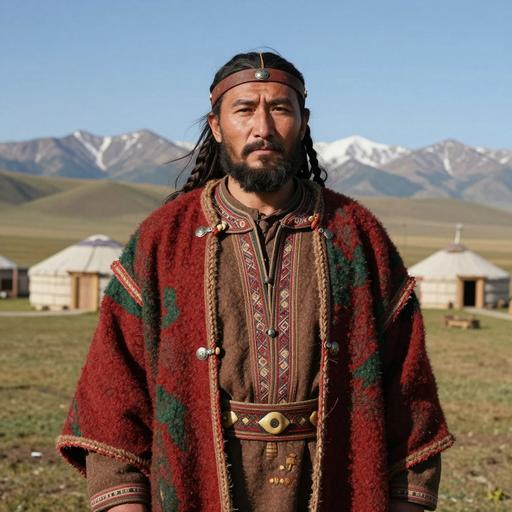
If A15 originated in the Early Holocene, it would have been carried by populations involved in postglacial recolonization of northern Eurasia, coastal foragers, and later by groups associated with regional archaeological cultures in the Russian Far East and northern Japan. Possible archaeological associations include the Jomon cultural complex in Japan (as a primary or contributing association for northern Japanese occurrences) and inland Siberian hunter-gatherer traditions. Where present, A15 may mark maternal continuity between prehistoric hunter-gatherers and some modern northern East Asian and Siberian communities.
It is important to emphasize that because A15 is a relatively narrowly defined mtDNA subclade and sampling is uneven, assigning firm cultural associations requires more ancient DNA and broader modern sampling.
Conclusion
mtDNA A15 occupies a plausible Early Holocene niche within the A haplogroup radiation, most likely arising in Northeast Asia/Siberia and persisting at low-to-moderate frequency in northern East Asian and Siberian populations. Its precise internal structure, geographic boundaries, and archaeological correlations remain provisional pending targeted mitogenome sequencing and inclusion of ancient DNA from relevant regions and time periods. As such, A15 is a useful marker for studies of postglacial maternal population dynamics in northern Eurasia but should be interpreted cautiously until further data clarify its distribution and age.
Key Points
- Origins and Evolution
- Subclades
- Geographical Distribution
- Historical and Cultural Significance
- Conclusion