The Story
The journey of mtDNA haplogroup B2A1A
Origins and Evolution
B2A1A is a downstream branch of the Native American maternal clade B2A1, itself nested within B2. The parent B2A1 likely formed in Central or South America in the early to mid-Holocene; B2A1A represents a more recent, regionally restricted diversification that most population genetic evidence suggests arose during the middle to late Holocene (several thousand years ago). Like many Native American mtDNA subclades, B2A1A probably formed through a combination of founder effects, local isolation, and small effective female population sizes that promote lineage sorting and the emergence of recognizable subclades.
Subclades
As a named subclade, B2A1A may itself harbor additional downstream branches detectable with high-resolution whole mitogenome sequencing, but published resolution for many Native American lineages remains incomplete and regionally biased by sampling. Where resolved, subclades of B2A1A tend to show microregional structure (lineages restricted to particular river basins, valleys, or language families), consistent with limited female-mediated gene flow and long-term residence of maternal lineages in place.
Geographical Distribution
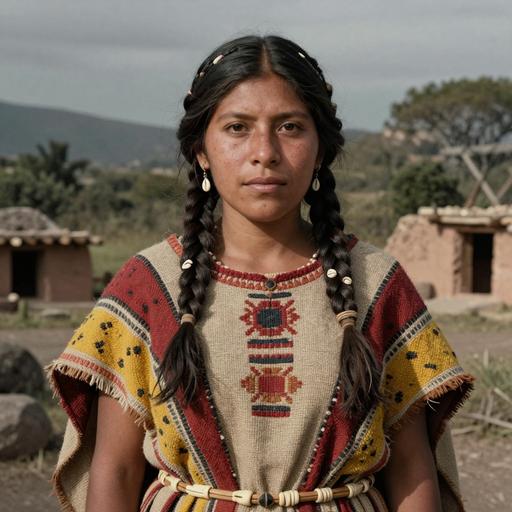
Empirical population surveys and available ancient DNA indicate B2A1A is concentrated in South America, with the highest frequencies reported among Amazonian and Andean indigenous groups. Lower-frequency occurrences extend into parts of Central America, southern Mexico, and sporadically into northern Mesoamerica, the Caribbean, and North America, usually reflecting pre-contact connections or later movements and admixture. Modern admixed populations in the Americas sometimes carry B2A1A at low frequencies due to indigenous maternal ancestry sustained through the post-contact period.
Historical and Cultural Significance
While maternal haplogroups do not map one-to-one onto archaeological cultures, the spatial and temporal pattern of B2A1A is compatible with Holocene population processes in South America: regional settlement, riverine and highland adaptations, and later cultural expansions. B2A1A lineages can inform questions about continuity between ancient and present-day populations in the Andes and Amazon, the demographic impact of local expansions, and the persistence of maternal ancestry through cultural transitions during the Late Holocene. Post-contact demographic collapse and admixture have altered frequencies, so interpreting modern distributions requires integration with archaeological and historical data.
Conclusion
B2A1A is a useful maternal marker for reconstructing finer-scale Native American population structure within Central and South America. Its presence in Amazonian and Andean groups, occasional detection in nearby regions, and likely formation during the mid-to-late Holocene make it informative for studies of local demographic history, maternal continuity, and the microgeography of maternal lineages in the Americas. High-resolution mitogenome sequencing and broader sampling will refine its internal branching and better tie subclades to specific regional histories.
Key Points
- Origins and Evolution
- Subclades
- Geographical Distribution
- Historical and Cultural Significance
- Conclusion