Menu
mtDNA Haplogroup • Maternal Lineage

B2

mtDNA Haplogroup B2

~15,000 years ago
Beringia / Northern North America (derived from East/Southeast Asia)
11 subclades
4 ancient samples
Scroll to explore
Chapter I

The Story

The journey of mtDNA haplogroup B2

Origins and Evolution

mtDNA haplogroup B2 is a derived branch of the broader haplogroup B, which itself originated in East/Southeast Asia during the Upper Paleolithic. B2 represents the B-derived lineage that became established among the founding maternal lineages of the Americas. Coalescence estimates and phylogeographic patterns place the origin of B2 in the Late Pleistocene, roughly ~12–18 kya (commonly ~15 kya), consistent with a Beringian standstill followed by dispersal into the Americas during or just after the Last Glacial Maximum.

Genetically, B2 carries mutations that distinguish it from Asian B lineages; after entering the Americas the lineage accumulated additional private mutations and diversified into several regionally restricted subclades. The observed internal diversity of B2 across Central and South America indicates an early arrival and substantial in situ diversification rather than only late, repeated introductions.

Subclades

B2 contains multiple sublineages that have been identified by full mitogenome sequencing. These subclades display geographic structuring — some are widespread across South and Central America while others are localized (for example, clades enriched in the Andes, Amazonia, or Mesoamerica). The precise nomenclature and number of recognized subclades expanded as more complete mtDNA genomes were sequenced; that internal branching supports a rapid initial founding followed by regional differentiation throughout the Holocene.

Geographical Distribution

B2 is predominantly a Native American lineage. It reaches its highest frequencies and greatest diversity in Central and South American indigenous populations, including Andean and Amazonian groups. In North America B2 is present but generally at lower frequencies and with less internal diversity, reflecting founder effects and subsequent population dynamics. Outside the Americas, true B2 is rare; the broader parent haplogroup B is common throughout East and Southeast Asia and in Austronesian populations, but these often belong to different B subclades (not B2). Occasional reports of B2-like mtDNAs outside the Americas are typically attributable to recent admixture or to limited sampling of rare lineages.

Historical and Cultural Significance

B2 is one of the maternal markers used to trace the peopling of the Americas. Its timing and distribution are consistent with archaeological and paleogenomic models in which people moved across Beringia and spread rapidly through the continents. The presence and diversity of B2 in pre-contact Andean, Amazonian, and Mesoamerican contexts link it to multiple cultural trajectories in the Americas (for example, early hunter-gatherer groups, later regional complex societies, and coastal maritime peoples). Because B2 is one of the canonical Native American haplogroups, it is commonly reported in ancient DNA studies that examine early American remains and in modern population surveys.

Conclusion

mtDNA haplogroup B2 is a founding Native American maternal lineage derived from East/Southeast Asian haplogroup B. Its age, phylogeographic structure, and distribution support an origin during the Late Pleistocene in a Beringian or early-American founder population, followed by rapid expansion and regional diversification throughout Central and South America. B2 remains an important genetic marker for reconstructing migration, demographic, and cultural histories of Indigenous peoples of the Americas.

Key Points

  • Origins and Evolution
  • Subclades
  • Geographical Distribution
  • Historical and Cultural Significance
  • Conclusion
Chapter III

Where in the World

Geographic distribution and modern presence

Place of Origin

Beringia / Northern North America (derived from East/Southeast Asia)

Modern Distribution

The populations where mtDNA haplogroup B2 is found include:

  1. Indigenous peoples of the Americas (especially Central and South America — high frequency and diversity)
  2. Indigenous North American groups (lower frequencies, localized occurrences)
  3. Coastal and island populations of the American Pacific and Caribbean (regional occurrences linked to pre-contact maritime networks)
  4. Some East Asian and Southeast Asian populations (rare occurrences or related parental B lineages; true B2 outside the Americas is uncommon and often due to recent admixture)
  5. Indigenous and admixed populations in areas affected by historic trans-oceanic contact (low frequency owing to recent movements)
  6. Populations sampled in ancient DNA studies from Paleo-Indian and early Holocene archaeological contexts across the Americas
CHAPTER IV

When in Time

Your haplogroup in the context of human history

~20k years ago

Last Glacial Maximum

Peak of the last ice age, populations isolated

~15k years ago

Haplogroup B2

Your mtDNA haplogroup emerged in Beringia / Northern North America (derived from East/Southeast Asia)

Beringia / Northern North America (derived from East/Southeast Asia)
~10k years ago

Neolithic Revolution

Agriculture begins, settled communities form

~5k years ago

Bronze Age

Metalworking, writing, and early civilizations

~3k years ago

Iron Age

Iron tools, expanded trade networks

~2k years ago

Classical Antiquity

Greek and Roman civilizations flourish

Present

Present Day

Modern era

Your Haplogroup
Historical Era
Chapter IV-B

Linked Cultures

Ancient cultures associated with mtDNA haplogroup B2

Cultural Heritage

These ancient cultures have been linked to haplogroup B2 based on matching ancient DNA samples from archaeological excavations. The presence of this haplogroup in these cultures provides insights into the migrations and population movements of populations carrying this haplogroup.

Ancient Beringian Atajadizo Ceramic Colonial Maya Cueva Esqueletos Huaca Prieta Kaingang Sambaqui Lapa do Santo Limão Sambaqui Tiwanaku Trail Creek Culture
Culture assignments are based on archaeological context of ancient DNA samples and may represent regional associations during specific time periods.
Chapter V

Sample Catalog

4 subclade carriers of haplogroup B2 (no exact B2 samples sequenced yet)

4 / 4 samples
Portrait Sample Country Era Date Culture mtDNA Match
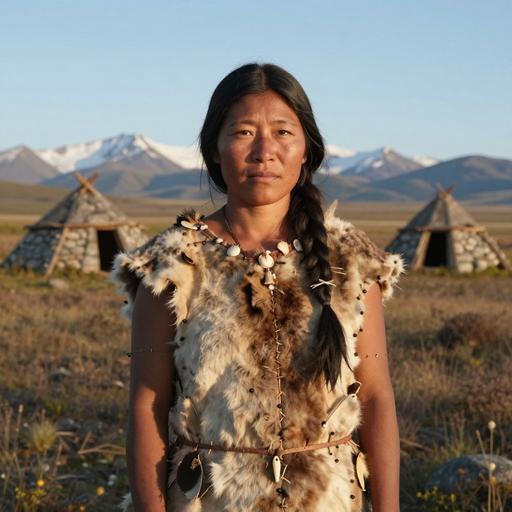
Portrait of ancient individual PLM001 from Brazil, dated 1426 CE - 1485 CE
PLM001
Brazil Sambaqui Culture 1426 CE - 1485 CE Sambaqui B2b-N Downstream
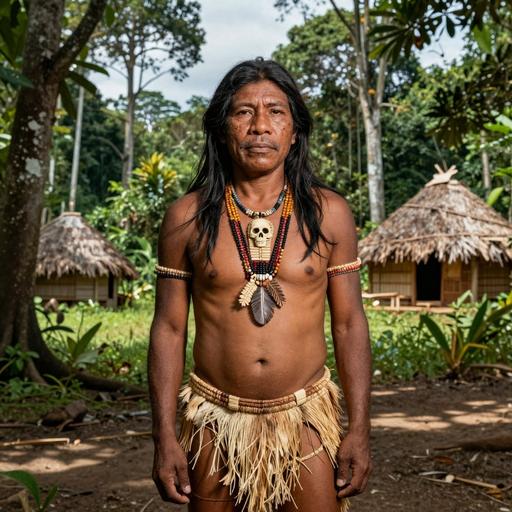
Portrait of ancient individual I0041 from Peru, dated 6640 BCE - 6470 BCE
I0041
Peru Lauricocha, Peru 8,600 Years Ago 6640 BCE - 6470 BCE Lauricocha Culture B2as* Downstream
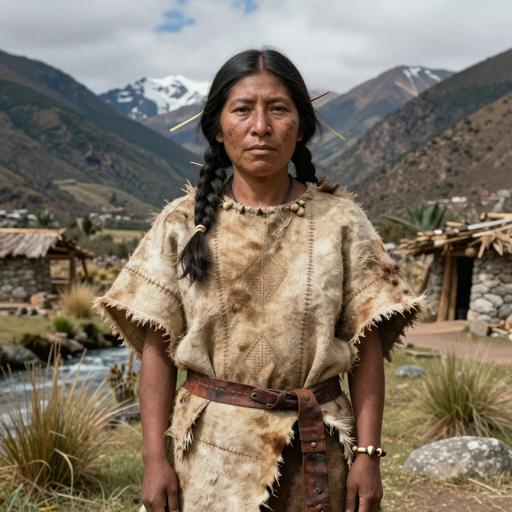
Portrait of ancient individual TrailCreek from USA, dated 7181 BCE - 6829 BCE
TrailCreek
USA The First Peoples of North America 7181 BCE - 6829 BCE B2* Downstream
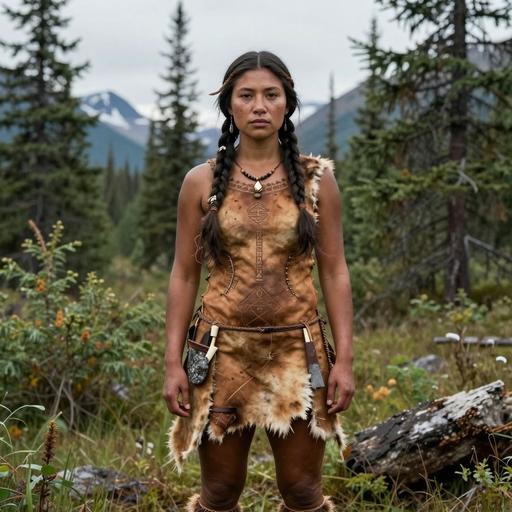
Portrait of ancient individual USR2 from USA, dated 9700 BCE - 9250 BCE
USR2
USA Ancient Beringian, USA 9700 BCE - 9250 BCE Ancient Beringian B2* Downstream
Chapter VI

Carrier Distribution Map

Geographic distribution of 4 ancient DNA samples (direct and subclade carriers of B2)

Subclade carrier
Time Period Filter
All Time Periods
Showing all samples
Chapter VII

Temporal Distribution

Distribution of carriers across archaeological periods

Chapter VIII

Geographic Distribution

Distribution by country of origin (direct and subclade carriers shown by default)

Chapter IX

Country × Era Distribution

Cross-tabulation of carrier countries and archaeological periods (direct and subclade carriers shown by default)

Data

Data & Provenance

Source information and data quality

Last Updated 2026-02-09
Data Source

We use the latest phylotree for MTDNA haplogroup classification and data.