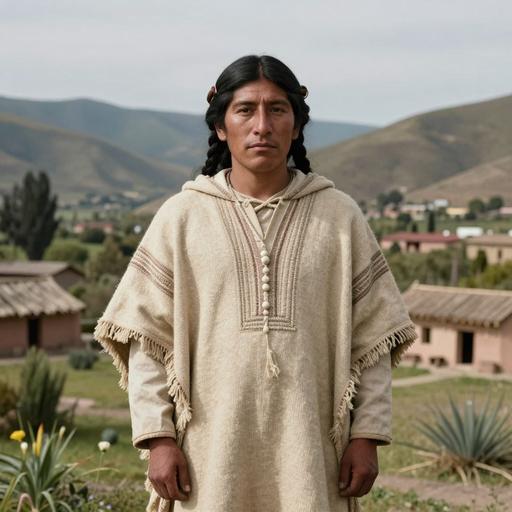
The Story
The journey of mtDNA haplogroup B2I2
Origins and Evolution
mtDNA haplogroup B2I2 is a subclade of B2I, itself nested within the broader Native American clade B2. B2 lineages entered and diversified within the Americas during the terminal Pleistocene and early Holocene; B2I appears to have differentiated within the Andean–Amazonian region in the early Holocene (~9 kya). B2I2 represents a later branching event within this regional lineage, most plausibly arising in the mid-Holocene (several thousand years after the initial B2I split) as populations settled into diverse ecological niches of northern and central South America.
Phylogenetically, B2I2 carries the diagnostic mutations that define its placement under B2I; its age estimate is lower than the parent clade, consistent with a pattern of in situ diversification and localized maternal founder effects. Like many sublineages of American mtDNA haplogroups, the distribution and diversity of B2I2 are shaped by small effective population sizes, founder events, and regional continuity rather than broad continent-wide spread.
Subclades
As an intermediate subclade, B2I2 may itself contain further internal diversity when sampled more intensively; however, published population surveys and ancient DNA datasets currently document only a limited number of distinct B2I2 branches. Additional whole-mitochondrial sequencing in understudied Andean and Amazonian groups is likely to reveal finer substructure and help place B2I2 branches in a more resolved temporal and geographic framework.
Geographical Distribution
B2I2 is most commonly reported from northern and central South America, particularly among Andean and adjacent Amazonian indigenous populations where the parent B2I shows its highest diversity. Secondary, lower-frequency occurrences are recorded in some Central American groups and as localized finds in northern South America’s coastal and riverine communities. Rare occurrences further north into parts of Mesoamerica and isolated signals in the Caribbean or North America likely reflect prehistoric mobility or modern admixture and are less well-supported by multiple samples.
The limited geographic breadth and often low frequency point to a history of regional persistence and small-scale demographic expansions (for example, valley-to-valley or river corridor movements) rather than large, continent-wide dispersals.
Historical and Cultural Significance
B2I2 is significant primarily as a marker of regional maternal continuity in the Andean–Amazonian interface during the Holocene. Its presence in modern and some ancient individuals helps reconstruct localized population histories: patterns of maternal inheritance, female-mediated gene flow along riverine and coastal routes, and demographic responses to the emergence of sedentary horticulture and later social complexity in parts of the Andes and adjacent lowlands.
Because many pre-Columbian cultural transitions in South America involved complex networks of interaction rather than simple population replacement, lineages like B2I2 are valuable for tracking continuity and micro-scale movement through time. However, its low frequency and limited sampling mean B2I2 should be interpreted alongside archaeological and autosomal evidence.
Conclusion
B2I2 is a mid-Holocene daughter clade of B2I localized in the Andean–Amazonian region and typifies the fine-scale maternal structure found across South America. Continued targeted mitochondrial sequencing and ancient DNA sampling in northern and central South America will clarify its internal diversity, precise age, and role in regional demographic events. Until sampling improves, B2I2 serves as a useful regional marker of maternal ancestry and continuity among indigenous populations of the Andean–Amazonian corridor.
Key Points
- Origins and Evolution
- Subclades
- Geographical Distribution
- Historical and Cultural Significance
- Conclusion