The Story
The journey of mtDNA haplogroup B2I
Origins and Evolution
mtDNA haplogroup B2I is a derived branch of the Native American maternal clade B2, itself originating from East/Southeast Asian haplogroup B and associated with the initial peopling of the Americas. While the parent B2 lineage likely formed in a Beringian or early American founder population around the Late Pleistocene (~15 kya), B2I represents a later diversification that most genetic evidence suggests occurred during the Early Holocene (roughly 9 kya) after initial southward dispersals. The timing and phylogenetic position of B2I indicate it formed as populations adapted to diverse ecological zones in Central and northern South America, with subsequent local diversification.
Subclades
As an intermediate clade within B2, B2I may include further downstream internal branches identified in high-resolution sequencing studies; however, published substructure for B2I is limited compared with major B2 sublineages. Where whole mitogenome surveys are available, subclades of B2I can be recognized by additional private mutations on the B2 backbone. Continued mitogenome sampling of under-represented indigenous groups in the Andes and Amazonia is likely to refine internal structure and identify population-specific branches.
Geographical Distribution
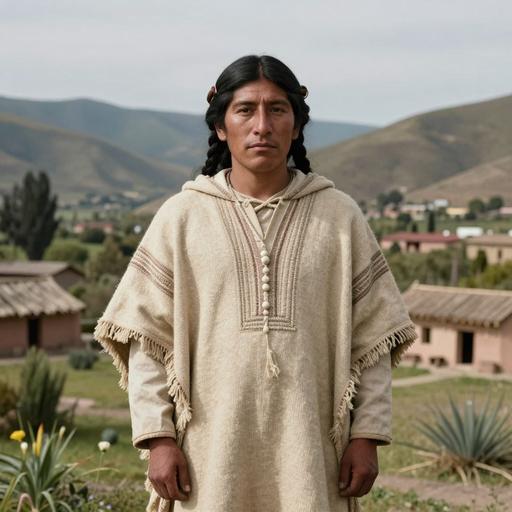
B2I is principally recorded in indigenous populations of Central America and northern and central South America, particularly among Andean and adjacent Amazonian groups. Frequencies are typically regional rather than pan-American: some local populations can show moderate representation while overall continental frequency remains low relative to more widespread founder clades such as A2 or basal B2. B2I occurs at low and patchy frequencies in parts of North America and the Caribbean, usually reflecting prehistoric north–south gene flow or later regional contact. Outside the Americas true B2I is rare and most reports from non-American populations represent recent admixture or misassigned sequencing artifacts.
Historical and Cultural Significance
Lineages like B2I provide insight into post-glacial demographic processes in the Americas: they document Early Holocene diversification after initial colonization, local persistence of maternal lineages through the Holocene, and the complex population structure prior to European contact. While specific archaeological cultures cannot be uniquely tied to B2I without direct ancient DNA confirmation, the lineage is consistent with genetic patterns produced by Early Holocene hunter-gatherer and later Formative expansions in the Andes and Amazonia. Ancient DNA from Paleoindian and Early Holocene sites across the Americas has demonstrated continuity of many maternal lineages, and targeted sampling has the potential to place B2I in precise archaeological contexts.
Conclusion
B2I is a regionally important derivative of the Native American B2 maternal founder that likely arose in Central to northern South America during the Early Holocene (~9 kya). It is primarily found among indigenous Central and South American populations with localized distributions that reflect Holocene demographic processes. Further whole mitogenome sequencing and ancient DNA sampling across under-studied regions will improve resolution of B2I's internal structure, timing, and archaeological associations.
Key Points
- Origins and Evolution
- Subclades
- Geographical Distribution
- Historical and Cultural Significance
- Conclusion