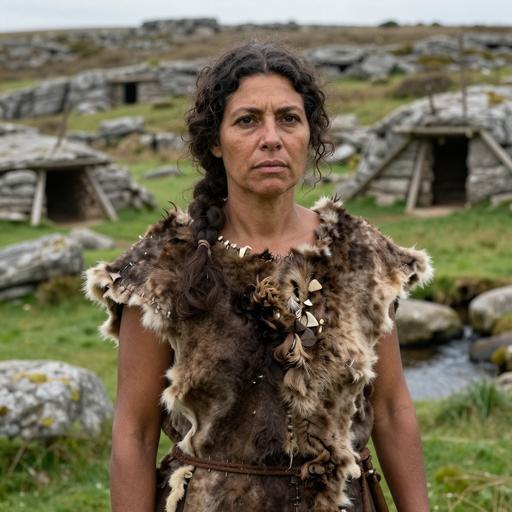
The Story
The journey of mtDNA haplogroup B5
Origins and Evolution
mtDNA haplogroup B5 is a descendant branch of haplogroup B, which itself dates back to the Upper Paleolithic in East/Southeast Asia. While parent haplogroup B is commonly dated to ~50 kya, B5 represents a later diversification event likely occurring in the Late Pleistocene to early Holocene (roughly 15–20 kya). This timing is consistent with post-Last Glacial Maximum (LGM) demographic expansions and regional refugial survivals on mainland East Asia and adjacent coastal zones. B5 diversified locally into multiple sublineages as human groups expanded along coastal and riverine corridors and adapted to changing climates and resource bases.
Subclades (if applicable)
B5 contains several recognized subclades (commonly reported as B5a, B5b, B5c, etc.) that show differing geographic focuses and relative ages. B5a is often reported at appreciable frequencies in northern and central East Asia (including Han Chinese, Koreans, and Japanese), while other B5 sublineages show stronger representation in Southeast Asia, Taiwan, and populations associated with Austronesian-speaking groups. The internal branching patterns indicate multiple regional radiations rather than a single rapid long-range dispersal, although later human movements (notably Neolithic coastal migrations and the Austronesian expansion) redistributed some B5 lineages across islands of Island Southeast Asia and into parts of Oceania.
Geographical Distribution
B5 is primarily an East and Southeast Asian maternal lineage with highest prevalence and diversity on the Asian mainland and island margins. It is found in:
- Mainland East Asia (China, Korea, Japan) with several subclades concentrated in different provinces and population groups.
- Mainland Southeast Asia (Vietnam, Thailand, Myanmar) where B5 co-occurs with other East/Southeast Asian mtDNA lineages.
- Island Southeast Asia and Taiwan, including some Austronesian-speaking indigenous groups, where B5 subclades are part of the maternal mix carried during prehistoric maritime movements.
- Lower-frequency occurrences in parts of Near Oceania and Remote Oceania tied to later island-hopping and Austronesian-mediated contacts.
Overall, the highest diversity of B5 lineages on the mainland supports an origin and early diversification there, with subsequent island dispersals.
Historical and Cultural Significance
B5 lineages likely accompanied coastal forager and early farming communities in East and Southeast Asia. The clade's timing and geography make it compatible with involvement in postglacial re-expansions, the spread of early Holocene coastal adaptations, and later Neolithic/Maritime expansions, including the Austronesian dispersal from Taiwan and coastal southern China into Island Southeast Asia and the Pacific (~4–5 kya). In continental contexts, B5 is found among populations associated with early rice and other agricultural systems, where maternal lineages were reshaped by demographic growth and local admixture.
Conclusion
mtDNA haplogroup B5 is an informative regional maternal branch of haplogroup B that records episodes of Late Pleistocene survival and Holocene expansion in East and Southeast Asia. Its pattern of internal diversity on the mainland combined with presence in island populations makes B5 useful for reconstructing coastal and maritime prehistoric movements, including aspects of the Austronesian expansion and regional Neolithic processes.
Key Points
- Origins and Evolution
- Subclades (if applicable)
- Geographical Distribution
- Historical and Cultural Significance
- Conclusion