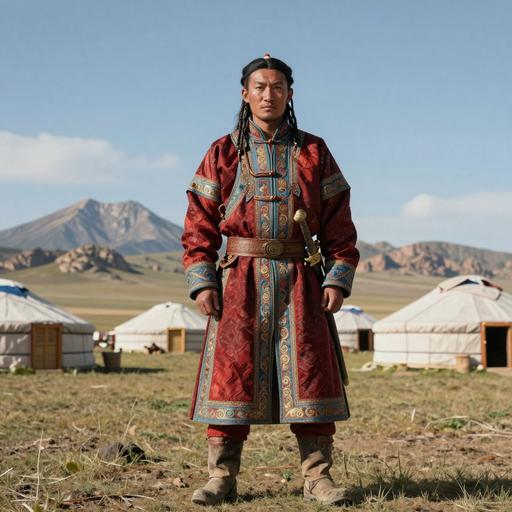
The Story
The journey of mtDNA haplogroup B6
Origins and Evolution
mtDNA haplogroup B6 sits beneath the intermediate node R11'B6 in the human mitochondrial phylogeny. Based on the placement of R11 and related R-derived lineages, B6 most plausibly coalesced in Southeast to East Asia during the late Pleistocene or the early Holocene (roughly ~20–35 kya). Because R11'B6 is an intermediate clade recognized in Phylotree, B6 should be viewed as a relatively deep maternal branch that has so far been detected at low to moderate frequencies in geographic areas associated with Pleistocene and Holocene population continuity in Island Southeast Asia and adjacent regions.
The current age estimate is provisional and derived from the phylogenetic position of B6 relative to other R-derived clades; dense whole-mitochondrial genome sequencing and calibrated molecular dating using ancient DNA would improve the precision of the coalescence time.
Subclades
At present, published references and public phylogenies indicate that B6 is a small or sparsely sampled clade with limited named internal substructure in public databases. Some samples assigned to B6 may form internal lineages that warrant subclade naming once more complete mitochondrial genomes are available. Because of the limited sampling, it is likely that previously unrecognized subclades exist in understudied island and inland populations of Southeast Asia.
Geographical Distribution
Available population genetics data and reasonable phylogeographic inference place B6 primarily in Island Southeast Asia with lower-frequency occurrences in neighboring East and Mainland Southeast Asian groups. The distribution pattern is consistent with an origin in mainland or island Southeast Asia followed by local persistence and partial spread with later demographic events (for example, Austronesian-associated movements) that redistributed some maternal lineages across island chains. Reports of B6 in Near Oceania or further Pacific regions are currently sparse and require independent confirmation through full mitogenome data and broader sampling.
Historical and Cultural Significance
Because B6 appears to be a relatively rare and regionally restricted lineage, it is most informative for population-level studies that track maternal continuity and microevolutionary events in Southeast Asian island systems. Two broad historical associations are plausible:
Pleistocene-Holocene continuity: B6 may reflect lineages that remained in island and coastal refugia since the late Pleistocene and into the Holocene, contributing to the genetic substrate of later populations.
Austronesian-era movement and local admixture: During the Neolithic and later Austronesian expansions (roughly the last 4–5 kya), maternal lineages were redistributed across island Southeast Asia; B6 could have been carried, diluted, or locally amplified in particular island populations depending on demographic and cultural dynamics. Given the sparse sampling, B6 should not be assumed to be a defining marker of any single archaeological culture without additional evidence.
Conclusion
mtDNA haplogroup B6 represents a modestly deep maternal branch within the R11'B6 clade with a likely Southeast/East Asian origin in the late Pleistocene–early Holocene. Current knowledge of B6 is limited by sampling density: resolving its full geographic range, internal substructure, and demographic history will require targeted whole-mitogenome sequencing across diverse Island Southeast Asian, mainland Southeast Asian, and Pacific populations, plus integration of ancient DNA where available. Until such data accumulate, interpretations should emphasize uncertainty and the need for further study.
Key Points
- Origins and Evolution
- Subclades
- Geographical Distribution
- Historical and Cultural Significance
- Conclusion