Menu
mtDNA Haplogroup ‱ Maternal Lineage

C1B8

mtDNA Haplogroup C1B8

~12,000 years ago
Northeast Asia / Beringia
0 subclades
Scroll to explore
Chapter I

The Story

The journey of mtDNA haplogroup C1B8

Origins and Evolution

Haplogroup C1B8 is a downstream branch of mtDNA haplogroup C1b, itself one of the founding maternal lineages associated with the peopling of the Americas. C1b likely differentiated on the Northeast Asian–Beringian margin during the Late Pleistocene, and subclades such as C1B8 would have arisen after the initial Beringian diversification as small founder groups moved into the Americas. Based on the position of C1B8 within the C1b phylogeny and radiocarbon-dated ancient DNA contexts for related clades, a plausible age for C1B8 is in the Early Holocene (approximately 12 kya), reflecting diversification shortly after or during initial southward dispersals.

Subclades

C1B8 is currently known as a relatively specific terminal or near-terminal branch within C1b. As of current published and database records, C1B8 shows limited internal substructure in public datasets, and many observations are singletons or rare haplotypes. This pattern is consistent with a local founder effect and/or subsequent demographic drift in particular regions of South America. Continued ancient DNA sampling and large-scale mitogenome surveys could reveal further subdivisions or clarify its age and migration history.

Geographical Distribution

The distribution of C1B8 is concentrated in the Americas, with the strongest signals in parts of South America. It has been recorded in modern and at least one ancient sample in archaeological contexts, indicating a pre-Columbian presence. Typical occurrences include Andean and Amazonian indigenous populations, where C1b sublineages are well represented. Far less frequent occurrences have been reported in some Native North American populations (including Alaska and subarctic groups) and as very rare matches in northeastern Eurasian (Siberian/Beringian) populations — likely reflecting either retention of ancestral diversity near Beringia or later backflow/contacts.

Historical and Cultural Significance

Although C1B8 is not one of the numerically dominant Native American mtDNA haplogroups, its presence contributes to the genetic mosaic that documents early migrations into South America and regional differentiation after initial entry. Where found in Andean or Amazonian contexts, C1B8 likely represents lineages that participated in local Neolithic-to-precontact population histories (for example, Preceramic Andean societies and long-standing Amazonian hunter-gatherer and horticulturalist groups). Its scarcity in Eurasia underscores the strong founder bottlenecks associated with the peopling of the Americas and subsequent regional drift.

Conclusion

C1B8 exemplifies a rare, regionally informative maternal lineage derived from the broader C1b clade. It is most informative for reconstructing local demographic processes in South America and for tracing finer-scale matrilineal genealogies within Native American populations. Additional mitogenome sequencing, targeted sampling in underrepresented regions, and integration with ancient DNA will improve resolutions of its age, internal structure, and precise role in the postglacial settlement of the Americas.

Key Points

  • Origins and Evolution
  • Subclades
  • Geographical Distribution
  • Historical and Cultural Significance
  • Conclusion
Chapter II

Tree & Relationships

Phylogenetic context and subclades

Evolution Path

This haplogroup's evolutionary journey from its earliest ancestor to the present.

Steps Haplogroup Age Estimate Archaeology Era Time Passed Immediate Descendants Tested Modern Descendants Ancient Connections
1 C1B8 Current ~12,000 years ago 🌾 Neolithic 12,000 years 0 2 0
2 C1B ~15,000 years ago 🏹 Mesolithic 15,000 years 5 114 198
3 C1 ~18,000 years ago 🏹 Mesolithic 18,000 years 5 562 5
4 C ~35,000 years ago 🦴 Paleolithic 35,000 years 5 617 75

Subclades (0)

Terminal branch - no known subclades

Siblings (4)

Other branches from the same parent haplogroup

Chapter III

Where in the World

Geographic distribution and modern presence

Place of Origin

Northeast Asia / Beringia

Modern Distribution

The populations where mtDNA haplogroup C1B haplogroup C1B8 is found include:

  1. Indigenous peoples of South America (Andean and lowland groups)
  2. Amazonian indigenous groups
  3. Native North American groups (select populations in Alaska and northwestern North America)
  4. Arctic and sub-Arctic peoples (very low frequency occurrences)
  5. Siberian/Beringian ethnic groups (rare isolated occurrences)
  6. Preceramic Andean archaeological contexts (ancient DNA find)
  7. Paleoindian/Archaic-associated remains in the Americas (occasional)
  8. Modern admixed populations in the Americas (low frequency due to indigenous ancestry)
CHAPTER IV

When in Time

Your haplogroup in the context of human history

~12k years ago

Haplogroup C1B8

Your mtDNA haplogroup emerged in Northeast Asia / Beringia

Northeast Asia / Beringia
~10k years ago

Neolithic Revolution

Agriculture begins, settled communities form

~5k years ago

Bronze Age

Metalworking, writing, and early civilizations

~3k years ago

Iron Age

Iron tools, expanded trade networks

~2k years ago

Classical Antiquity

Greek and Roman civilizations flourish

Present

Present Day

Modern era

Your Haplogroup
Historical Era
Chapter IV-B

Linked Cultures

Ancient cultures associated with mtDNA haplogroup C1B8

Cultural Heritage

These ancient cultures have been linked to haplogroup C1B8 based on matching ancient DNA samples from archaeological excavations. The presence of this haplogroup in these cultures provides insights into the migrations and population movements of populations carrying this haplogroup.

Ancient Beringian Arroyo Seco Kusnarenkovo-Karajakupovo Culture Lagoa de Encantada Laguna Chica Late Paleoindian Belize Los Rieles Pre-Columbian Mexican Selknam Yamana
Culture assignments are based on archaeological context of ancient DNA samples and may represent regional associations during specific time periods.
Chapter V

Sample Catalog

1 direct carrier of haplogroup C1B8

1 / 1 samples
Portrait Sample Country Era Date Culture mtDNA Match
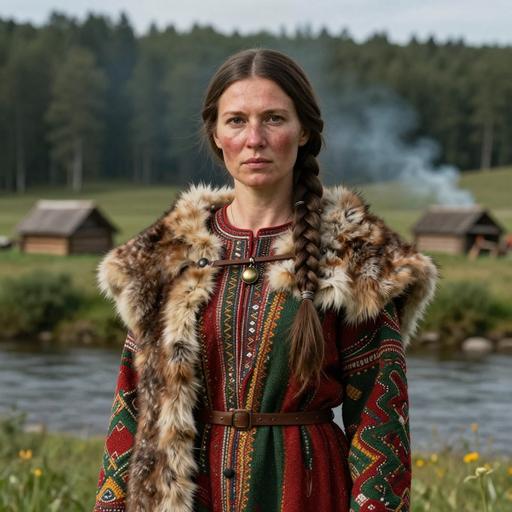
Portrait of ancient individual MS20 from Russia, dated 800 CE - 900 CE
MS20
Russia Medieval Kusnarenkovo-Karajakupovo Culture, Russia 800 CE - 900 CE Kusnarenkovo-Karajakupovo Culture C1b8 Direct
Chapter VI

Carrier Distribution Map

Geographic distribution of 1 ancient DNA sample (direct and subclade carriers of C1B8)

Direct carrier
Time Period Filter
All Time Periods
Showing all samples
Chapter VII

Temporal Distribution

Distribution of carriers across archaeological periods

Chapter VIII

Geographic Distribution

Distribution by country of origin (direct and subclade carriers shown by default)

Chapter IX

Country × Era Distribution

Cross-tabulation of carrier countries and archaeological periods (direct and subclade carriers shown by default)

Data

Data & Provenance

Source information and data quality

Last Updated 2026-02-16
Confidence Score 50/100
Coverage Low
Data Source

We use the latest phylotree for MTDNA haplogroup classification and data.